Improvisation In The Arts Of The Middle Ages And Renaissance
Improvisation in the Arts of the Middle Ages and Renaissance, edited by Timothy J. McGee, is a rigorous and highly influential collection of scholarly essays that explore the 'hidden' history of spontaneous creation in the pre-modern world. Published in 2003, the book challenge the traditional view of medieval and renaissance art as purely prescriptive or 'scripted'. Instead, it demonstrate that improvisation was a central and highly valued competency across the disciplines of music, dance, theater, and even the visual arts.
The work is organized by artistic domain, with contributors examine the 'oral tradition' and the 'performative logic' of each period. The 'Music' section is particularly noted for its focus on 'extemporization' in both sacred and secular forms: showing how musicians used fixed melodies as a 'platform' for elaborate spontaneous variations. The 'Theater' section look at the development of 'Commedia dell'Arte' and the 'Lazzi': demonstrating how professional ensembles used a shared 'notebook' of scenarios and character types to generate infinitely variable shows for diverse audiences. The book provides a deep analysis of the 'training' of the pre-modern improviser: showing that 'spontaneity' was the result of a lifelong apprenticeship in the 'schemata' and 'tropes' of their craft.
The text is highly academic and interdisciplinary, weaving together musicology, performance studies, and cultural history. It provide a much-needed historical context for our modern obsession with 'creativity': showing that 'improvisation' has a long and sophisticated history as a major site for narrative and aesthetic innovation. Improvisation in the Arts of the Middle Ages and Renaissance is an essential reference for any scholar or serious practitioner who wants to understand the 'deep roots' of their art and the cultural logic of the unscripted moment.
Key Concepts
The study of the 'stable units' of knowledge and patterns that the pre-modern artist used as a platform for spontaneous discovery.
The shift from seeing improvisation as a 'secondary' skill to recognizing it as a primary mode of artistic creation in the pre-modern world.
The analysis of the 'comic business' and the 'scenarios' that the Commedia dell'Arte used to coordinate their spontaneous shows.
How 'spontaneity' was taught as a rigorous apprenticeship in the rules and the 'vocabulary' of a specific artistic language.
An exploration of how religious and social hierarchies viewed the 'unscripted' moment as a site of both risk and inspiration.
Who Benefits from Reading this Book
Individuals seeking a rigorous and well-documented history of the spontaneous arts in the pre-modern world.
Artists working in period-piece reconstruction who want to understand the cultural logic and technical demands of pre-modern improvisation.
Those interested in the intersection of 'notation' and 'spontaneity' and the development of artistic theory.
Individuals who want to move beyond 'games' to understand the sophisticated and long-reaching lineage of their art form.
Reception & Legacy
Improvisation in the Arts of the Middle Ages and Renaissance has been hailed as a 'cornerstone' for the study of pre-modern performance. Critics praise Timothy J. McGee for his ability to weave disparate disciplines into a cohesive narrative that challenge our fundamental assumptions about the 'history of the masterpiece'. The book's interdisciplinary scope and its use of meticulous primary research are frequently cited as its major strengths. It is regarded as an indispensable resource for any library dedicated to the performing arts and the history of creativity.
Related Reading
See all books →
Semiotics and Pragmatics of Stage Improvisation
Domenico Pietropaolo; Paul Bouissac

Improvisation in Drama, Theatre and Performance
History, Practice, Theory
Anthony Frost; Ralph Yarrow

Something Wonderful Right Away
An Oral History of The Second City and The Compass Players
Jeffrey Sweet

Long Form Improvisation and American Comedy
The Harold
Matt Fotis

The Art of Chicago Improv
Short Cuts to Long-Form Improvisation
Rob Kozlowski
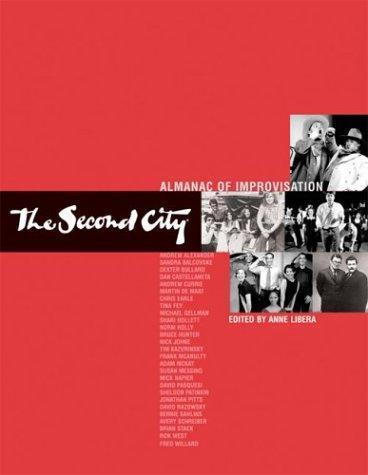
The Second City Almanac of Improvisation
Anne Libera
About This Book
How to Reference This Page
The Improv Archive. (2026). Improvisation In The Arts Of The Middle Ages And Renaissance. Retrieved March 17, 2026, from https://improvarchive.org/books/improvisation-in-the-arts-of-the-middle-ages-and-renaissance
The Improv Archive. "Improvisation In The Arts Of The Middle Ages And Renaissance." The Improv Archive, 2026. https://improvarchive.org/books/improvisation-in-the-arts-of-the-middle-ages-and-renaissance.
The Improv Archive. "Improvisation In The Arts Of The Middle Ages And Renaissance." The Improv Archive, 2026, https://improvarchive.org/books/improvisation-in-the-arts-of-the-middle-ages-and-renaissance. Accessed March 17, 2026.
The Improv Archive is a systemically maintained repository. The archive itself acts as the corporate author.