Teaching Improv
The Essential Handbook
Teaching Improv, curated by The Second City, acts as both a historical repository and a practical workshop in book form. Unlike a traditional linear manual, this volume is a kaleidoscope of essays, interviews, and exercises that document the evolution of the 'Chicago Style' of improvisation. It captures the oral history of The Second City, the theater that became the Mecca of American comedy, through the voices of the people who built it.
The work organizations the chaos of fifty years of comedy into a structured exploration of the art form. The book traces the lineage of improv from the games of Viola Spolin to the satiric revues that launched the careers of Bill Murray, Tina Fey, and Stephen Colbert. It is less a step-by-step 'how-to' and more of a 'why-to,' offering deep context on the artistic principles that underpin the work.
One of the book's greatest strengths is its polyphony. It does not present a single, unified theory of improv but rather a collection of perspectives that sometimes complement and sometimes contradict one another. Readers can find master performers discussing their early days, offering masterclasses on object work, and analyzing the mechanics of long-form versus short-form. This approach reflects the nature of The Second City itself: a collaborative environment where strong individual voices merge to create something greater than the sum of its parts.
The text covers the full spectrum of the improviser's toolkit. There are sections dedicated to 'The Big Three' rules (which the book examines and complicates), content generation, and the specific demands of the revue format. Tina Fey's contribution on the process of 're-improvising,' or refining improvised material into sketched scenes, is a highlight, offering a rare glimpse into the writing process of professional comedy.
Ultimately, Teaching Improv serves as a bridge between the classroom and the stage. It validates the struggles of the student while setting a high bar for the professional. It demonstrates that the funny is rarely accidental; it is the result of rigor, awareness, and a deep commitment to the truth of the moment.
Key Concepts
The belief that authentic emotional reactions are the engine of high-level performance rather than 'clichés' or 'joking'.
Entering every interaction with a single, clear, and unchangeable emotional 'POV' or gift before your partner speaks.
The process of using unscripted discovery as the raw material for refined, written comedic performance.
An analysis of the performer's responsibility to represent the ensemble's intent and mission fairly and with integrity.
Moving beyond 'performance' to view the unscripted moment as a tool for personal and communal transformation.
Who Benefits from Reading this Book
Those looking for a technical and rigorous model for expanding their artistic range and collaborative skill.
Individuals seeking a clear and effective curriculum for training their troupes in 'narrative mastery' and ensemble skill.
Individuals looking for a mindset that embrace uncertainty and the power of the 'honest choice' in comedic creation.
Those interested in the specific technical training and culture of the world's most influential comedy scene.
Reception & Legacy
Teaching Improv has been hailed as one of the most 'useful' and 'rigorous' books in the field of contemporary improv training. Reviewers often praise the Second City for its clarity and for its refusal to rely on the 'easy clichés' of sketch-based comedy. The book's focus on 'concentration' and 're-improvising' is frequently cited as its major strength. It is regarded as an essential 'textbook' for any drama department or individual committed to the serious art of the unscripted moment.
Related Reading
See all books →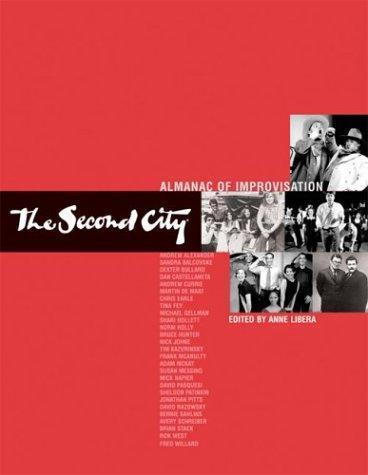
The Second City Almanac of Improvisation
Anne Libera

The Upright Citizens Brigade Comedy Improvisation Manual
Matt Besser; Ian Roberts; Matt Walsh

Improv Nonsense
All The Posts
Will Hines
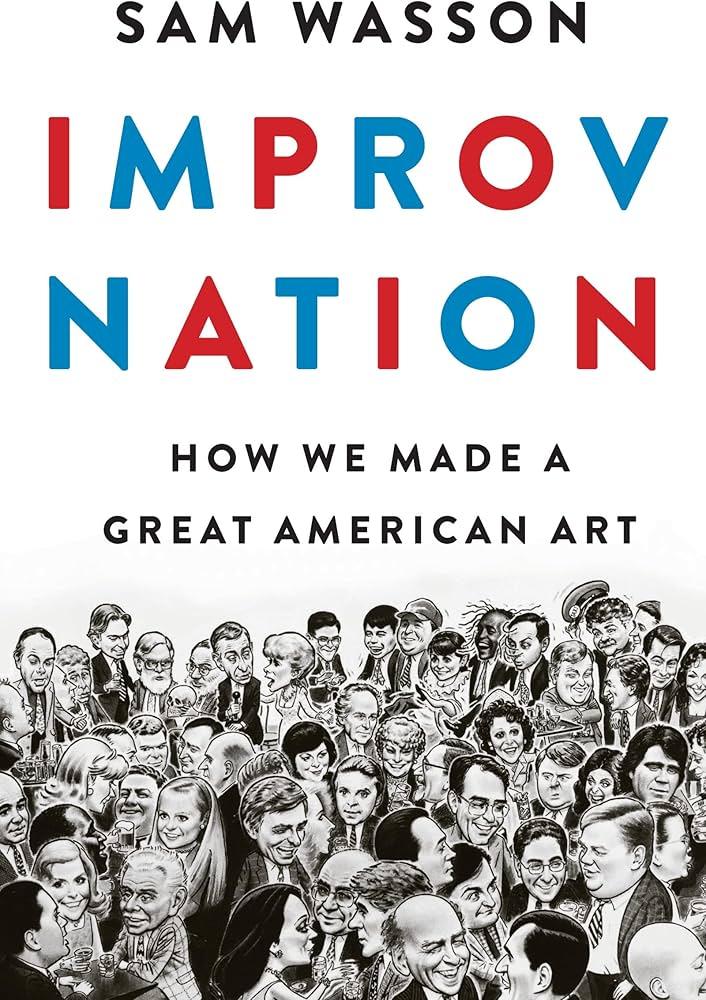
Improv Nation
How We Made a Great American Art
Sam Wasson

Pirate Robot Ninja
An Improv Fable
Billy Merritt; Will Hines

The Art of Chicago Improv
Short Cuts to Long-Form Improvisation
Rob Kozlowski
About This Book
How to Reference This Page
The Improv Archive. (2026). Teaching Improv. Retrieved March 17, 2026, from https://improvarchive.org/books/teaching-improv
The Improv Archive. "Teaching Improv." The Improv Archive, 2026. https://improvarchive.org/books/teaching-improv.
The Improv Archive. "Teaching Improv." The Improv Archive, 2026, https://improvarchive.org/books/teaching-improv. Accessed March 17, 2026.
The Improv Archive is a systemically maintained repository. The archive itself acts as the corporate author.