Crazy Talk
Crazy Talk is a verbal exercise in which players speak in deliberate nonsense or stream-of-consciousness gibberish while maintaining committed emotional delivery. The exercise separates expressive intention from semantic content, proving that how something is said matters as much as what is said. It frees performers from the need to be clever or coherent.
Worth Reading
See all books →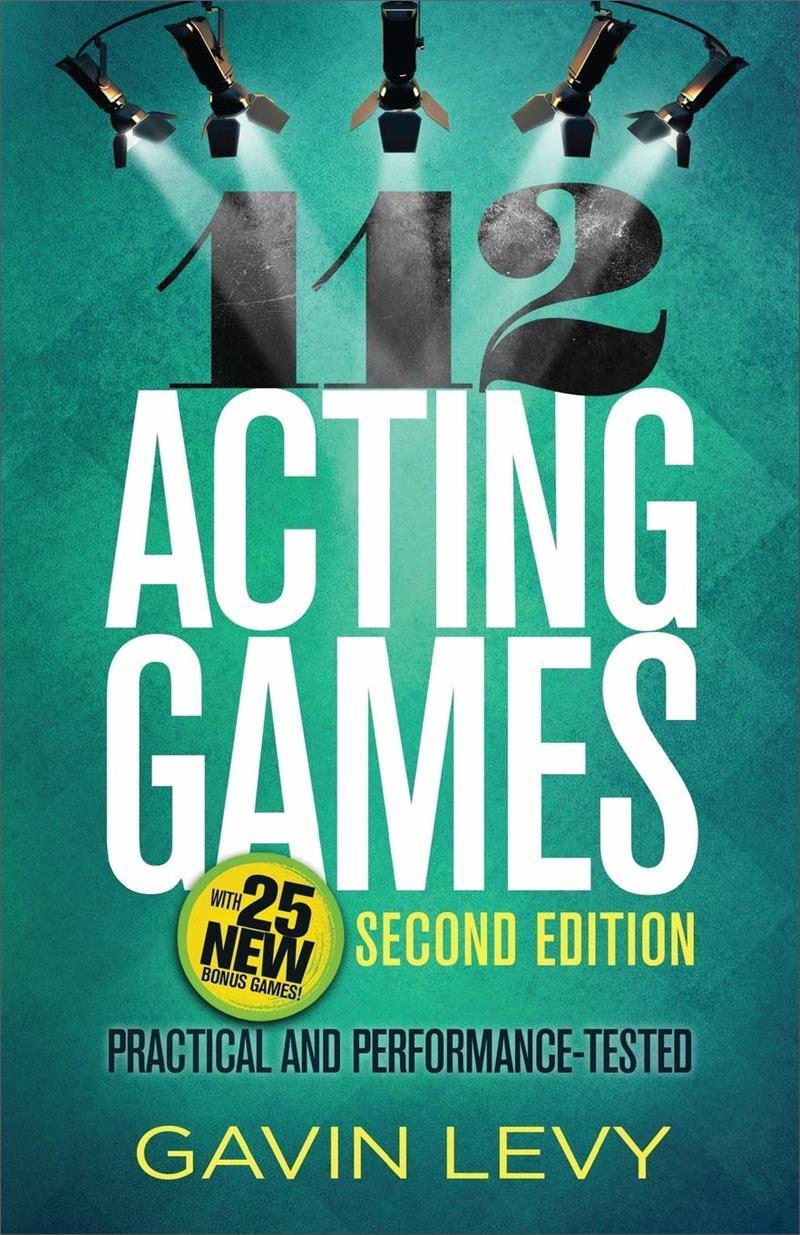
112 Acting Games
Gavin Levy

Group Improvisation
The Manual of Ensemble Improv Games
Peter Campbell Gwinn; Charna Halpern

Acting Through Improv
Improv Through Theatresports
Lynda Belt; Rebecca Stockley

Business Improv
Experiential Learning Exercises to Train Employees
Val Gee

Action Theater
The Improvisation of Presence
Ruth Zaporah

The Upright Citizens Brigade Comedy Improvisation Manual
Matt Besser; Ian Roberts; Matt Walsh
Related Exercises
Just Gibberish
Just Gibberish is a pared-down gibberish exercise in which performers communicate exclusively through nonsense sounds with no recourse to real words at all. The total removal of language forces complete reliance on vocal musicality and physical expression. The exercise builds the nonverbal communication skills that underpin all strong scene work.
Gibberish
Gibberish is a foundational improv exercise in which performers communicate using invented nonsense language while relying on vocal tone, facial expression, gesture, and physical action to convey meaning. The exercise demonstrates that communication transcends words and that audiences read emotional truth through nonverbal channels. Gibberish builds confidence in physical and vocal expression, frees performers from dependence on clever dialogue, and reveals how much information the body communicates before language enters the picture. It is one of the most widely used exercises across all improv traditions and appears in the training curricula of Viola Spolin, Keith Johnstone, and nearly every major improv school.
Dada Monologue
Dada Monologue is an exercise in which a performer delivers a monologue composed of seemingly random, disconnected words and images in the spirit of the Dada art movement. The exercise frees performers from the pressure to make logical sense and trains the audience to find meaning in unexpected juxtapositions. It builds confidence in committing to material without understanding where it leads.
Replay Gibberish
Replay Gibberish is a short-form game in which a scene is first performed in coherent dialogue, then replayed entirely in gibberish while maintaining the same emotional arc, physicality, and scene structure. The exercise reveals how much communication happens through tone, rhythm, and body language rather than words. It works as both a performance game and a training tool.
Gibberish Commands
Gibberish Commands is an exercise in which a facilitator gives instructions entirely in gibberish -- an invented, wordless language -- and the group must interpret and execute what they believe was communicated. The exercise sharpens nonverbal reading: tone, gesture, pacing, and physical demonstration carry meaning in the absence of recognizable words. The group discovers how much information travels through channels other than vocabulary, and develops responsiveness to a speaker's full communicative presence.
Premise Lawyer
Premise Lawyer is a scene exercise in which one performer acts as an advocate for the scene's central premise, arguing for its logic and defending its reality whenever it is challenged or abandoned. The exercise teaches players to commit fully to established premises and resist the temptation to bail out when an idea feels risky.
How to Reference This Page
The Improv Archive. (2026). Crazy Talk. Retrieved March 17, 2026, from https://improvarchive.org/exercises/crazy-talk
The Improv Archive. "Crazy Talk." The Improv Archive, 2026. https://improvarchive.org/exercises/crazy-talk.
The Improv Archive. "Crazy Talk." The Improv Archive, 2026, https://improvarchive.org/exercises/crazy-talk. Accessed March 17, 2026.
The Improv Archive is a systemically maintained repository. The archive itself acts as the corporate author.