Donut
Donut is a scene exercise in which performers arrange themselves in two concentric circles, inner and outer rings facing each other to form pairs. Each pair engages in a brief scene or exchange before one circle rotates, creating new partnerships. The structure generates rapid variety, exposes every player to every other player in the group, and builds the ensemble's collective comfort level. Donut is particularly effective for new groups or workshop settings where performers need to establish working relationships quickly.
Structure
Players divide into two equal groups and form two concentric circles: the inner ring faces outward, the outer ring faces inward. Each player in the outer circle faces a partner in the inner circle.
The facilitator provides a prompt for the first round: a relationship, a location, an emotion, or an open-ended suggestion. Each pair simultaneously performs a brief scene or exercise based on the prompt, typically lasting thirty seconds to two minutes.
When the facilitator calls "rotate," one circle (typically the outer ring) shifts one position clockwise. Each player now faces a new partner. The facilitator provides a new prompt or allows pairs to continue with the same prompt, and a new round of scenes begins.
Rotation continues until every player has worked with every other player, or until the facilitator ends the exercise. The simultaneous performance format means that every player is active at all times; there is no waiting or watching.
Variations include adjusting the scene length (fifteen-second scenes for speed and spontaneity, three-minute scenes for depth), changing the type of prompt between rounds, or having the inner circle provide the prompt to the outer circle player.
How to Teach It
How to Explain It
"Form two circles: an inner circle facing out, an outer circle facing in. When I call switch, the inner circle rotates one person clockwise. In the moment before the switch, make eye contact with the person across from you and have a complete moment."
Donut is an excellent warm-up for new groups because it forces every player to interact with every other player in a low-pressure, high-repetition format. The simultaneous performance eliminates the anxiety of being watched by the full group.
The facilitator should calibrate the prompts to the group's experience level. For beginners, specific prompts ("parent and child at a bus stop") reduce the burden of invention. For experienced groups, open prompts ("find a relationship") encourage creative risk.
A common pitfall is pairs defaulting to conversation rather than scene work. Coach for physical engagement: characters should be doing something, not just talking about something. The brevity of each round rewards performers who establish a physical activity immediately.
Another pitfall is players treating the rotation as a break rather than a transition. Coach for immediate engagement: the scene should begin the instant the new partnership forms. Hesitation wastes the format's compressed timeline.
Donut works well as a bridge between individual warm-ups and full-group scene work. The rapid partner changes build the adaptive skill of adjusting to different performance styles, energies, and instincts, which transfers directly to ensemble performance.
Worth Reading
See all books →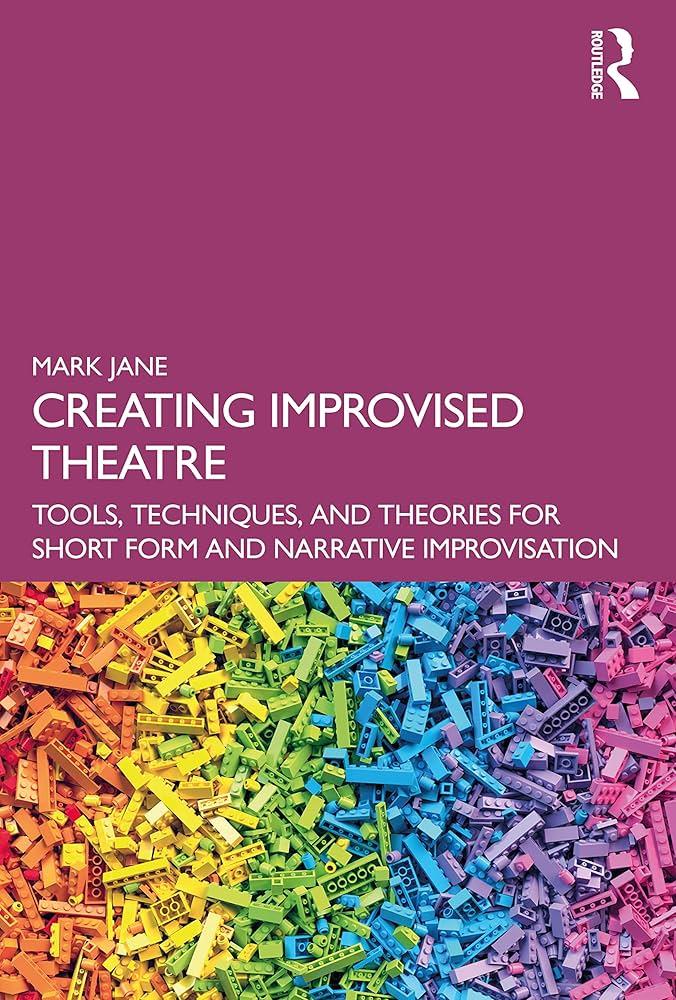
Creating Improvised Theatre
Tools, Techniques, and Theories
Mark Jane

The Improv Handbook
The Ultimate Guide to Improvising in Comedy, Theatre, and Beyond
Tom Salinsky; Deborah Frances-White

Acting Through Improv
Improv Through Theatresports
Lynda Belt; Rebecca Stockley

Improvised Theatre and the Autism Spectrum
A Practical Guide
Gary Kramer; Richie Ploesch
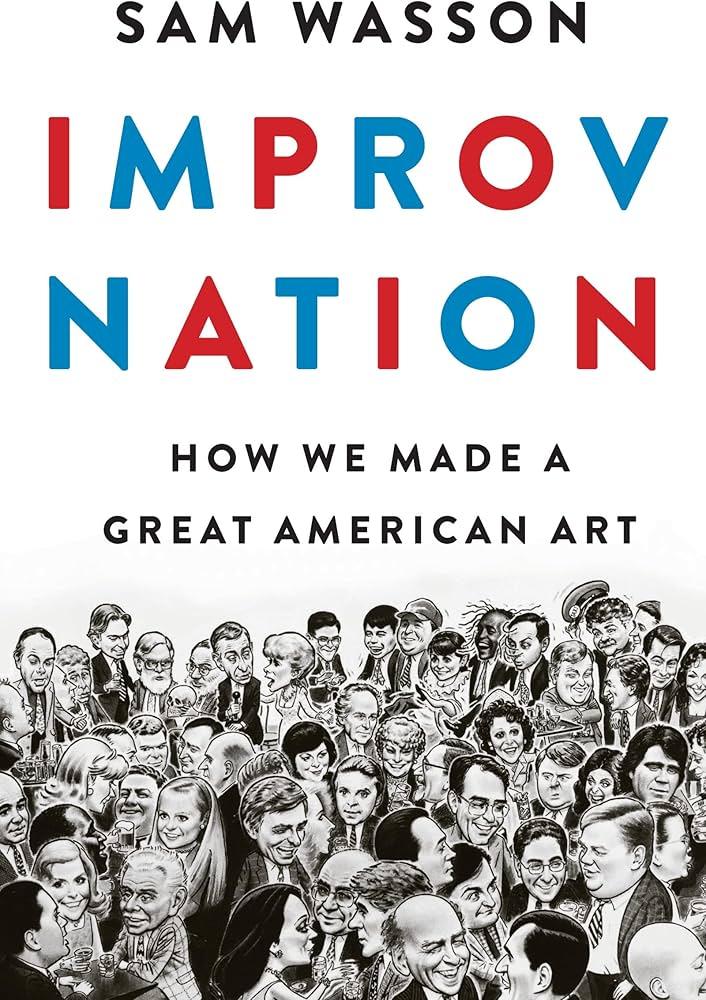
Improv Nation
How We Made a Great American Art
Sam Wasson

The Ultimate Improv Book
A Complete Guide to Comedy Improvisation
Edward J. Nevraumont; Kurt Smeaton; Nicholas P. Hanson
Related Exercises
Cocktail Party
Cocktail Party is a multi-scene ensemble exercise and game in which several pairs of performers simultaneously engage in separate conversations at an imagined social gathering. The overlapping dialogues create a rich, layered environment in which performers must maintain their own character and scene while tracking the conversations happening around them. As connections emerge between the separate conversations, performers weave themes, characters, and references across the pairs. The game trains ensemble awareness, the ability to sustain a character in the background, and the skill of recognizing shared themes and patterns across simultaneous scenes. As described in Truth in Comedy, the Cocktail Party allows performers to explore the value of connections in improvisation.
What Are You Doing
What Are You Doing is a circle or pair game in which one player performs a physical activity while another player asks what they are doing. The performer names a completely different action, which the asking player then performs. The disconnect between the stated action and the performed action trains free association, spontaneity, and the separation of verbal and physical channels. The game is a standard warm-up across improv, educational, and applied contexts.
Character / Scene Walkabout
Character/Scene Walkabout is an exercise in which performers walk through the space and, on a signal, immediately enter a scene with whoever is nearest. The random pairing and instant commitment prevent over-planning. The exercise builds comfort with initiating scenes with any partner and develops quick character choices.
Scene Carousel
Scene Carousel is an exercise in which multiple pairs or small groups perform short scenes simultaneously, then rotate to new partners or receive new prompts. The rapid cycling prevents overthinking and builds comfort with quick scene initiations. The format allows a large group to get substantial stage time in a compressed period.
Alliances
Alliances is a spatial awareness exercise in which each player secretly selects one person in the group as their ally and another as their enemy, then moves through the space trying to keep the ally positioned between themselves and the enemy at all times. No one announces their choices, so the resulting group movement becomes complex, organic, and unpredictable as every participant simultaneously pursues their own spatial objective. The exercise produces a constantly shifting formation that resembles flocking behavior, with sudden accelerations, direction changes, and clusters forming and dissolving. Alliances develops spatial awareness, peripheral vision, and the ability to read and respond to group movement patterns without verbal communication. It also demonstrates how simple individual rules can generate complex group behavior, a principle that applies directly to ensemble scene work.
How to Reference This Page
The Improv Archive. (2026). Donut. Retrieved March 17, 2026, from https://improvarchive.org/exercises/donut
The Improv Archive. "Donut." The Improv Archive, 2026. https://improvarchive.org/exercises/donut.
The Improv Archive. "Donut." The Improv Archive, 2026, https://improvarchive.org/exercises/donut. Accessed March 17, 2026.
The Improv Archive is a systemically maintained repository. The archive itself acts as the corporate author.