Emotional Endowment
Emotional Endowment is an applied improv exercise in which partners endow each other with an emotional state or characteristic that the other must accept and embody. One player assigns an emotional reality to their partner -- "You are devastated," "You are secretly thrilled" -- and the partner must accept that endowment fully without negotiating, correcting, or breaking the offer. The exercise develops awareness of emotional offers, the practice of acceptance, and the difference between explaining an emotion and inhabiting it.
Structure
Setup
Participants work in pairs. Partners face each other. No special space requirement.
Progression
Partner A looks at Partner B and makes an emotional endowment: a clear statement of what emotional state they believe Partner B is in or should be in. The endowment is offered as an observation or invitation: "You look like you just received wonderful news," or "Something is worrying you right now."
Partner B accepts the endowment immediately and allows it to transform their physical and vocal behavior. They do not explain, correct, or acknowledge the endowment as an instruction -- they simply inhabit it.
Partners then interact briefly -- one to two minutes -- in the scene that emerges from the endowment. At a signal from the facilitator, partners swap roles: Partner B endows Partner A with an emotional state, and the cycle repeats.
Conclusion
The exercise runs through several endowment pairs. The facilitator closes with a debrief focused on what it felt like to accept an emotional offer without resisting it.
How to Teach It
Objectives
Emotional Endowment develops the accepting and building reflex for emotional offers, builds sensitivity to the emotional states others project onto us, and trains the ability to shift into an assigned emotional state rapidly and fully.
How to Explain It
"Your partner is going to tell you how you're feeling. Accept it completely -- not as a costume, but as a reality. And then respond from there."
Scaffolding
Begin with strong, legible emotions before introducing ambiguous or complex states. Early endowments should be emotionally clear so that partners can practice full acceptance before being asked to interpret nuanced offers.
Common Pitfalls
Partners sometimes resist endowments that feel emotionally incongruent with how they already feel. The coaching note is that acceptance in this exercise is the skill -- the feeling of being told how you feel, when you feel different, is exactly the condition the exercise is preparing participants to handle. Receiving an emotional endowment without argument is a real-world skill, not just a game rule.
In Applied Settings
Learning Objectives
In applied settings, Emotional Endowment addresses the way emotional attributions circulate in professional relationships. Colleagues and leaders constantly project emotional states onto each other: "You seem frustrated," "You're clearly not invested in this," "You look worried." These attributions are a form of endowment -- and how participants respond to them, either accepting and exploring or resisting and correcting, has significant consequences for communication and trust. The exercise gives participants experience with both sides of this dynamic.
Workplace Transfer
The transfer to workplace communication is direct. Leaders who learn to endow generously -- to name positive or constructive emotional states in colleagues rather than negative attributions -- shift the emotional culture of their teams. Participants who practice receiving endowments without defensiveness develop greater emotional flexibility and reduce the friction that comes from contested emotional attributions. Both skills contribute to psychological safety and honest communication.
Facilitation Context
Emotional Endowment is used in emotional intelligence programs, leadership development, and interpersonal communication training. It is appropriate for groups working in pairs, making it scalable to any group size. The exercise is most effective midway through a program, after participants have developed basic acceptance habits through simpler improv exercises.
Debrief Framing
Ask participants: "What was it like to accept an emotional offer that was given to you? When did you want to resist it? When in your real work do people project emotional states onto you -- and how do you typically respond?"
Skills Developed
Worth Reading
See all books →
Group Improvisation
The Manual of Ensemble Improv Games
Peter Campbell Gwinn; Charna Halpern

Improvised Theatre and the Autism Spectrum
A Practical Guide
Gary Kramer; Richie Ploesch

Improv Ideas
A Book of Games and Lists
Mary Ann Kelley; Justine Jones

Improvising Real Life
Personal Story in Playback Theatre
Jo Salas
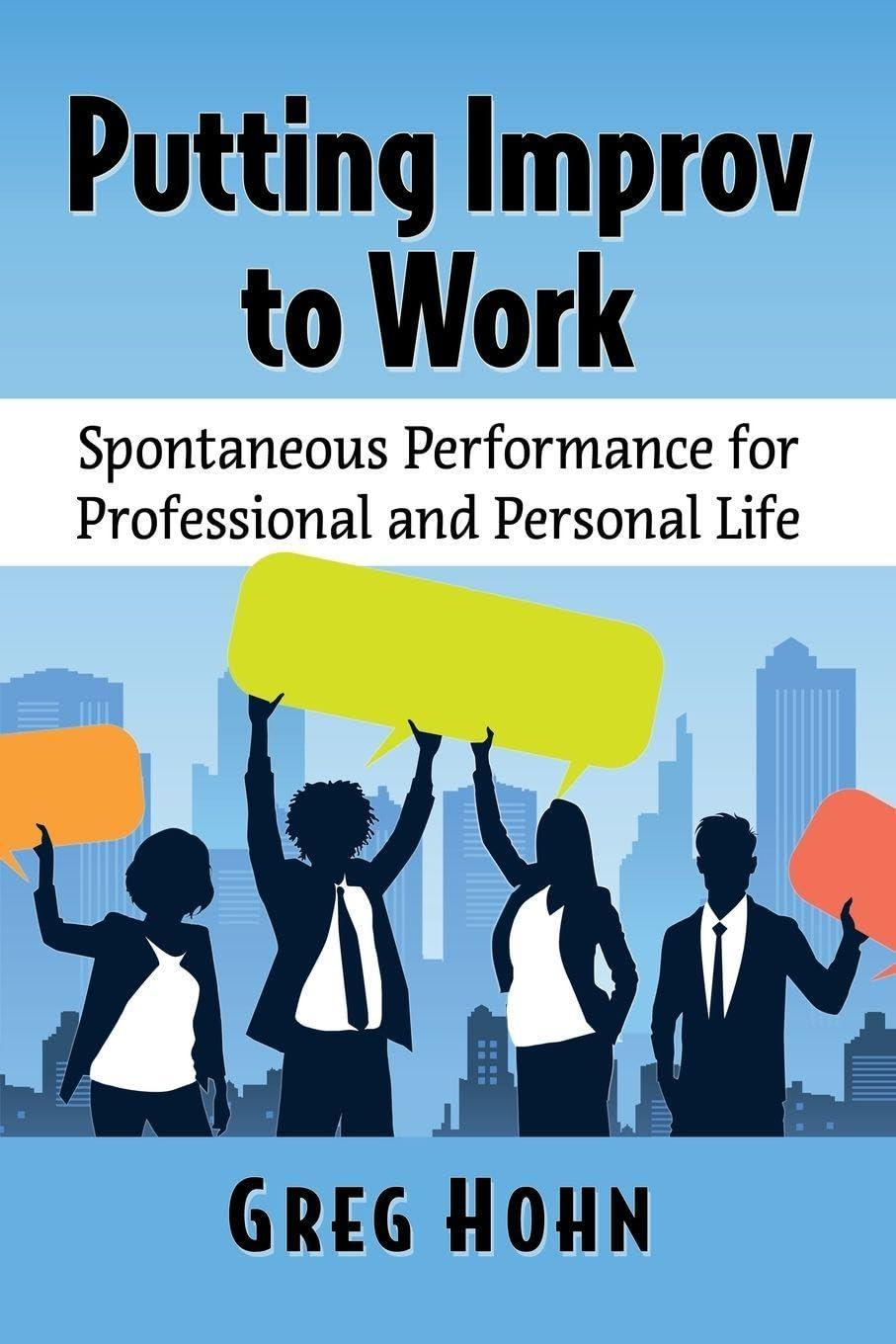
Putting Improv to Work
Spontaneous Performance for Leadership, Learning, and Life
Greg Hohn

Mask Improvisation for Actor Training and Performance
the compelling image
Sears A. Eldredge
Related Exercises
Self-Awareness: Identify Emotions
Exercises for recognizing and naming one's own emotional states in real time, a foundation of emotional intelligence.
What I Like about That
Participants respond to each other's offers by stating what they like about them before adding their own contribution. Trains positive framing and genuine acceptance.
I Like You Because/I Love You Because
I Like You Because/I Love You Because is a connection exercise in which players take turns expressing genuine appreciation for specific qualities in their partners. The exercise builds trust, vulnerability, and ensemble warmth. It works best when participants move beyond surface compliments to specific, observed qualities.
Emotional Mirror
Emotional Mirror is a mirroring exercise focused on emotional states rather than physical movement. One player establishes an emotion through face, body, and vocal tone; the partner mirrors not the specific gestures but the underlying feeling. The exercise trains emotional empathy and the ability to read and reflect a partner's inner state.
Upside-Down Introductions
Participants introduce their partner to the group based on what they learned, flipping the typical self-introduction format. Builds active listening and empathy.
The Good, the Bad and the Ugly
Everyone shares something positive, something that did not go well, and something challenging. Creates psychological safety and normalizes honest sharing.
How to Reference This Page
The Improv Archive. (2026). Emotional Endowment. Retrieved March 17, 2026, from https://improvarchive.org/exercises/emotional-endowment
The Improv Archive. "Emotional Endowment." The Improv Archive, 2026. https://improvarchive.org/exercises/emotional-endowment.
The Improv Archive. "Emotional Endowment." The Improv Archive, 2026, https://improvarchive.org/exercises/emotional-endowment. Accessed March 17, 2026.
The Improv Archive is a systemically maintained repository. The archive itself acts as the corporate author.