Finger Applause
Finger Applause is a silent appreciation exercise in which players wave their fingers in the air instead of clapping. The gesture produces a soft visual rustling rather than audible sound, making it suitable for quiet acknowledgment in settings where noise is undesirable, where diverse access needs exist, or where the group wishes to express appreciation without the competitive or hierarchical dynamic that conventional applause can carry. In improv contexts the exercise is also used to develop sensitivity to non-verbal group signals.
Structure
Setup
No special arrangement is required. Participants must be visible to each other.
Progression
The facilitator demonstrates: both hands raised at approximately chest height, fingers spread wide, wrists rotating gently so the fingers ripple through the air. The gesture is performed simultaneously by all participants when appreciation is warranted.
Finger Applause can be used at any point in a session where conventional clapping would be used: after a scene, after a contribution, at the end of an exercise. The facilitator may also use it as a check-in tool, asking the group to express their level of engagement or agreement through the intensity of their finger applause.
Conclusion
The exercise has no fixed close -- it becomes a running convention of the room that the facilitator and participants adopt for the duration of the session.
How to Teach It
Objectives
Finger Applause establishes a non-verbal appreciation convention that equalizes acknowledgment across different types of contributions. It also normalizes non-standard communication forms and creates a moment of group synchrony through a shared, unusual gesture.
How to Explain It
"Instead of clapping, we do this. Fingers up, wiggle. That's appreciation in this room."
Scaffolding
No scaffolding is needed. The gesture is simple and self-demonstrating. The facilitator introduces it by doing it and naming it once.
Common Pitfalls
Some groups treat Finger Applause as too whimsical to sustain and abandon it after a few rounds. The facilitator's consistent use of it -- and gentle invitation to others to use it as well -- maintains it as a room convention rather than a one-off novelty.
Worth Reading
See all books →
Business Improv
Experiential Learning Exercises to Train Employees
Val Gee

Group Improvisation
The Manual of Ensemble Improv Games
Peter Campbell Gwinn; Charna Halpern

Improv Ideas
A Book of Games and Lists
Mary Ann Kelley; Justine Jones
Theater Games for Rehearsal
Viola Spolin
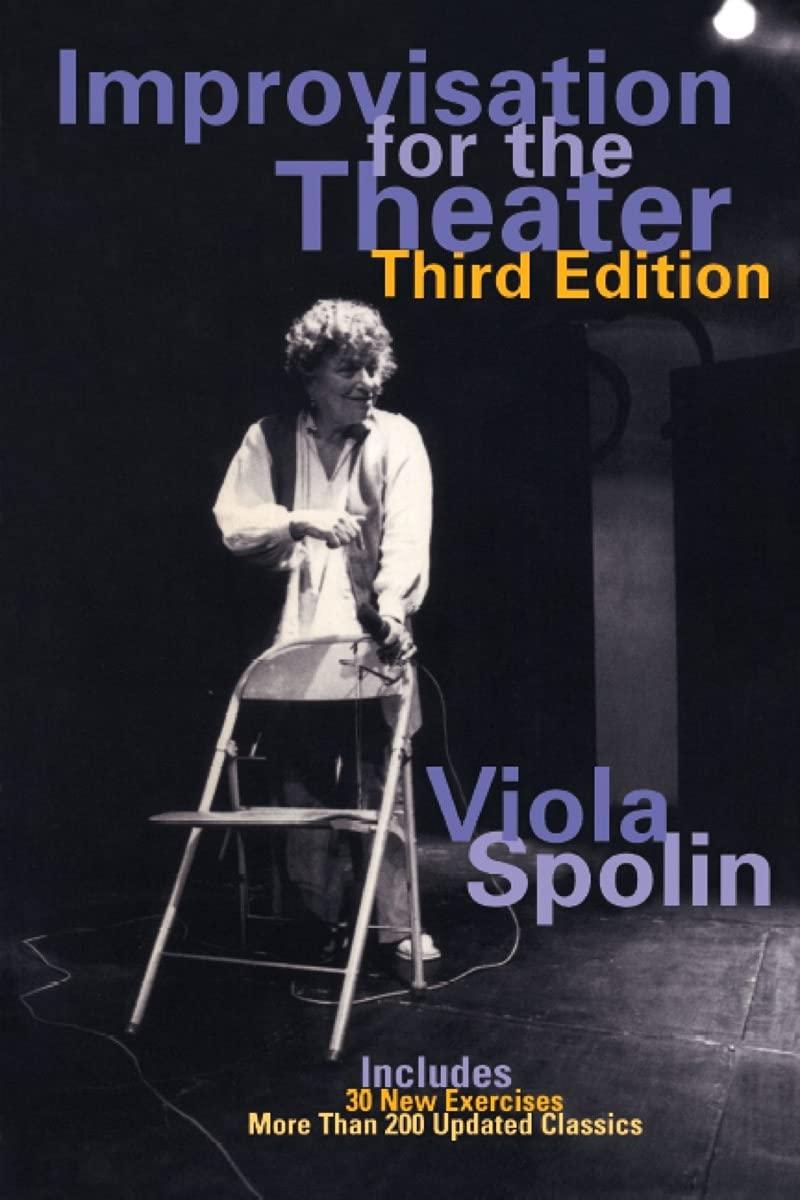
Improvisation for the Theater
A Handbook of Teaching and Directing Techniques
Viola Spolin

Improvised Theatre and the Autism Spectrum
A Practical Guide
Gary Kramer; Richie Ploesch
Related Exercises
Clap Out
Clap Out is an elimination exercise in which the group attempts to clap in unison on an unspoken cue. When two or more players clap at the same moment, they are safe; anyone who claps alone is out. The exercise develops sensitivity to group rhythm and the ability to read collective impulse without verbal coordination.
Name and Applause
Name and Applause is a group introductory exercise in which each participant states their name and receives a full round of applause from the group. The exercise creates an immediate experience of being seen and celebrated, lowers self-consciousness in new groups, and establishes a culture of generous acknowledgment from the first minutes of a rehearsal or workshop.
Clap Focus
Clap Focus is an exercise in which players pass focus around a circle by clapping in unison with a partner across the circle. Eye contact establishes the connection before the synchronized clap transfers energy. The exercise trains the ability to give and receive focus clearly and decisively.
Bong Bong Bong
Bong Bong Bong is a rhythm and focus exercise in which players pass energy around a circle using the words "Bong," with specific gestures indicating direction changes or skips. The exercise demands sustained concentration and punishes hesitation or incorrect gestures. It is commonly used as a warm-up to sharpen group focus before scene work.
Synchro Clap
Synchro Clap is a focus exercise in which players attempt to clap simultaneously without any verbal countdown or signal. The group must sense the collective impulse and act as one. The exercise trains nonverbal group awareness and the ability to feel and follow shared rhythm.
Friendly Hands
Friendly Hands is a trust and connection exercise in which players reach out to shake hands or make physical contact with as many people as possible in a short time. The exercise breaks the physical barrier between participants and establishes a baseline of comfortable touch. It warms up the group's willingness to engage physically.
How to Reference This Page
The Improv Archive. (2026). Finger Applause. Retrieved March 17, 2026, from https://improvarchive.org/exercises/finger-applause
The Improv Archive. "Finger Applause." The Improv Archive, 2026. https://improvarchive.org/exercises/finger-applause.
The Improv Archive. "Finger Applause." The Improv Archive, 2026, https://improvarchive.org/exercises/finger-applause. Accessed March 17, 2026.
The Improv Archive is a systemically maintained repository. The archive itself acts as the corporate author.