Honey Walk
Honey Walk is a physicality exercise in which players imagine they are walking through a thick, viscous substance like honey or wet sand. The resistance slows movement, demands physical commitment, and makes visible the relationship between physical tension, weight, and effort. The exercise develops sustained physical attention, full-body engagement, and the capacity to physicalize an imagined environment with enough specificity that it becomes visible to observers.
Structure
Setup
Players stand in open space and begin walking normally. The facilitator introduces the imagined substance: honey, wet cement, water, or any thick, resistant medium.
The Walk
Players slow their walking to match the implied resistance of the substance. Each step must be physically earned: the body leans into the movement, lifts the feet with effort, and moves through the imagined thickness. The face, arms, and torso participate in the resistance -- not just the legs.
Escalation
The facilitator can increase the resistance (thicker honey, deeper cement) or shift the substance type to create different physical qualities. Players might reach for something across the room, turn to look at someone, or gesture -- all under the same physical constraint.
Variation
The substance can change: from honey to air (light and buoyant), from honey to ice (slippery, careful), from honey to quicksand (increasing urgency as the resistance intensifies). Each shift creates a new physical world.
Conclusion
The exercise ends when the facilitator returns the group to neutral walking and invites a moment of noticing what the body feels like after sustained physical imagination.
How to Teach It
Objectives
Honey Walk develops full-body physical commitment, the ability to physicalize an imagined environment with specificity, and the awareness of how physical state shapes presence and movement quality.
How to Explain It
"You're walking through honey. Real honey -- thick, heavy, resistant. Every step takes effort. Let your whole body feel it. Not just your legs -- your arms, your face, your breath. Walk through something real."
Scaffolding
Begin with a substance players can easily imagine and that has a clear, consistent physical quality. Honey or water are the most accessible. Once players have found the full-body quality of one substance, variations with different resistance types can broaden the exercise's range.
Common Pitfalls
Players sometimes produce slow walking without the physical specificity of actual resistance -- moving at honey speed but without honey effort. The coaching note is that the imagined substance should be physically real: if the honey is real, it takes real effort to move through it. Observers can usually tell the difference between performed slowness and genuine physical imagination.
Worth Reading
See all books →
Business Improv
Experiential Learning Exercises to Train Employees
Val Gee

Action Theater
The Improvisation of Presence
Ruth Zaporah

Group Improvisation
The Manual of Ensemble Improv Games
Peter Campbell Gwinn; Charna Halpern

Improvised Theatre and the Autism Spectrum
A Practical Guide
Gary Kramer; Richie Ploesch

The Improv Illusionist
Using Object Work, Environment, and Physicality in Performance
David Raitt
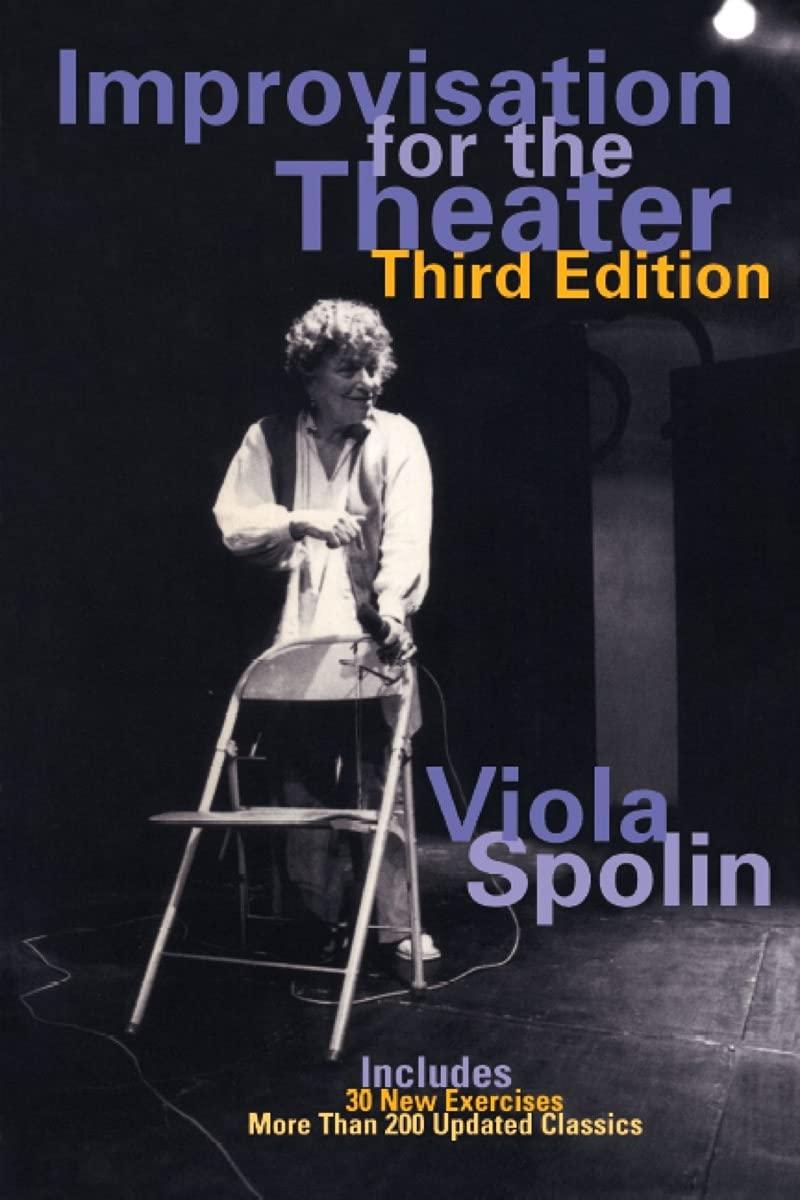
Improvisation for the Theater
A Handbook of Teaching and Directing Techniques
Viola Spolin
Related Exercises
Obstacle Course
Obstacle Course is a physical exercise in which players navigate a real or imagined series of obstacles using their bodies expressively. The exercise may be used to build physical confidence, practice environment work, or warm up the body before performance. It trains spatial awareness and encourages bold physical choices.
King Lizard
King Lizard is a physical status and transformation exercise in which participants alternate between embodying two extreme physical archetypes -- the king, characterized by elevated posture, expanded presence, and unhurried ease, and the lizard, characterized by a low center of gravity, darting speed, and close-to-the-ground alertness. The exercise uses the contrast between these two physical states to develop performers' range of physicalized status and presence.
Commando
Commando is a high-energy physical game in which players navigate an imagined obstacle course or battlefield, reacting to called-out hazards and commands. The exercise demands full physical commitment and rapid shifts between actions. It raises group energy and breaks down self-consciousness through shared physical absurdity.
Complete Bodies
Complete Bodies is a physicality exercise in which players practice using their entire body to communicate rather than relying primarily on face and hands. The exercise challenges performers to express emotional states, status, and character through the spine, torso, hips, and legs as well as through their more habitual expressive channels. It builds physical range and presence for scene work and performance.
Slappy Face
Slappy Face is a physical warm-up game in which players gently tap their own faces and bodies to wake up their physical awareness, often followed by partner exercises involving light, controlled contact. The exercise raises tactile sensitivity and alertness. It is a quick way to bring performers into their bodies at the start of a session.
Passing Around Objects
Passing Around Objects is an exercise in which players pass imaginary objects around a circle, maintaining the physical properties of each item as it moves from hand to hand. Players must handle the same invisible object consistently, honoring its established weight, size, and fragility. The exercise builds shared physical reality and attention to detail.
How to Reference This Page
The Improv Archive. (2026). Honey Walk. Retrieved March 17, 2026, from https://improvarchive.org/exercises/honey-walk
The Improv Archive. "Honey Walk." The Improv Archive, 2026. https://improvarchive.org/exercises/honey-walk.
The Improv Archive. "Honey Walk." The Improv Archive, 2026, https://improvarchive.org/exercises/honey-walk. Accessed March 17, 2026.
The Improv Archive is a systemically maintained repository. The archive itself acts as the corporate author.