Leadership
Leadership is an applied improv exercise that uses structured group movement and voluntary leader emergence to explore how leadership authority is claimed, transferred, and recognized within a group. Participants move through the space or perform actions in which any member of the group may step into a leadership role at any moment, and the group must recognize and follow the shift without verbal announcement. The exercise surfaces the dynamics of organizational leadership through an embodied, real-time demonstration.
Structure
Setup
Participants stand and move freely through the space, or sit in a configuration where movement and initiation are equally accessible to all members.
Progression
The group begins moving together without a designated leader. Any participant may take a leadership action -- a direction change, a gesture, a sound, a pace change -- and the group must recognize and follow it. Leadership shifts organically when another participant initiates a new direction and the group follows the new lead.
There is no announcement of who is leading. Leadership is determined entirely by who initiates and whether the group follows. The facilitator may debrief periodically to name what just happened before returning to the exercise.
Conclusion
The exercise concludes after multiple leadership cycles. The facilitator closes with a structured debrief that connects the observed leadership dynamics to workplace or organizational patterns.
How to Teach It
Objectives
The Leadership exercise targets the dynamics of authority, followership, and group responsiveness in real time. It reveals how leadership is claimed and yielded, how groups decide which initiatives to follow, and what signals distinguish a genuine leadership act from a gesture that goes unacknowledged.
How to Explain It
"There is no assigned leader. Anyone can lead at any moment. Leadership is not announced -- it is claimed by initiating and recognized by the group following. The group decides whether to follow. Watch for when leadership shifts and what made the shift happen."
Scaffolding
Begin with physical movement in the space before introducing verbal or vocal leadership initiatives. For groups unfamiliar with unstructured leadership exercises, the facilitator may seed early leadership moments by briefly stepping in before withdrawing.
Common Pitfalls
Groups sometimes default to a single dominant leader and remain there, avoiding the leadership transitions the exercise is designed to generate. Coach the group explicitly to allow leadership to move and to experiment with claiming it even when someone else currently appears to be leading.
In Applied Settings
Learning Objectives
The Leadership exercise trains participants to notice how authority is established, transferred, and recognized in real-time group behavior. It makes visible the difference between formal leadership (assigned role) and functional leadership (whose initiative the group actually follows), a distinction that is often collapsed in organizational settings but operates simultaneously and sometimes in opposition.
Workplace Transfer
In organizations, authority is frequently assigned by title but exercised through initiative and followership -- the group's willingness to follow a given action. When formal and functional authority diverge, confusion about whose direction to follow creates friction in meetings, project teams, and cross-functional collaborations. The Leadership exercise replicates this dynamic without hierarchy: participants experience both the act of claiming leadership and the experience of choosing whether to follow someone who has. The debrief connects these embodied experiences to named organizational patterns.
Facilitation Context
The exercise is used in leadership development programs, team-building workshops, management training, and organizational culture sessions where authority, initiative, and followership are primary themes. It works well with intact teams, leadership cohorts, and cross-functional groups of eight to twenty participants. It is particularly effective when preceded by a discussion of the gap between formal organizational authority and the informal authority that teams actually operate on.
Debrief Framing
After the exercise, ask: Who led at which moments? How did you know that leadership had shifted? What made you decide to follow a particular initiative and not others? When did you want to lead but did not initiate? Where in your organization do the same dynamics appear -- between formal authority and the leadership the group actually follows? The debrief should connect the group's observed behavior to specific organizational patterns they recognize from their own teams.
Skills Developed
Worth Reading
See all books →
Improv Leadership
How to Lead Well in Every Moment
Stan Endicott; David A. Miller; Cory Hartman

When I Say This, Do You Mean That?
Enhancing Communication
Cherie Kerr; Julia Sweeney

Business Improv
Experiential Learning Exercises to Train Employees
Val Gee

Action Theater
The Improvisation of Presence
Ruth Zaporah
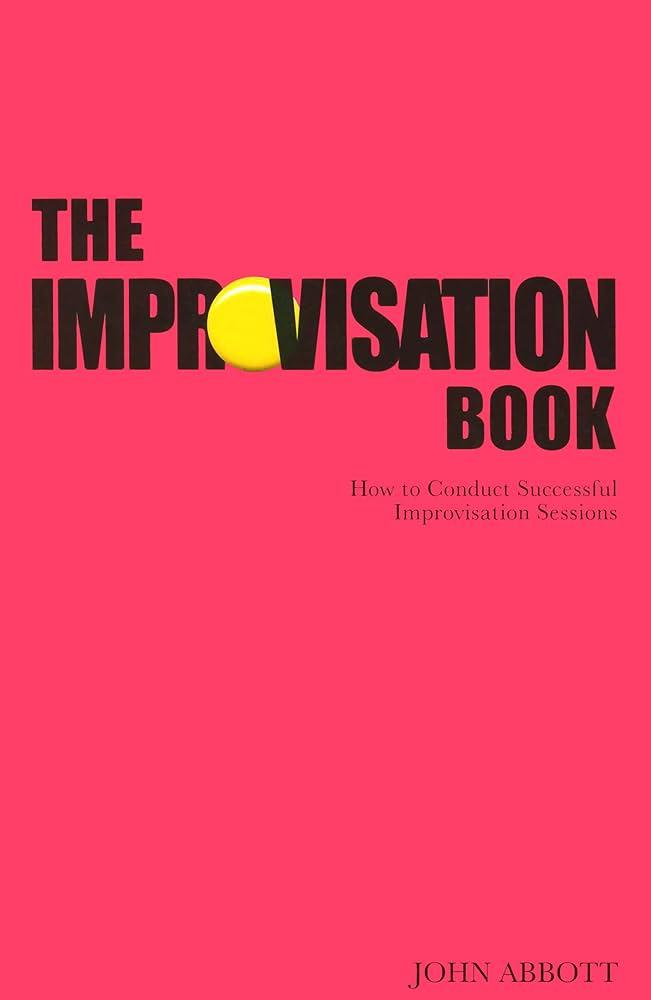
The Improvisation Book
How to Conduct Successful Improvisation Sessions
John S.C. Abbott

Improv to Improve Your Leadership Team
Tear down Walls and Build Bridges
Candy Campbell
Related Exercises
Move and Speak
Move and Speak is an exercise exploring the relationship between physical movement and dialogue. Players alternate between moving without speaking and speaking without moving, learning to separate and then integrate the two channels. The exercise reveals how movement informs vocal delivery and helps performers make more deliberate choices about when to let their bodies lead.
Follow the Leader
Follow the Leader is a classic exercise in which one player leads the group through a series of movements that everyone copies. The exercise builds observation skills and comfort with matching another player's energy and style. It can be extended by having the leader change without announcement, forcing the group to identify the new source of movement.
Run Around
Run Around is a physical warm-up exercise in which players move through the space and respond to commands called by the facilitator. The exercise builds spatial awareness, group attentiveness, and physical readiness by requiring participants to shift direction, speed, or movement quality on cue.
Turkish Army Drill
Turkish Army Drill is an energetic warm-up exercise in which a leader barks out commands and the group responds with synchronized physical actions and vocal responses at increasing speed. The military-style format builds group discipline, responsiveness, and collective energy. The exercise is effective at focusing scattered group attention quickly.
Zulu
Zulu (1) is an energetic warm-up exercise in which players perform a series of synchronized group movements and chants, building collective rhythm and physical energy. The call-and-response format creates strong group cohesion and raises the energy level quickly. The exercise is commonly used as a pre-show warm-up to unite the ensemble.
Copycat
Copycat is a mirroring exercise in which one player leads and a partner copies every movement, facial expression, and sound as closely as possible. As the exercise progresses, the distinction between leader and follower blurs until both move as one. The exercise develops physical sensitivity and the foundational skill of following a partner's impulses.
How to Reference This Page
The Improv Archive. (2026). Leadership. Retrieved March 17, 2026, from https://improvarchive.org/exercises/leadership
The Improv Archive. "Leadership." The Improv Archive, 2026. https://improvarchive.org/exercises/leadership.
The Improv Archive. "Leadership." The Improv Archive, 2026, https://improvarchive.org/exercises/leadership. Accessed March 17, 2026.
The Improv Archive is a systemically maintained repository. The archive itself acts as the corporate author.