Limericks
Limericks is an applied improv exercise in which participants compose and perform spontaneous limericks -- five-line poems with an AABBA rhyme scheme -- individually or collaboratively in real time. The exercise trains verbal rhythm, rhyme under pressure, and the ability to build a structured comedic form spontaneously from a prompt. It is used in applied improv to develop creative confidence, verbal fluency, and the willingness to commit to a comedic form under time and social pressure.
Structure
Setup
Participants stand in a circle or sit in groups. The facilitator reviews the structure of a limerick: five lines, rhyme scheme AABBA, with a specific rhythmic pattern (da-DUM-da-da-DUM in lines one, two, and five; da-DUM-da-da-DUM in lines three and four). A model example is provided.
Progression
The facilitator offers a prompt -- a person's name, a place, a profession -- and a participant attempts to compose a limerick on the spot. In collaborative versions, the group builds the limerick one line at a time, each participant contributing the next line.
The exercise moves quickly: participants are encouraged to commit to the structure even when the rhyme is imperfect or the meter is loose. Speed and commitment are prioritized over technical perfection.
Conclusion
The exercise concludes after multiple limericks have been completed by a range of participants. The facilitator may close with a group limerick that synthesizes the session's themes or names.
How to Teach It
Objectives
Limericks trains verbal spontaneity within a structured form, the tolerance for imperfect execution under time pressure, and the comedic confidence to commit to a punch line even when the path to it is not yet clear.
How to Explain It
"There was a (noun) from (place) / Who (rhymes with place). / They (something) / And (something shorter) / And (rhymes with the first line). Don't overthink it -- get line one and the last word of line two, and the rest will follow. Go."
Scaffolding
Begin with collaborative group limericks before asking individuals to complete them alone. For groups very unfamiliar with the form, practice the AABBA rhyme pattern separately from the content before combining.
Common Pitfalls
Participants often stall at the junction between line two and line three because they are searching for a perfect rhyme rather than committing to any serviceable one. Coach the group that an imperfect limerick delivered with commitment is more effective than a perfect one begun but not finished.
In Applied Settings
Learning Objectives
Limericks trains creative confidence under constraint, verbal dexterity, and the willingness to commit to a structured form even when the path is uncertain. The exercise develops the tolerance for imperfect execution that underlies creative risk-taking -- the ability to produce something concrete and deliverable rather than refining toward a standard that may never be reached under time pressure.
Workplace Transfer
In organizational settings, creative tasks frequently require producing something specific and useful within a time or format constraint. The Limericks exercise replicates this condition in miniature: participants must produce a complete, structured artifact under mild time and social pressure, committing to a direction before knowing exactly how it will resolve. The skill being trained is not rhyming -- it is the ability to work within a form, commit to a direction, and complete the task even when it is imperfect. This transfers directly to brainstorming, pitching, presenting, and any context where producing a concrete output on demand is more valuable than indefinite refinement.
Facilitation Context
Limericks is used in creativity workshops, team-building programs, communication skills training, and ideation sessions as a playful, low-stakes entry point into structured creative work. It works well as a warm-up preceding sessions that require participants to generate and commit to ideas quickly. Groups of any size can participate; the exercise works in pairs, small groups, or full circles.
Debrief Framing
After the exercise, ask: What made it difficult to commit to the first line? What happened to the quality of the limerick when you stopped trying to make it perfect? Where in your work do you experience the same pressure to produce something before you feel ready? How does the experience of completing an imperfect limerick connect to how you handle creative tasks or presentations that require a commitment before all the pieces are in place?
Skills Developed
Worth Reading
See all books →
Group Improvisation
The Manual of Ensemble Improv Games
Peter Campbell Gwinn; Charna Halpern

Devising Theatre
A Practical and Theoretical Handbook
Alison Oddey

Devising Performance
A Critical History
Deirdre Heddon; Jane Milling
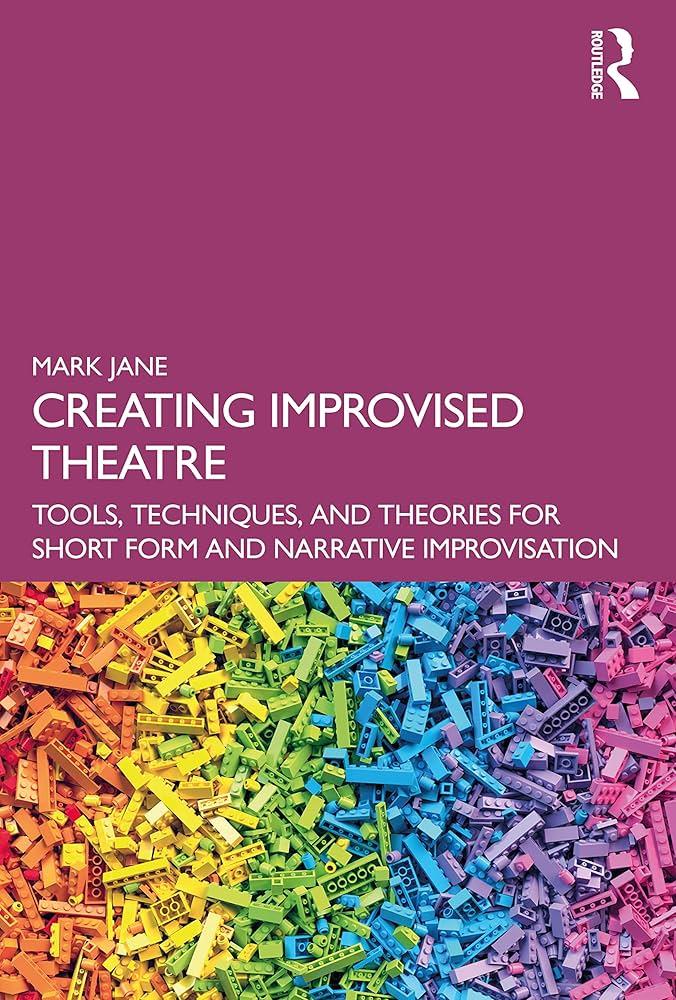
Creating Improvised Theatre
Tools, Techniques, and Theories
Mark Jane

Long Form Improvisation and American Comedy
The Harold
Matt Fotis

Embodied Playwriting
Improv and Acting Exercises for Writing
Hillary Haft Bucs; Charissa Menefee
Related Exercises
You Are Creative
In groups of three, participants take turns speaking Gibberish, English, and translating between the two, discovering their inherent creativity.
Swedish Story
Participants collaboratively build a story in a circle, each adding a short segment. Encourages spontaneous storytelling and group listening.
Same Time Story
Same Time Story is a collaborative exercise in which two or more performers tell a story simultaneously, attempting to say the same words at the same time without prior planning. The exercise demands extreme listening and the willingness to follow collective impulses. It is a powerful demonstration of group mind when executed successfully.
Story String
Story String is a collaborative storytelling exercise in which each performer adds a sentence or beat to an evolving narrative, building on the previous contribution while advancing the plot. The exercise trains narrative listening and the discipline of serving the emerging story rather than redirecting it toward a personal idea.
Three Sentence Story
Three Sentence Story is a collaborative storytelling exercise in which each performer contributes exactly three sentences to a group story before passing to the next teller. The constraint creates a natural rhythm and forces players to advance the narrative efficiently with each turn. The exercise trains concise storytelling and narrative generosity.
How to Reference This Page
The Improv Archive. (2026). Limericks. Retrieved March 17, 2026, from https://improvarchive.org/exercises/limericks
The Improv Archive. "Limericks." The Improv Archive, 2026. https://improvarchive.org/exercises/limericks.
The Improv Archive. "Limericks." The Improv Archive, 2026, https://improvarchive.org/exercises/limericks. Accessed March 17, 2026.
The Improv Archive is a systemically maintained repository. The archive itself acts as the corporate author.