Maintain Focus
Maintain Focus is an applied improv exercise that trains the ability to sustain attention on a single task, conversation, or partner over an extended period despite the presence of distractions -- internal or external -- that would normally pull attention away. The exercise develops the deliberate practice of returning attention to a chosen focus point whenever it drifts, building the cognitive discipline of sustained concentration in group and collaborative settings.
Structure
Setup
Participants work in pairs or as a full group. The facilitator introduces the exercise and names the specific focus object: a partner's eyes, a single point on the wall, a physical sensation, or the content of a partner's speech.
Progression
Participants attend to the designated focus object for a set duration. The facilitator may introduce deliberate distractions -- background noise, movement at the periphery, other participants moving through the space -- that the participant must notice and consciously set aside in favor of the designated focus.
After each timed interval, the facilitator briefly invites participants to name where their attention went when it drifted, before returning to the focus task.
Conclusion
The exercise concludes after multiple intervals, with a group debrief on the experience of distraction, the pull of various attention competitors, and the practice of returning to focus.
How to Teach It
Objectives
Maintain Focus trains deliberate attention management -- the ability to notice when focus has drifted and to return it to a chosen object without judgment or delay. It develops the concentration baseline required for extended partner listening, scene work, and any group task that requires sustained engagement over time.
How to Explain It
"Your job is simple: keep your attention on [focus object]. When it moves -- and it will -- notice that it moved and bring it back. You're not failing when your attention drifts. You're practicing when you bring it back."
Scaffolding
Begin with shorter intervals and a simple, concrete focus object before extending duration and introducing more complex or abstract focus tasks. The early rounds should make success accessible; difficulty can be introduced gradually through duration, distraction, or the complexity of the focus task.
Common Pitfalls
Participants often judge themselves harshly for attention drift rather than simply returning to the focus. The exercise is not about maintaining perfect focus but about practicing the return. Coach the group to treat each return to focus as the exercise's success condition rather than the drift as its failure condition.
In Applied Settings
Learning Objectives
Maintain Focus develops the deliberate attention management skill of sustaining concentration on a chosen focus despite the constant availability of attention competitors -- notifications, other conversations, internal planning, and environmental distraction. The exercise trains the specific capacity to notice distraction and return to focus intentionally, a skill that underlies effective meeting participation, sustained listening, and quality engagement in collaborative settings.
Workplace Transfer
Contemporary professional environments are structured around continuous partial attention -- the sustained availability of attention across multiple channels simultaneously. This pattern produces shallow engagement across many things rather than deep engagement with any one thing. Maintain Focus trains the alternative: the deliberate choice to attend fully to one person, task, or conversation, and the practice of recovering that attention when it is pulled away. The workplace applications are direct: listening in meetings without monitoring email, attending to a colleague's concern without mentally composing a response, sustaining engagement in a long conversation without checking the clock.
Facilitation Context
The exercise is used in focus and concentration training, leadership development programs, communication skills workshops, and any applied improv session where sustained attention quality is identified as a development area. It is particularly effective in organizations or roles characterized by high interruption rates, constant multi-tasking, or sustained information overload. Groups of any size can participate.
Debrief Framing
After the exercise, ask: Where did your attention go when it drifted? What pulled it? What did it feel like to bring it back? How long were you able to sustain focus before the first drift? Where in your work do you notice the same attention competitors -- and how often do you consciously choose to return to your focus rather than following the drift?
Skills Developed
Worth Reading
See all books →
Group Improvisation
The Manual of Ensemble Improv Games
Peter Campbell Gwinn; Charna Halpern

Pirate Robot Ninja
An Improv Fable
Billy Merritt; Will Hines

Improvised Theatre and the Autism Spectrum
A Practical Guide
Gary Kramer; Richie Ploesch

The Improv Illusionist
Using Object Work, Environment, and Physicality in Performance
David Raitt
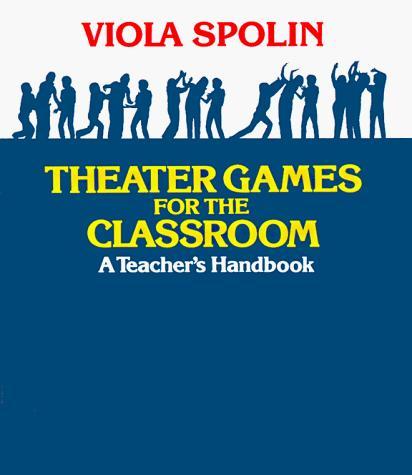
Theater Games for the Classroom
Viola Spolin

Business Improv
Experiential Learning Exercises to Train Employees
Val Gee
Related Exercises
Tossing
Tossing is a circle warm-up exercise in which players pass real or imaginary objects around the group with clear physical intention. Each exchange requires specific attention to the give and the receive: the sender must establish the object's weight, size, and nature before releasing it; the receiver must honor those physical qualities in the catch and carry. The exercise trains physical specificity, eye contact, ensemble attention, and the fundamental habit of truly giving something to a partner.
Bappety Boo
Bappety Boo is a focus and elimination exercise in which the person in the center of a circle points to someone and counts to a set number. The pointed-to player and their neighbors must complete an assigned physical task before the count finishes. Players who fail are eliminated or take the center. The game sharpens reaction time and group attention.
Pass Ball
Pass Ball is a circle warm-up exercise in which players toss a real or imaginary ball around the group while maintaining eye contact with the intended recipient. Additional balls may be introduced to increase complexity. The exercise builds focus, nonverbal communication, and the habit of making clear offers to specific partners.
Pass Catch
Pass Catch is a circle exercise in which players practice giving and receiving an imaginary object with clear physical intention. The passer must communicate the weight, size, and trajectory of the throw, and the catcher must honor those properties. The exercise develops object work precision and the habit of treating every offer as real.
Sign Pass
A circle game where participants pass focus and energy around the group through agreed-upon physical signals, building team connection and awareness of ensemble engagement.
Passing Around Objects
Passing Around Objects is an exercise in which players pass imaginary objects around a circle, maintaining the physical properties of each item as it moves from hand to hand. Players must handle the same invisible object consistently, honoring its established weight, size, and fragility. The exercise builds shared physical reality and attention to detail.
How to Reference This Page
The Improv Archive. (2026). Maintain Focus. Retrieved March 17, 2026, from https://improvarchive.org/exercises/maintain-focus
The Improv Archive. "Maintain Focus." The Improv Archive, 2026. https://improvarchive.org/exercises/maintain-focus.
The Improv Archive. "Maintain Focus." The Improv Archive, 2026, https://improvarchive.org/exercises/maintain-focus. Accessed March 17, 2026.
The Improv Archive is a systemically maintained repository. The archive itself acts as the corporate author.