Massage
Massage is a physical warm-up exercise in which players pair up or form a circle and give brief shoulder, neck, or back massages to release physical tension before a rehearsal or performance. The exercise builds physical trust within the ensemble, helps performers relax into their bodies, and establishes a baseline of comfortable physical contact that supports the physical scene work to follow. Massage is typically used as part of a larger warm-up sequence, often following high-energy exercises to bring the group's energy down to a focused, grounded state.
Structure
The group forms a circle facing the same direction, so each player stands behind another player's back. On the facilitator's signal, players begin giving a gentle shoulder and upper-back massage to the person in front of them.
The facilitator coaches the group through different techniques: kneading the shoulders, pressing along the spine with thumbs, tapping the upper back, squeezing the trapezius muscles. The massage is brief, running two to three minutes in each direction.
The facilitator calls for the group to turn and face the opposite direction, so each player now massages the person who was just massaging them. This reciprocity ensures everyone receives the same attention they gave.
Variations include paired massage (partners face away from each other and take turns), seated massage (performers sit while a partner works on their shoulders), and self-massage (performers use their own hands to release tension in their neck, jaw, and shoulders, guided by the facilitator).
The exercise concludes with a moment of stillness in which performers notice the difference in their physical state: released shoulders, softer jaw, more relaxed breathing.
The facilitator should offer alternatives for performers who prefer not to receive physical contact. Self-massage or stretching provides a parallel activity without requiring touch.
How to Teach It
How to Explain It
"Find a partner. You are going to give them a massage. This is not a warm-up: it is a trust exercise. Be present, be intentional, be appropriate. This person is letting you touch them. Treat that seriously."
Massage is valuable as a trust-building exercise because physical contact establishes a different kind of ensemble bond than verbal or performative exercises create. Groups that share physical care tend to perform with greater mutual support and willingness to take risks.
The exercise must be introduced with clear boundaries. The facilitator specifies the areas of the body that are appropriate for massage (shoulders, upper back, neck) and emphasizes that any performer can opt out or modify the exercise at any time. Consent is non-negotiable.
Coach for attentive, responsive touch rather than mechanical rubbing. A performer who notices their partner carrying tension in a specific area and adjusts their attention accordingly is practicing the same responsiveness that drives good scene work: noticing what a partner needs and providing it.
The exercise works best as a transition within a warm-up sequence. After high-energy physical games, massage brings the group's energy down to a focused, present state. After cognitive exercises, massage reconnects performers with their bodies. The exercise's placement in the warm-up determines its function.
Worth Reading
See all books →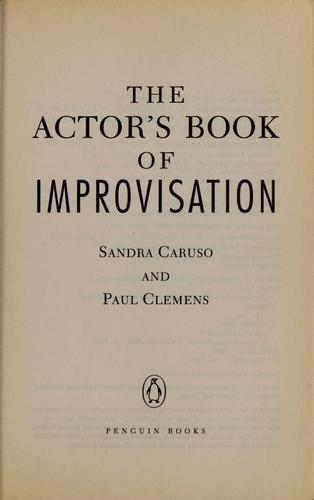
The Actor's Book of Improvisation
Sandra Caruso; Paul Clemens

Impro
Improvisation and the Theatre
Keith Johnstone

Something Wonderful Right Away
An Oral History of The Second City and The Compass Players
Jeffrey Sweet

Improvisations in Creative Drama
A Program of Workshops
Betty Keller

The Upright Citizens Brigade Comedy Improvisation Manual
Matt Besser; Ian Roberts; Matt Walsh

Improve
How I Discovered Improv Comedy and Conquered Social Anxiety
Alex Graudins
Related Exercises
Stretching
Stretching is a physical warm-up practice in which performers release tension and increase range of motion through guided or self-directed body movement before a rehearsal or performance. The practice grounds players in their bodies, signals the transition from everyday life into creative readiness, and reduces the risk of physical strain during exercises that involve movement, physicality, or sustained ensemble work.
Slappy Face
Slappy Face is a physical warm-up game in which players gently tap their own faces and bodies to wake up their physical awareness, often followed by partner exercises involving light, controlled contact. The exercise raises tactile sensitivity and alertness. It is a quick way to bring performers into their bodies at the start of a session.
Back Dancing
Back Dancing is a physical warm-up in which two players stand back to back and move together, each responding to the pressure and rhythm of the other's body. Without visual cues, players must rely on physical sensitivity to stay connected. The exercise builds nonverbal communication and physical trust.
Trust Exercise
Trust Exercise is an ensemble warm-up in which players practice physical vulnerability and mutual support through structured trust-fall and trust-lift configurations. One player allows their body to be caught, supported, or passed by the group, developing the physical and psychological openness that ensemble ensemble work requires. The exercise builds ensemble cohesion by making reliance on others literal and concrete.
Run Around
Run Around is a physical warm-up exercise in which players move through the space and respond to commands called by the facilitator. The exercise builds spatial awareness, group attentiveness, and physical readiness by requiring participants to shift direction, speed, or movement quality on cue.
Everybody Touch Someone Who...
Everybody Touch Someone Who... is a physical warm-up exercise in which a caller names a characteristic or experience and all participants who match it must immediately move to touch at least one other person who also matches. The resulting movement creates visible social maps of the group -- who shares which experiences -- while generating physical energy and a sense of collective discovery through quick, full-body engagement.
How to Reference This Page
The Improv Archive. (2026). Massage. Retrieved March 17, 2026, from https://improvarchive.org/exercises/massage
The Improv Archive. "Massage." The Improv Archive, 2026. https://improvarchive.org/exercises/massage.
The Improv Archive. "Massage." The Improv Archive, 2026, https://improvarchive.org/exercises/massage. Accessed March 17, 2026.
The Improv Archive is a systemically maintained repository. The archive itself acts as the corporate author.