Name the Monster
Name the Monster is a reflective exercise in which participants identify and name the internal critic, fear, or resistance that arises for them in improvisation or creative work. By giving the inner critic a distinct name and persona, the exercise creates psychological distance from self-limiting thought patterns, making them easier to recognize and set aside during performance or rehearsal.
Structure
Setup
Participants sit or stand comfortably. The facilitator introduces the concept of the internal critic -- the voice that says "that was stupid," "you should have done better," or "everyone is judging you" -- and explains that most improvisers share some version of it.
Progression
Each participant is invited to think of their own version of this voice and give it a name. The name should be concrete and slightly absurd -- not "Fear" or "Doubt" in the abstract, but something like "Gerald," "The Grader," or "Captain Obvious." The facilitator may also invite participants to give the monster a brief description: what it looks like, what it typically says, and when it tends to show up.
Participants share their monster's name and a brief characterization with the group. The facilitator encourages a tone of gentle humor and recognition rather than shame or anxiety about the monster's content.
Conclusion
The exercise closes with a brief group check-in: the facilitator asks participants to imagine addressing their monster directly, telling it they see it but are going onstage anyway. The exercise ends with the group returning to the rehearsal space having externalized and named what was previously internal.
How to Teach It
Objectives
Name the Monster targets psychological safety and self-awareness. It gives improvisers a concrete tool for recognizing and depersonalizing self-critical thought, which is one of the primary barriers to full commitment in performance.
How to Explain It
"Everyone has an inner critic that shows up when they're about to take a risk. We are going to give ours a name -- something specific and a little silly. Once it has a name, it stops being you. It becomes a character you can notice without obeying."
Scaffolding
This exercise works best after a group has some shared experience -- at least one or two sessions together -- so participants are drawing on real moments of self-doubt rather than imagining hypothetical ones. With very new groups, the facilitator can offer a few examples of what other groups have named their monsters to lower the entry barrier. Advanced groups can explore what the monster is actually afraid of and whether that fear contains any useful information.
Common Pitfalls
Participants sometimes share their monster in a spirit of genuine distress rather than playful recognition. If this happens, the facilitator should gently redirect toward the naming as a reframing tool rather than a disclosure exercise. The exercise is not therapy; it is a practical technique for building creative resilience.
Worth Reading
See all books →
Group Improvisation
The Manual of Ensemble Improv Games
Peter Campbell Gwinn; Charna Halpern

Improvised Theatre and the Autism Spectrum
A Practical Guide
Gary Kramer; Richie Ploesch
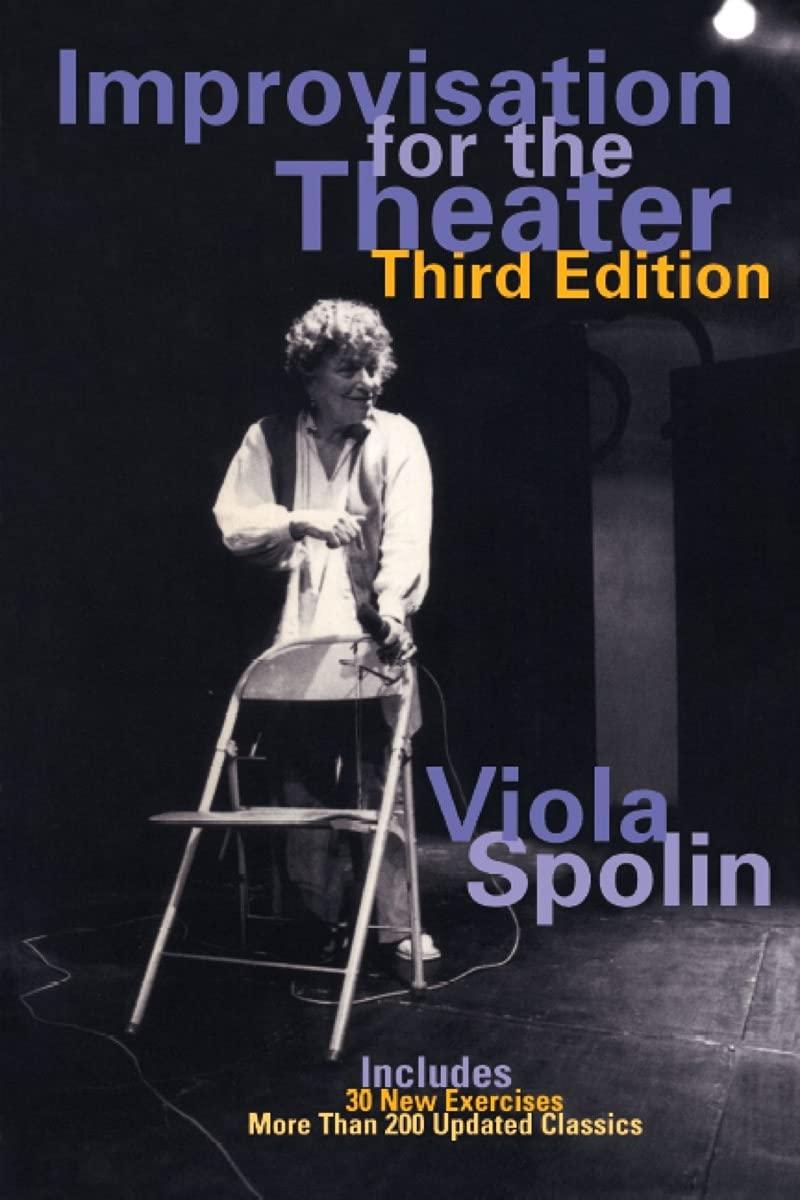
Improvisation for the Theater
A Handbook of Teaching and Directing Techniques
Viola Spolin

Pirate Robot Ninja
An Improv Fable
Billy Merritt; Will Hines

Business Improv
Experiential Learning Exercises to Train Employees
Val Gee
Theater Games for the Lone Actor
Viola Spolin
Related Exercises
The Machine
The Machine is a group exercise in which players build a collective apparatus by adding interlocking physical movements and sounds one at a time. Each new contributor must connect their action to the existing mechanism. The exercise develops ensemble coordination, physical commitment, and the ability to contribute to a shared creation.
Machines
Machines is a group exercise in which players collectively build an imaginary apparatus by adding interlocking physical movements and sounds one performer at a time. A facilitator may call out a theme or type of machine, prompting the group to adapt their contributions accordingly. The exercise trains ensemble listening, physical expressiveness, and creative collaboration.
Party Planning
Party Planning is an exercise or scene game in which a group of performers must collaboratively plan a fictional event while navigating different character agendas and communication styles. The exercise trains group agreement, negotiation, and the ability to advance a shared objective while maintaining individual character perspectives.
What Would She Be If
What Would She Be If is a character-building exercise in which the group describes what a character would be if they were a color, an animal, a type of weather, a piece of music, or other metaphorical categories. The associations build a rich, multidimensional character portrait through lateral thinking. The exercise teaches players to develop characters through sense and metaphor rather than biography.
Object Morphing
Object Morphing is an exercise in which a player holds an imaginary object and gradually transforms it into something else through continuous physical manipulation. The transformation should be smooth and visible so the group can follow the shift. The exercise trains creative fluidity and the ability to find physical connections between unrelated objects.
Group Environment
Group Environment is a space work exercise in which the entire ensemble collaborates to build a shared imagined environment through mime and physical interaction. Each player adds objects, features, and activities that others must acknowledge and use. The exercise trains spatial memory, object permanence, and the foundational skill of creating a believable shared world.
How to Reference This Page
The Improv Archive. (2026). Name the Monster. Retrieved March 17, 2026, from https://improvarchive.org/exercises/name-the-monster
The Improv Archive. "Name the Monster." The Improv Archive, 2026. https://improvarchive.org/exercises/name-the-monster.
The Improv Archive. "Name the Monster." The Improv Archive, 2026, https://improvarchive.org/exercises/name-the-monster. Accessed March 17, 2026.
The Improv Archive is a systemically maintained repository. The archive itself acts as the corporate author.