Squeezer
Squeezer is a circle exercise in which players stand holding hands and pass a squeeze around the group as quickly as possible. The squeeze can change direction or split into multiple signals. The exercise builds physical connectivity, group rhythm, and nonverbal communication skills.
Structure
Setup
- Players stand in a circle and join hands.
- One player initiates a squeeze with one hand, sending it to the next player in the circle.
- That player receives the squeeze and passes it on.
The Signal Rules
- A squeeze travels in the direction sent: left hand sends to the left, right hand sends to the right.
- A double squeeze can reverse direction.
- A triple squeeze can be used to split the signal: it travels in both directions simultaneously.
- The facilitator introduces rules progressively.
The Speed Challenge
- The exercise begins slowly, establishing the rules with care.
- Speed increases gradually until the squeeze is traveling as fast as the circle can manage.
- At high speed, the exercise becomes a true reflex challenge: players must feel and respond before consciously processing the signal.
What It Trains
- Nonverbal group communication: the entire exercise operates through physical contact without visual signals.
- Group rhythm: the circle develops a shared pulse as the squeeze travels.
- Physical presence: players who lose concentration break the signal chain.
Variations
- Players close their eyes, increasing reliance on physical sensation.
- Multiple squeezers travel simultaneously in the same or opposite directions.
How to Teach It
How to Explain It
"We are passing a squeeze around the circle. One hand sends, the other receives. When you feel a squeeze arrive, pass it on immediately. We start slow. We get fast. The goal is to keep it going without gaps."
Common Notes
- The exercise should begin slowly enough for all players to understand the signal before speed is increased.
- Watch for players who anticipate the signal rather than respond to it. Anticipation breaks the group rhythm.
- Eyes closed is the most advanced variation and should only be introduced after the circle has run clean for several rounds.
Common Pitfalls
- Players look around the circle to watch the signal rather than feeling it through their hands. Encourage attention through touch, not vision.
- The signal stalls because a player is unsure of the rules. Simplify before adding complexity.
- The group rushes to increase speed before establishing clarity. Speed gained on an unclear foundation collapses immediately.
Worth Reading
See all books →
Business Improv
Experiential Learning Exercises to Train Employees
Val Gee

Group Improvisation
The Manual of Ensemble Improv Games
Peter Campbell Gwinn; Charna Halpern

Pirate Robot Ninja
An Improv Fable
Billy Merritt; Will Hines

Improvised Theatre and the Autism Spectrum
A Practical Guide
Gary Kramer; Richie Ploesch

Acting Through Improv
Improv Through Theatresports
Lynda Belt; Rebecca Stockley
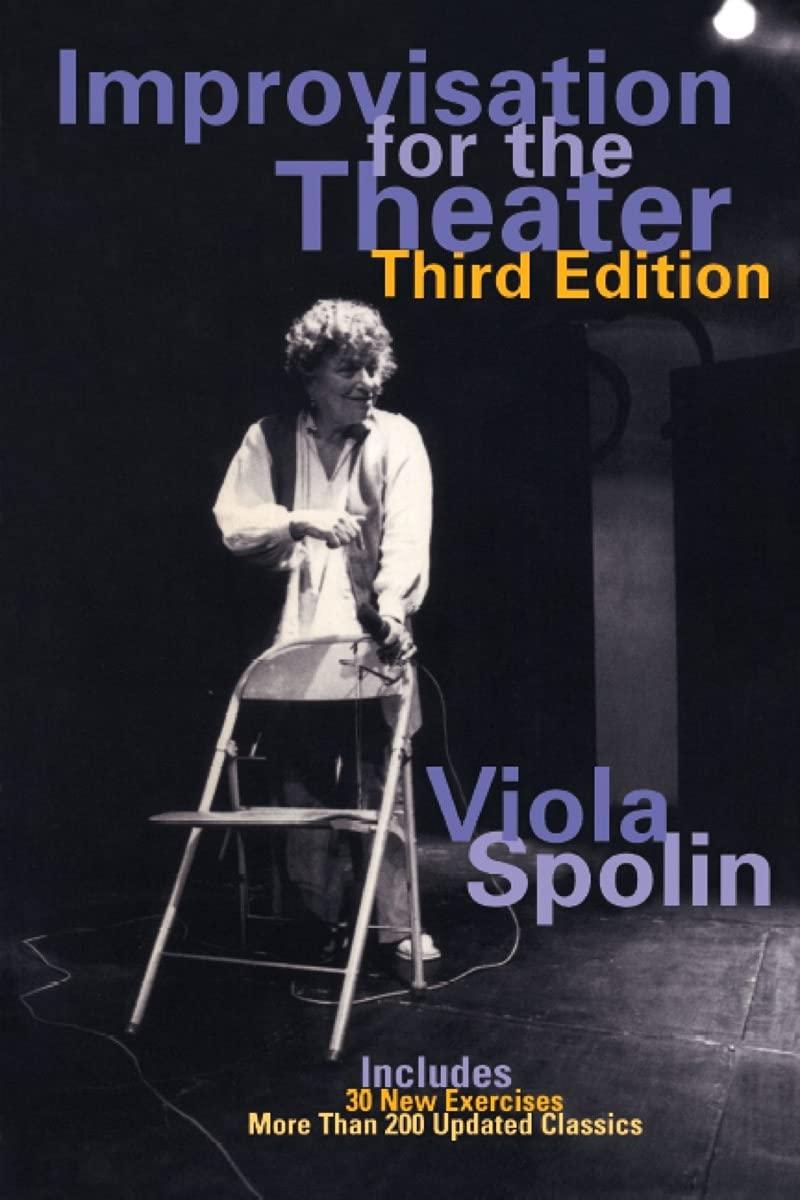
Improvisation for the Theater
A Handbook of Teaching and Directing Techniques
Viola Spolin
Related Exercises
Whoosh
Whoosh is an energetic circle exercise in which players pass a sound-and-gesture impulse around the group with the option to reverse, deflect, or redirect using different sounds and movements. The exercise is typically played as a layered game in which new moves are introduced one at a time, building complexity and requiring players to hold multiple rules simultaneously. The exercise builds group energy, quick decision-making, and the habit of sending and receiving clear physical signals.
The Wave
The Wave is a group exercise in which players send a wave of movement or energy around a circle, each person picking up and passing on the previous player's motion. The exercise trains group rhythm, physical sensitivity, and the instinct to receive and transmit energy without breaking the chain. It is accessible to players of all ages and experience levels.
Arm Tangle
Arm Tangle is a group problem-solving exercise in which players stand in a circle, reach across to grasp the hands of two different people, and then work together to untangle the resulting knot without releasing their grip. Also known as the Human Knot, the exercise builds group communication, spatial reasoning, and patient collaborative problem-solving.
Human Knot
Human Knot is a group problem-solving exercise in which players reach across a circle to grab two different people's hands, then untangle the resulting knot without releasing their grip. The exercise requires patience, spatial reasoning, and collaborative communication. It is one of the most widely used team-building exercises across disciplines.
Clap Around the World
Clap Around the World is a focus and timing exercise in which players stand in a circle and pass a single clap around as quickly as possible. The group aims for the clap to travel the full circle in one seamless wave. The exercise trains precise timing, group concentration, and the ability to anticipate a partner's action.
Hot Potato
Hot Potato is a circle game in which an imagined object is passed rapidly around the group, and whoever holds it when a signal sounds must perform a task, answer a question, or be eliminated. The exercise raises energy and adds stakes to simple passing games. It builds speed and the comfort with being put on the spot.
How to Reference This Page
The Improv Archive. (2026). Squeezer. Retrieved March 17, 2026, from https://improvarchive.org/exercises/squeezer
The Improv Archive. "Squeezer." The Improv Archive, 2026. https://improvarchive.org/exercises/squeezer.
The Improv Archive. "Squeezer." The Improv Archive, 2026, https://improvarchive.org/exercises/squeezer. Accessed March 17, 2026.
The Improv Archive is a systemically maintained repository. The archive itself acts as the corporate author.