Surprise Movement
Surprise Movement is an exercise in which performers interrupt their own scenes or monologues with sudden, unexpected physical choices and must justify them within the scene. The exercise breaks habitual movement patterns and teaches players that physical surprises can open new scene directions.
Worth Reading
See all books →
Action Theater
The Improvisation of Presence
Ruth Zaporah

Business Improv
Experiential Learning Exercises to Train Employees
Val Gee

Group Improvisation
The Manual of Ensemble Improv Games
Peter Campbell Gwinn; Charna Halpern
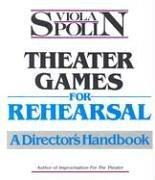
Theater Games for Rehearsal
Viola Spolin

Pirate Robot Ninja
An Improv Fable
Billy Merritt; Will Hines

The Improv Illusionist
Using Object Work, Environment, and Physicality in Performance
David Raitt
Related Exercises
Without Sound
Without Sound is a scene exercise in which performers play an entire scene with no vocal output, communicating exclusively through physicality, facial expression, and gesture. The exercise reveals how much of scene work can be conveyed nonverbally and trains performers to make bold, clear physical choices.
Who Where Why Am I
Who Where Why Am I is a scene exercise in which a performer enters a space and must quickly establish their character, location, and purpose through physical behavior before any dialogue begins. The exercise prioritizes physical storytelling and teaches performers to communicate essential scene information through action rather than exposition.
Scenes That Bring You Joy
Scenes That Bring You Joy is a scene exercise in which performers are invited to play only scenes that genuinely delight them, prioritizing personal enjoyment over audience-pleasing instincts. The exercise reconnects players with the pleasure of performing and often produces unexpectedly authentic, engaging work. It counters the tendency to default to conflict-driven or joke-heavy scenes.
Create Obstacles
Create Obstacles is a scene exercise in which performers deliberately introduce complications and barriers to their characters' goals. The exercise teaches that obstacles are the engine of dramatic interest: characters who get what they want without resistance produce flat, unengaging scenes. By practicing the creation of obstacles, performers develop the instinct to generate tension and problem-solving pressure from within the scene rather than waiting for obstacles to arrive from outside.
Opposite Characters
Opposite Characters is a scene exercise in which each performer plays a character whose traits are the direct inverse of their own natural tendencies. A quiet player adopts a loud persona, an analytical player becomes impulsive, and so on. The exercise expands performers' range by forcing them outside habitual choices.
Spoken Thoughts
Spoken Thoughts is a scene exercise in which a facilitator or fellow player periodically taps a performer on the shoulder, prompting them to speak their character's inner monologue aloud before resuming the scene. The technique reveals the gap between what characters say and what they think. The exercise builds subtext awareness and emotional depth.
How to Reference This Page
The Improv Archive. (2026). Surprise Movement. Retrieved March 17, 2026, from https://improvarchive.org/exercises/surprise-movement
The Improv Archive. "Surprise Movement." The Improv Archive, 2026. https://improvarchive.org/exercises/surprise-movement.
The Improv Archive. "Surprise Movement." The Improv Archive, 2026, https://improvarchive.org/exercises/surprise-movement. Accessed March 17, 2026.
The Improv Archive is a systemically maintained repository. The archive itself acts as the corporate author.