You
You is a circle exercise in which players point at another person and say "you," passing focus around the group with clear eye contact and decisive gestures. The exercise trains the habit of making specific, committed choices about who receives an offer. It builds directness and the ability to give and receive attention cleanly.
Structure
Setup
- Players stand in a circle or spread through the space.
- The exercise uses a single word: "you."
- Players pass the word to each other using clear eye contact and a decisive pointing gesture.
The Exercise
- One player makes eye contact with another player across the circle or space.
- When they have that player's full attention, they say "you" and point.
- The receiving player accepts the "you" with a clear acknowledgment (a nod, a sound, their own "yes") and then passes it to a new player.
- The exercise runs continuously until the facilitator ends it.
What the Exercise Trains
- The habit of making specific, committed choices about who receives an offer.
- Full eye contact as a prerequisite for passing focus.
- The ability to give and receive attention cleanly: without hedging, without looking away, without ambiguity.
- The understanding that unclear offers in scenes create confusion the scene partner must resolve.
Variations
- Pairs up: one player says "you" and points, the other must immediately begin a scene initiation toward that person.
- The word changes: any word or phrase becomes the passing object, training the same specificity with more complex content.
- Blindfolded: players use vocal rather than visual attention-getting before pointing.
How to Teach It
How to Explain It
"Find someone's eyes before you say 'you.' Get them. Then say it. Then point. They receive it, they pass it. The word isn't the point. The attention behind it is. When you say 'you,' the person you're saying it to should feel it."
Common Notes
- Players who say "you" while looking for someone to say it to have not met the exercise's requirement. The eye contact comes first.
- The receiving player should acknowledge the "you" fully before passing it. An immediate re-pass without acknowledgment breaks the chain of attention.
- The exercise reveals how much most players avoid direct, committed attention. Coach this directly.
Common Pitfalls
- Players aim "you" at the room rather than at a specific person.
- The receiving player is not tracking the space and misses their moment.
- Players rush through the exercise without genuine eye contact, treating it as a mechanical relay.
Worth Reading
See all books →
Business Improv
Experiential Learning Exercises to Train Employees
Val Gee

Group Improvisation
The Manual of Ensemble Improv Games
Peter Campbell Gwinn; Charna Halpern

Pirate Robot Ninja
An Improv Fable
Billy Merritt; Will Hines

Acting Through Improv
Improv Through Theatresports
Lynda Belt; Rebecca Stockley

You Can Teach Improv (Yes, You!)
The Ultimate Guide to Class Planning, Skill Building, and Helping Every Student Leave With a Win
Andrew Berkowitz
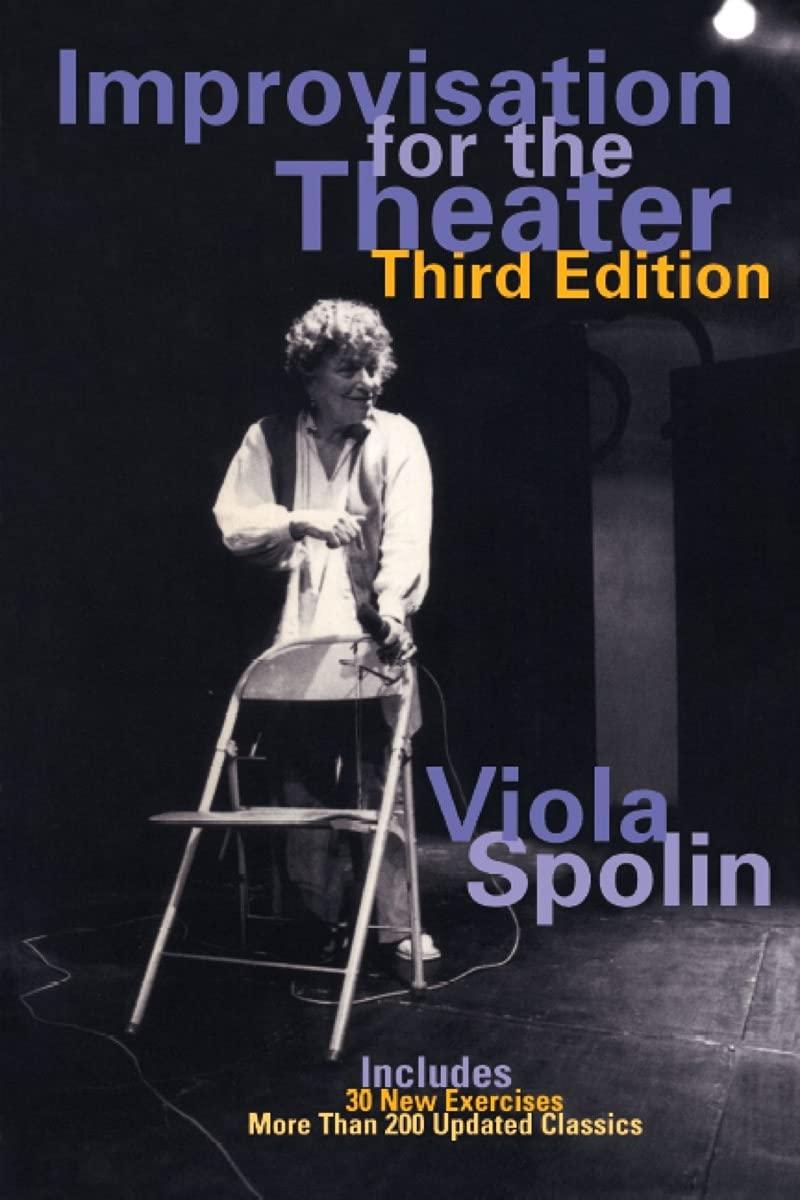
Improvisation for the Theater
A Handbook of Teaching and Directing Techniques
Viola Spolin
Related Exercises
Zip Zap Zop
Zip Zap Zop is a circle exercise in which players pass focus to one another by pointing and calling out the words "zip," "zap," and "zop" in strict sequence. Each player who receives focus must immediately redirect it to someone else with the next word in the sequence. The exercise trains attention, group awareness, and physical precision under pressure and is one of the most widely used warm-ups in improv teaching.
Pass Yes
Pass Yes is a warm-up exercise in which players make eye contact with someone across a circle and say "yes" to receive permission before crossing to take that person's place. The exercise practices the fundamental improv principle of seeking and granting agreement. It builds the habit of establishing connection before initiating action.
Accepting Circle
Accepting Circle is a warm-up exercise in which players stand in a circle and practice receiving and building on each other's offers. One player initiates a sound, gesture, or phrase; the next player accepts it fully before adding their own. The exercise reinforces the foundational improv principle of "yes, and" in its simplest physical form.
Bibbidy Bibbidy Bop
Bibbidy Bibbidy Bop is a fast-paced circle game in which the person in the center points to someone and says a phrase. The pointed-to player and their neighbors must complete a physical pose before the center player finishes saying "Bibbidy Bibbidy Bop." Whoever fails takes the center. The game sharpens focus, listening, and reaction speed.
Clap Focus
Clap Focus is an exercise in which players pass focus around a circle by clapping in unison with a partner across the circle. Eye contact establishes the connection before the synchronized clap transfers energy. The exercise trains the ability to give and receive focus clearly and decisively.
Pass Ball
Pass Ball is a circle warm-up exercise in which players toss a real or imaginary ball around the group while maintaining eye contact with the intended recipient. Additional balls may be introduced to increase complexity. The exercise builds focus, nonverbal communication, and the habit of making clear offers to specific partners.
How to Reference This Page
The Improv Archive. (2026). You. Retrieved March 17, 2026, from https://improvarchive.org/exercises/you
The Improv Archive. "You." The Improv Archive, 2026. https://improvarchive.org/exercises/you.
The Improv Archive. "You." The Improv Archive, 2026, https://improvarchive.org/exercises/you. Accessed March 17, 2026.
The Improv Archive is a systemically maintained repository. The archive itself acts as the corporate author.