The Bat
The Bat is a long-form format performed entirely in the dark, using ensemble-created soundscapes to build worlds that the audience hears rather than sees. The format is akin to a radio play, with performers voicing characters and creating environments through sound while the stage remains unlit. It was created by Joe Bill at the ImprovOlympic in Chicago and takes its name from the bat's navigation by sound in darkness.
Structure
Opening
The ensemble begins in complete darkness. There is no visual introduction. The format opens with an ensemble-created soundscape: performers add sounds layered over each other, establishing a world, environment, or emotional texture without any dialogue. The opening soundscape functions as the equivalent of a visual suggestion, establishing the material the scenes will explore.
Scenes
Scenes emerge from and return to sound. Performers voice characters, establish locations through sound effects and ambience, and build narrative through dialogue. Because the audience cannot see the performers, physical performance is irrelevant; all meaning is carried through voice: tone, pace, volume, pitch, and the acoustic relationships between characters.
The format weaves between multiple scenes and storylines in a nonlinear pattern, connected by thematic and emotional resonance rather than explicit narrative links. Transitions between scenes are made through sound: the soundscape dissolves one environment and builds another. Performers may hold silence as a dramatic tool in ways that are rarely available in lit performance.
Closing
The format typically concludes with a return to a unifying soundscape, echo, or callback that brings thematic elements together. Because there is no visual resolution, the closing must be achieved through sound and language alone.
Technical Requirements
The format requires complete darkness: all stage lighting must be eliminated, including exit signs and other ambient sources if possible. Audience members are warned before the show that they will be in darkness for the duration. The performance space should be designed for acoustic clarity, as sound carries all the format's meaning.
How to Teach It
Objectives
The Bat develops voice-led storytelling and pure listening. By eliminating the visual channel, the format forces performers to replace every technique that depends on the audience seeing them: physical status, gesture, stage picture, facial expression. The skills that survive the darkness are the ones built on voice, timing, and genuine ensemble listening.
How to Explain It
"The entire show happens in the dark. The lights go out at the top and don't come on until the show is over. Everything the audience experiences comes through sound: your voice, your characters, the world you build together. Think of it as a radio play that no one scripted. The audience will hear exactly what you give them."
Scaffolding
The format is difficult to introduce to ensembles unfamiliar with pure voice work. Before attempting a full Bat show, warm up with darkness exercises: ensemble soundscapes built with eyes closed, paired scenes with backs turned, or a short blackout scene drill. Each of these trains the ear-first habit the format requires.
For ensembles training The Bat, the ImprovOlympic curriculum has used the format as a diagnostic exercise for listening quality. Groups that depend heavily on visual status markers and sight-based comedy will find The Bat exposes those dependencies immediately.
Common Notes
Coach performers to establish location and character through sound before any narrative begins. A scene that starts with a vocal soundscape grounding the world (traffic, rain, a kitchen) gives the audience a physical space to imagine before characters populate it.
Voice differentiation between characters is essential. When the audience cannot see who is speaking, performers must develop distinct vocal registers, accents, or rhythms for each character they voice within a scene.
Common Pitfalls
Performers often speak faster and louder when unable to rely on physicality, which reduces intelligibility. Coach for deliberate pacing and clear diction.
Ensemble members who are not actively voicing a character sometimes go physically still and mentally absent. The Bat requires the backline to remain vocally available for soundscape support even during dialogue scenes.
How to Perform It
The format eliminates the visual channel that performers typically rely on for comedy, status, physicality, and stage picture. Every technique that depends on the audience seeing the performer must be replaced with a sonic equivalent.
Voice work becomes the primary instrument. Performers who have relied on physical expressiveness to carry performances will find The Bat demanding: the voice must convey everything that the face and body normally provide. Vocal differentiation between characters becomes critical: an audience that cannot see the stage must be able to distinguish characters by sound alone.
Soundscape creation is an ensemble skill. The Bat requires performers to listen to each other with precision and add sounds that complement rather than compete with existing layers. Too much sound creates acoustic mud; too little fails to establish the world. The ensemble must develop a collective sense of acoustic balance.
Silence in The Bat carries dramatic weight that is unavailable in lit formats. A pause in the dialogue, an absence of soundscape, a moment in which the audience hears only the room's ambient noise can be among the format's most powerful choices. Performers should treat silence as a performance resource rather than as a gap to fill.
How to Promote It
The Bat is best marketed as an experiential format rather than a typical improv show. Audiences unfamiliar with the format benefit from advance framing: they are attending something closer to a radio drama or an audio experience than a conventional theatrical performance. This framing manages expectations and creates anticipation rather than confusion.
The darkness conceit is both a challenge and a marketing asset. The format offers something audiences cannot experience in any other theatrical context: a live performance designed entirely for the ears. Promotional language that emphasizes the sonic experience and the unusual listening relationship the format creates tends to draw audiences curious about the format as an experience rather than simply as a comedy show.
History
The Bat was created by Joe Bill at the ImprovOlympic in Chicago. The format originated as a listening exercise Bill was using while coaching a session with Georgia Pacific, and the exercise expanded into a full long-form format. Level 5: A Brief Introduction to Forms documents that Joe Bill named it the Bat.
Matt Fotis in Long Form Improvisation and American Comedy (2012) describes The Bat as having grown out of a tradition of dark, often sardonic scene work with emphasis on quickness and verbal gymnastics, and notes that the format is akin to a radio play, performed entirely in the dark and relying on ensemble-created soundscapes. Fotis places The Bat within the broader Chicago long-form ecosystem of the ImprovOlympic era.
The ImprovOlympic (now iO Theater) in Chicago was the primary incubator for long-form formats developed by teachers and performers working with Del Close and the company's curriculum during the 1980s and 1990s. The Bat represents a formal experiment distinctive within that tradition: most long-form formats depend on visual performance, and a format that eliminates the visual channel entirely is a significant departure from the norm.
Worth Reading
See all books →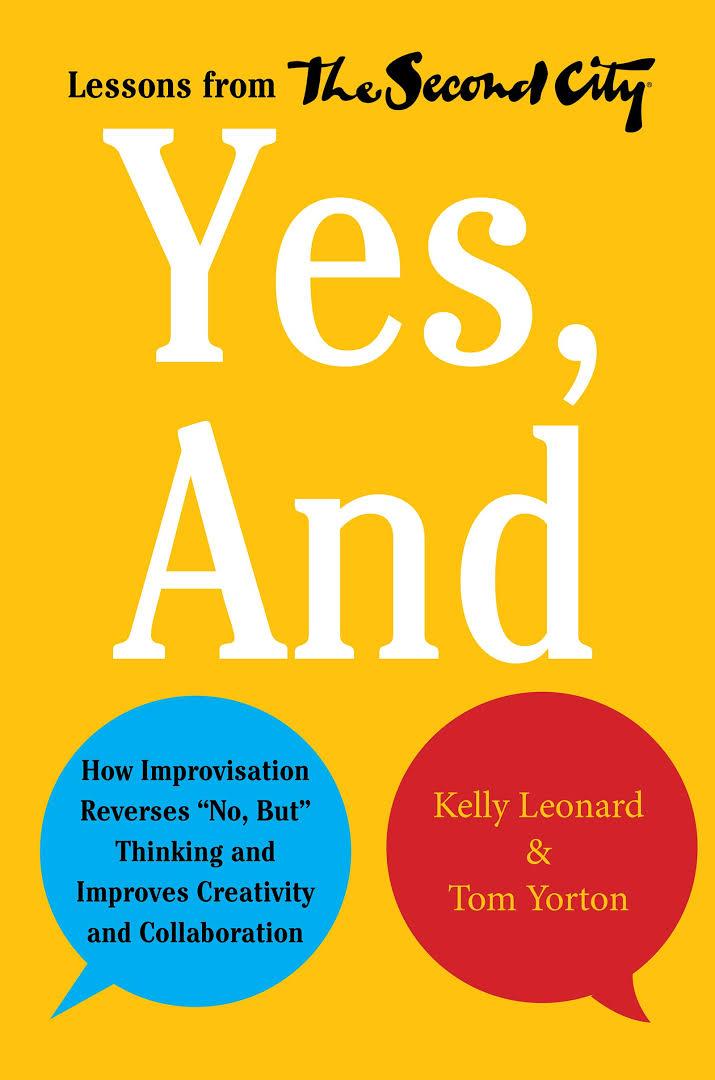
Yes, And
How Improvisation Reverses No, But Thinking and Improves Creativity and Collaboration
Kelly Leonard; Tom Yorton

Business Improv
Experiential Learning Exercises to Train Employees
Val Gee

The Art of Chicago Improv
Short Cuts to Long-Form Improvisation
Rob Kozlowski

The Second City Unscripted
Revolution and Revelation at the World-Famous Comedy Theater
Mike Thomas

Long Form Improvisation and American Comedy
The Harold
Matt Fotis
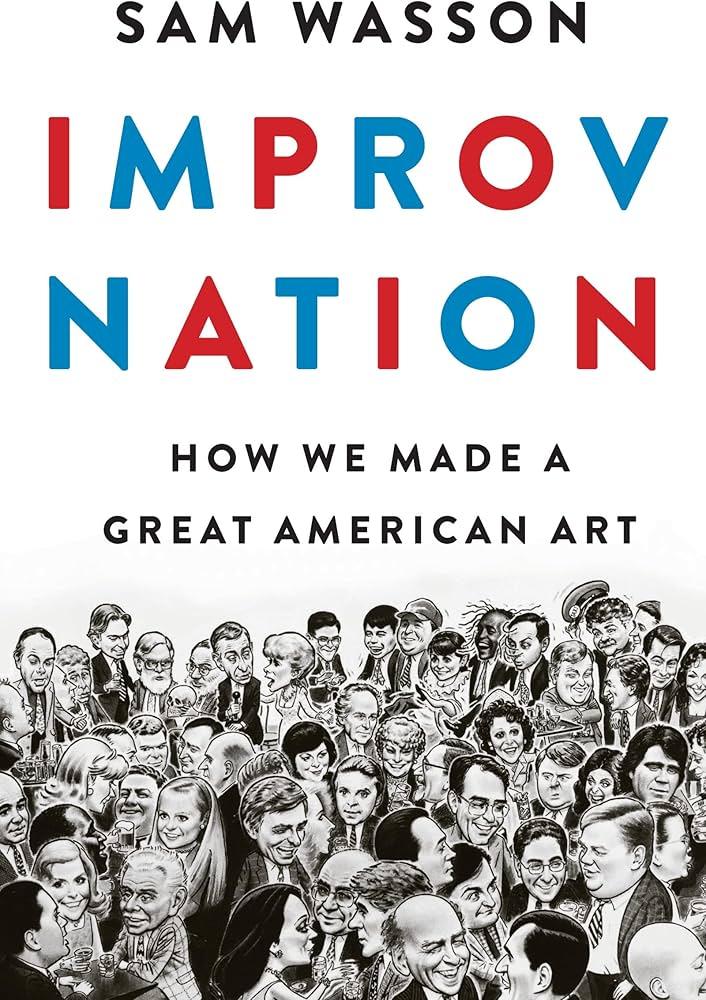
Improv Nation
How We Made a Great American Art
Sam Wasson
Related Formats
Tapestry
Tapestry is a long-form format in which multiple seemingly unrelated scenes are played across a full show, gradually revealing thematic, character, and narrative connections between them. The full picture emerges only as the show progresses, requiring ensemble patience, callback discipline, and trust that the disparate threads will cohere. The format rewards thematic awareness and is named for the way its elements, invisible in isolation, reveal their pattern once complete.
Montage
Montage is a long-form improvised format in which performers present a series of thematically connected scenes inspired by a single audience suggestion. Scenes are linked by shared ideas, recurring motifs, emotional resonances, or occasional character callbacks rather than a continuous plot. The format's strength is its flexibility: any scene can follow any scene as long as the thematic connection holds. Montage is one of the foundational structures in Chicago-tradition long-form improvisation and is among the most widely performed long-form formats worldwide.
Playbook
Playbook is a format in which a team of performers draws from a known repertoire of scene structures, games, and transitions to assemble a show in real time, selecting and sequencing elements based on audience energy and emerging thematic material. The cast functions as a collective director, reading the room and choosing the next element from their shared toolkit. The format rewards ensemble experience and the ability to adapt a show's structure on the fly.
How to Reference This Page
The Improv Archive. (2026). The Bat. Retrieved March 17, 2026, from https://improvarchive.org/formats/the-bat
The Improv Archive. "The Bat." The Improv Archive, 2026. https://improvarchive.org/formats/the-bat.
The Improv Archive. "The Bat." The Improv Archive, 2026, https://improvarchive.org/formats/the-bat. Accessed March 17, 2026.
The Improv Archive is a systemically maintained repository. The archive itself acts as the corporate author.