Before or After
Before or After is a short-form game in which performers present a scene, then the audience calls out whether they want to see what happened "before" or "after" the events just depicted. The performers create a new scene that logically connects to the original, revealing backstory or consequences that recontextualize what the audience already witnessed. The game can cycle through multiple rounds, with the audience driving the story forward or backward in time. Before or After trains narrative construction, temporal awareness, and the ability to expand a story in either direction while maintaining internal consistency. The game rewards performers who plant details in early scenes that pay off when the timeline shifts.
Structure
Two or more performers begin with an initial scene based on an audience suggestion. The scene establishes characters, a relationship, and a situation with enough specificity to suggest both a past and a future. The scene runs for two to three minutes and ends on a strong moment.
The host asks the audience: "Before or after?" The audience calls out their preference. If the audience chooses "before," the performers create a scene depicting events that led to the original scene, revealing how the characters arrived at the situation the audience first witnessed. If the audience chooses "after," the performers show the consequences of what happened.
The new scene should recontextualize the original. A "before" scene might reveal that the cheerful greeting in the first scene masked a recent argument. An "after" scene might show that the casual agreement in the first scene led to a disaster.
The cycle can repeat multiple times, with the audience choosing the temporal direction after each new scene. Some versions allow the audience to jump further back or forward: "long before" or "long after." Each new scene must connect logically to the existing timeline.
The game concludes when the host determines that the narrative arc has reached a satisfying scope, or after a predetermined number of rounds.
How to Teach It
How to Explain It
"You are going to play a scene. At the end, the audience tells you: before or after? If they say before, you play the scene that happened just before this one, the thing that led up to what we just saw. If they say after, you play the scene that followed, the consequences of what just happened."
Before or After is an excellent exercise for teaching narrative structure, specifically the concepts of cause and effect, backstory, and consequence. The game makes these abstract storytelling concepts concrete and immediate.
Coach performers to listen carefully during the initial scene and mentally catalog specific details that could be explored in either temporal direction. Strong players leave the first scene with multiple options for both "before" and "after" scenarios.
A common failure mode occurs when performers create disconnected scenes that share characters but do not logically connect to the established timeline. Reinforce that each new scene must explain or extend what the audience already knows.
Another pitfall is performers who play the same emotional register in every time period. Coach them to show how characters change over time. The confident character in the original scene might have been insecure in the "before" scene, or the happy couple in the original scene might be strained in the "after" scene.
The game also teaches the concept of the plant and payoff. Details mentioned casually in the original scene become significant when the timeline expands. Coach performers to treat every specific detail as a potential seed for future scenes.
For advanced groups, extend the game by allowing non-linear jumps: "long before," "just before," "moments after," "years after." This variation pushes performers to maintain continuity across a wider narrative scope.
How to Perform It
The game works best with two to four performers who maintain consistent characters across the temporal shifts. Performers must track not only what their characters say and do in each scene but also what version of the character is appropriate for each time period.
The initial scene is the game's foundation. Performers should plant specific, concrete details that offer multiple avenues for temporal exploration. A scene with a proposal, a broken lamp, or a packed suitcase suggests both past causes and future effects.
When performing a "before" scene, performers must reverse-engineer the emotional and situational setup for the scene the audience already saw. This requires recalling the exact emotional state, physical positions, and relationship dynamics of the original scene and working backward from them.
When performing an "after" scene, performers must project the logical consequences of what occurred. The strongest "after" scenes heighten the stakes established in the original rather than introducing entirely new situations.
Consistency across the timeline is essential. Performers who contradict established facts break the game's logic and lose the audience's investment. If the first scene established that the characters are siblings, every subsequent scene must honor that relationship.
Worth Reading
See all books →
Legislative Theatre
Using Performance to Make Politics
Augusto Boal

The Routledge Companion to Improvisation in Organizations
Miguel Pina e Cunha; Dusya Vera; António Cunha Meneses

Devising Theatre
A Practical and Theoretical Handbook
Alison Oddey
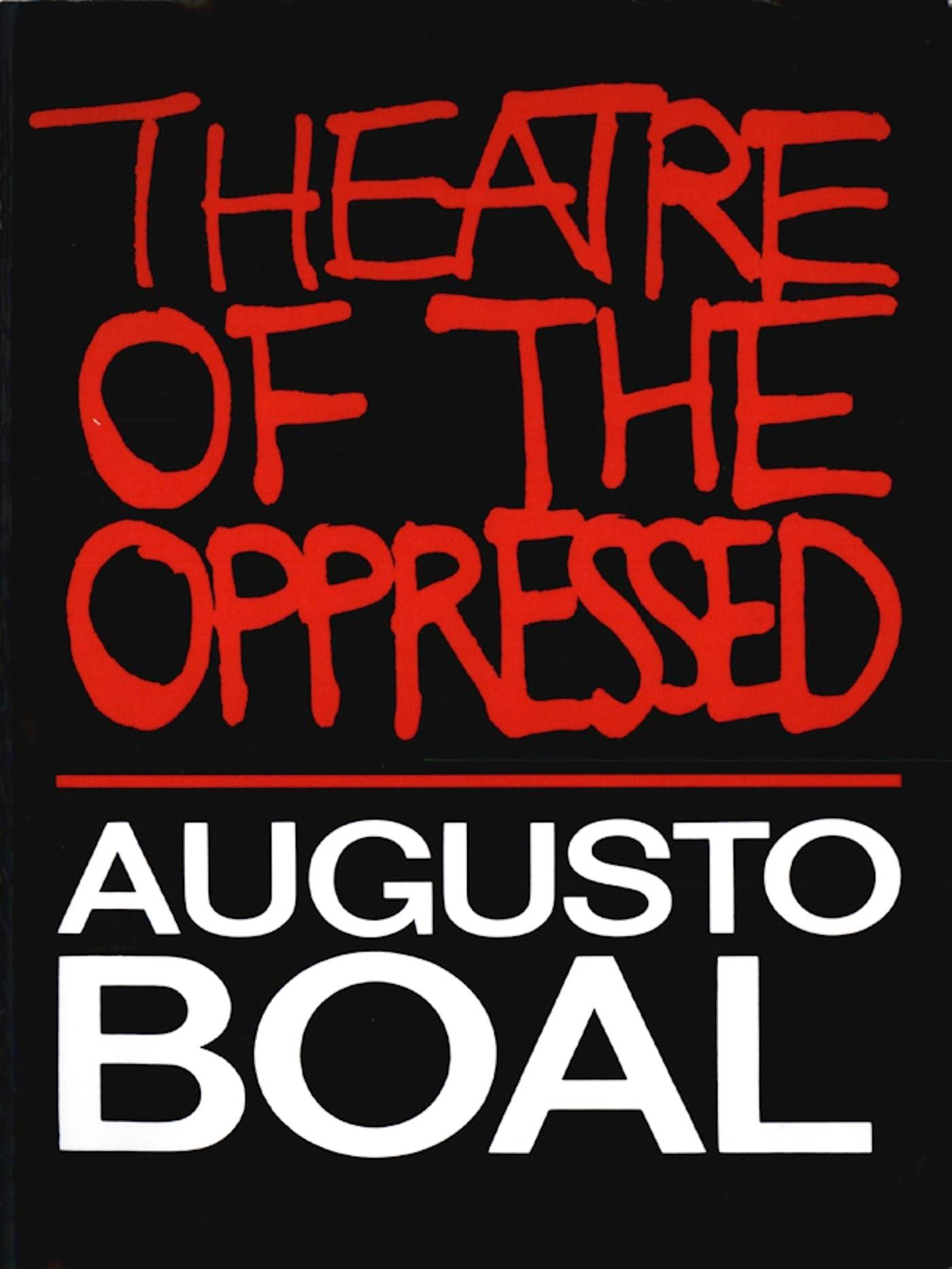
Theatre of the Oppressed
Augusto Boal

Mask Improvisation for Actor Training and Performance
the compelling image
Sears A. Eldredge

Impro
Improvisation and the Theatre
Keith Johnstone
Related Games
Backwards Scene
Backwards Scene is a short-form game in which performers play a scene from its final moment to its first. Each exchange must logically precede what the audience has already seen, creating a reverse-engineered narrative that rewards careful physical and verbal continuity.
Timeline
Timeline is a scene game in which performers play scenes from different moments across a character's or community's history, jumping forward and backward in time to reveal how past events connect to later ones. The game rewards strong narrative tracking and the ability to find surprising causal or thematic links between scenes separated by years or generations.
Rewind
Rewind is a short-form game in which a host calls out during a scene, causing performers to physically and verbally reverse their actions back to an earlier moment, then replay forward with different choices. The game rewards strong physical memory, comedic timing at the point of replay, and the ability to generate distinct alternatives quickly when the scene resumes.
Last Line
Last Line is a scene game in which the audience provides a line of dialogue that must serve as the final words of the scene. The performers build a narrative that makes the predetermined ending feel inevitable and earned rather than forced. The game trains the ability to reverse-engineer a story toward a fixed conclusion, developing narrative instinct and the skill of planting details early that pay off at the end. The audience's awareness of the destination creates dramatic irony and anticipation throughout the scene.
What Happens Next
What Happens Next is a game in which performers build an improvised story or scene through a series of offers, with a coach or host prompting each new development by asking "What happens next?" Each offer is accepted, echoed, and built upon before the next prompt arrives. The game trains offer acceptance, narrative momentum, and the collective instinct to advance rather than stall a story.
Meanwhile
Meanwhile is a short-form game in which multiple scenes run in parallel, connected by the transitional word that gives the game its name. When a player or host calls the transition, the current scene freezes and a new scene begins in a different location, time period, or context. The game trains performers in quick context-switching, scene memory, and the ability to pick up a frozen scene exactly where it left off. Callbacks and connections between the parallel storylines elevate the game from a scene-switching exercise into a web of interlocking narratives.
How to Reference This Page
The Improv Archive. (2026). Before or After. Retrieved March 17, 2026, from https://improvarchive.org/games/before-or-after
The Improv Archive. "Before or After." The Improv Archive, 2026. https://improvarchive.org/games/before-or-after.
The Improv Archive. "Before or After." The Improv Archive, 2026, https://improvarchive.org/games/before-or-after. Accessed March 17, 2026.
The Improv Archive is a systemically maintained repository. The archive itself acts as the corporate author.