Bucket
Bucket is a short-form game in which scene suggestions, character traits, or constraints are written on slips of paper and placed in a bucket before the show. During scenes, performers draw slips at designated moments and must immediately incorporate whatever is written into the ongoing action. The random elements inject controlled unpredictability, forcing performers to accept and justify offers that could not be anticipated. The game rewards flexibility, quick thinking, and the ability to absorb any suggestion without hesitation. Bucket demonstrates the core improv principle that accepting external offers, no matter how disruptive, produces stronger and more surprising scene work than relying solely on performer-generated choices.
Structure
Before the show, audience members write suggestions on slips of paper and place them in a bucket, hat, or container. Suggestions can include locations, character traits, emotional states, occupations, random phrases, or physical actions. The host collects the bucket and places it on or near the stage.
Two or more performers begin a scene based on a standard suggestion such as a location, relationship, or activity. At a designated signal from the host, or at moments chosen by the performers, a player reaches into the bucket, draws a slip, reads it aloud or silently, and must immediately integrate the written suggestion into the scene.
The integration takes many forms. A location slip changes where the characters are. A character trait slip forces the reader to adopt that quality. An action slip must be performed physically. The key rule is that nothing drawn from the bucket can be refused or ignored.
Draws continue throughout the scene at intervals determined by the host or the performers. The frequency of draws typically increases as the scene progresses, creating escalating chaos. The scene ends with a blackout or when the host calls the game at a peak moment of absurdity.
How to Teach It
How to Explain It
"I have a bucket of objects. Before you go on, you reach in and take one. You have no idea what it is until you hold it. Whatever you pull out, it is yours. Your character has it. Use it."
Bucket is an accessible game for teaching acceptance of external offers. Begin by having performers practice with simple, manageable suggestions (emotions, animals, occupations) before progressing to more abstract or challenging ones.
Coach performers to read each slip and respond physically before trying to justify verbally. Physical commitment creates an immediate audience reaction, buying the performer time to find a verbal justification. Players who try to think of a clever response before acting tend to freeze.
A common failure mode occurs when performers treat bucket draws as interruptions to endure rather than offers to explore. Reframe the exercise: every slip is an opportunity to discover something new about the scene and the characters.
Another pitfall is performers abandoning the scene entirely after each draw, treating every slip as a scene reset. Coach players to weave new information into the existing scene rather than starting fresh. The comedy multiplies when constraints accumulate and interact with each other.
For teaching purposes, start with a single performer doing a monologue with bucket draws before adding scene partners. This isolates the core skill of immediate integration.
How to Perform It
The strength of this game depends on the quality of audience suggestions. The host should coach the audience briefly before collection: short, specific suggestions work better than long sentences or inside jokes. Filtering out inappropriate or unusable slips before the show begins saves performers from navigating genuinely unhelpful material.
Performers must commit to each drawn suggestion immediately and completely. The comedy emerges from watching skilled improvisers absorb impossible constraints without breaking. Hesitation, negotiation, or half-hearted incorporation kills the momentum.
Timing the draws is critical. Drawing too frequently prevents any scene from developing. Drawing too infrequently makes the game feel like an ordinary scene with occasional interruptions. The strongest rhythm alternates between stretches of genuine scene work and well-timed draws that disrupt at moments of peak audience investment.
The performer who draws a slip should treat it as a gift rather than an obstacle. The audience watches specifically to see how the performer handles the unexpected, making the moment of integration the primary source of comedy.
Worth Reading
See all books →
Devising Performance
A Critical History
Deirdre Heddon; Jane Milling
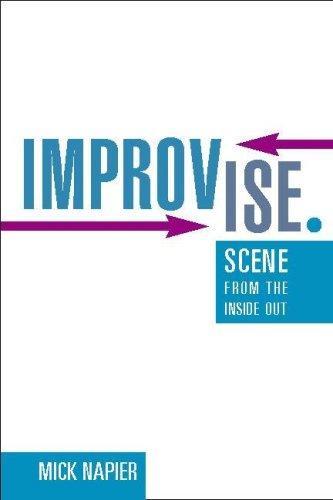
Improvise
Scene from the Inside Out
Mick Napier

The Second City Unscripted
Revolution and Revelation at the World-Famous Comedy Theater
Mike Thomas

Improv Yourself
Business Spontaneity at the Speed of Thought
Joseph A. Keefe
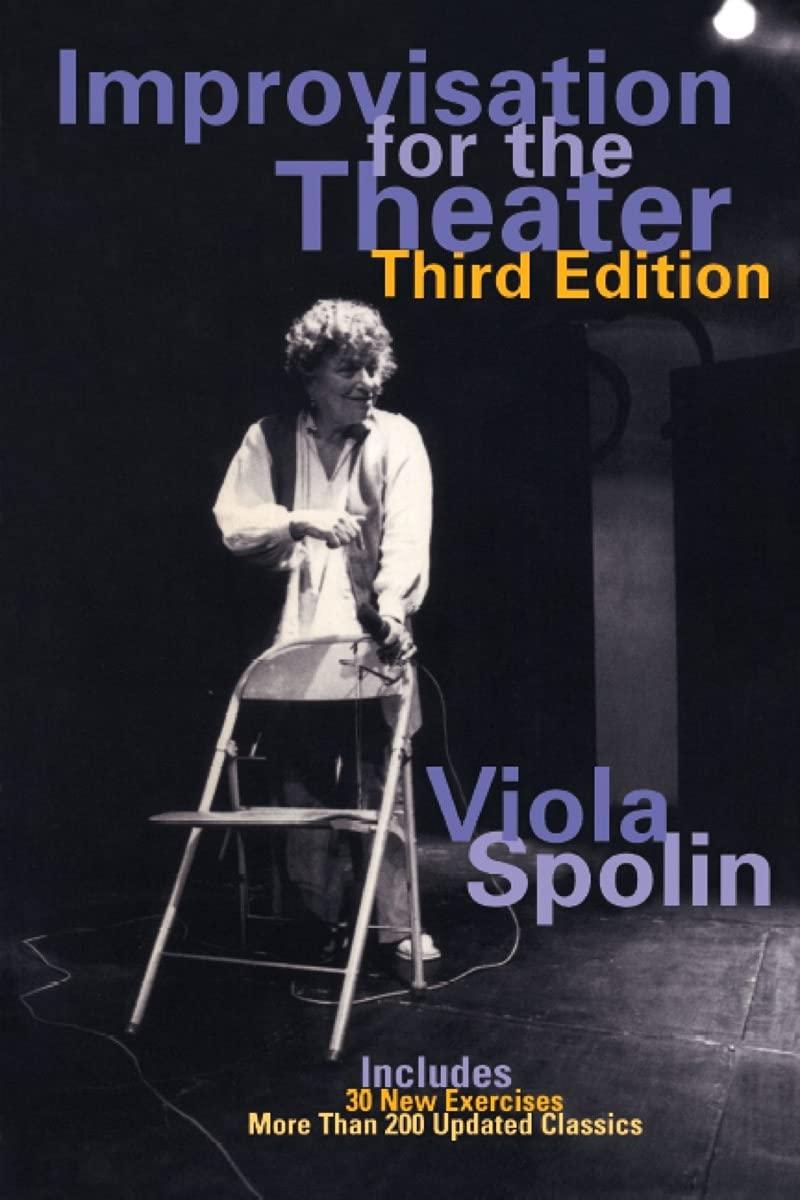
Improvisation for the Theater
A Handbook of Teaching and Directing Techniques
Viola Spolin

The Improv Handbook
The Ultimate Guide to Improvising in Comedy, Theatre, and Beyond
Tom Salinsky; Deborah Frances-White
Related Games
The Bag
The Bag is a short-form game in which performers draw random objects from a bag and must immediately incorporate each item into an ongoing scene, finding justification for the object's presence within the established narrative. The objects are typically collected from audience members' pockets and belongings before the show, giving the game an element of authentic surprise. The game trains rapid object integration and the improvisational habit of treating unexpected material as an offer.
Game-O-Matic
Game-O-Matic is a meta-improv game in which the audience suggests rules, constraints, or elements that are combined to create a brand-new game on the spot. The performers must figure out and play the invented game in real time. The game rewards adaptability and the ability to find playable structure in arbitrary constraints.
Mix and Match
Mix and Match is a character and scene game in which performers combine disparate audience-suggested traits, occupations, scenarios, or styles into a single scene. The game takes two or more elements that do not naturally belong together and challenges the performers to find coherent logic within the absurd combination. A brain surgeon with a fear of blood, a cowboy at a ballet class, or a romantic comedy set in a submarine: the game rewards specificity, commitment, and the ability to ground heightened premises in recognizable human behavior.
Cards
Cards is a short-form game in which performers draw playing cards that assign them secret emotions, character traits, or scene constraints they must incorporate into the scene. The random assignment prevents pre-planning and forces genuine in-the-moment adaptation. The game rewards the ability to make any given constraint appear natural.
Blind Line Offers
Blind Line Offers is a scene exercise in which performers receive random written lines from slips of paper and must incorporate each one seamlessly into the scene as it unfolds. The unexpected text forces players to justify and connect disparate material in real time. The exercise trains adaptability and the skill of making any offer work.
Overload
Overload is a short-form game in which one or two performers must manage multiple simultaneous scenes or conversations, switching between them on the host's cue. As additional threads are added, the performers' struggle to track and maintain each one becomes the primary source of comedy. The game tests rapid context-switching, the ability to sustain distinct emotional registers simultaneously, and physical composure under mounting cognitive pressure.
How to Reference This Page
The Improv Archive. (2026). Bucket. Retrieved March 17, 2026, from https://improvarchive.org/games/bucket
The Improv Archive. "Bucket." The Improv Archive, 2026. https://improvarchive.org/games/bucket.
The Improv Archive. "Bucket." The Improv Archive, 2026, https://improvarchive.org/games/bucket. Accessed March 17, 2026.
The Improv Archive is a systemically maintained repository. The archive itself acts as the corporate author.