More or Less
More or Less is a short-form game in which the audience or a director calls out "more" or "less" during a scene, instructing performers to intensify or diminish a specific element of their performance. Players must adjust their energy, emotion, physicality, or character choice on command, calibrating their performance in real time. The game trains responsiveness to external direction and teaches performers that every choice exists on a spectrum that can be dialed up or down. It also demonstrates to audiences the mechanics of performance calibration, making the invisible craft visible.
Structure
Two or more performers begin a scene based on an audience suggestion. The performers make natural choices about character, emotion, and physicality.
During the scene, the host, facilitator, or audience calls out "more" or "less" in response to a specific element: the accent, the physicality, the emotional intensity, the conflict level, or the pacing. The performers adjust immediately, amplifying or reducing the targeted element while maintaining the scene's continuity.
The adjustments stack. A performer told "more" on an accent and then "more" again must push the accent further. A performer told "less" on emotion and then "less" again must find an even more restrained version. The stacking creates a dynamic range that builds comedy through extremes.
The game escalates as the audience learns the format and becomes more specific in their requests. Early calls tend to be general ("more energy"); later calls become targeted ("more of the limp," "less of the friendliness"). The audience's increasing specificity drives the performers into increasingly unusual performance territory.
Variations include split more/less (different elements are pushed in opposite directions simultaneously: more accent, less emotion), performer-directed more/less (one performer directs another), and competitive more/less (performers compete to adjust more quickly and precisely).
How to Teach It
How to Explain It
"Play this scene at ten percent of your full energy. Now at fifty percent. Now at one hundred and fifty percent. The scene does not change. Your energy level changes. Notice what each level reveals."
More or Less is an effective game for teaching the concept of performance range. Students discover that every choice exists on a spectrum and that the ability to calibrate that spectrum is a core performance skill. Many performers default to a single level of energy or emotion; this game forces them to explore the full range.
Coach performers to identify what specifically they are adjusting. A vague response to "more" (just getting louder or bigger) is less useful than a specific one (increasing the physical tic, deepening the accent, escalating the emotional stakes). Specificity in adjustment produces specificity in performance.
The game also teaches the skill of taking direction without breaking flow. Performers must process external input, adjust their performance, and maintain the scene's continuity simultaneously. This multitasking skill transfers to all performance contexts where direction, adjustment, and spontaneity coexist.
Use the game to demonstrate the relationship between subtlety and exaggeration. Students who experience both extremes of a performance choice develop the judgment to find the right level for any given scene.
How to Perform It
The game rewards performers who can make precise adjustments rather than binary switches. "More" does not mean maximum; it means one notch higher than the current level. Performers who jump to the extreme on the first call leave themselves nowhere to go on subsequent calls. Calibrated, incremental adjustments create a longer and more satisfying arc.
Maintaining the scene's emotional reality through the adjustments is the game's central challenge. A performer who increases physicality while maintaining genuine character motivation produces a scene that is both funny and grounded. A performer who increases physicality at the expense of character motivation produces a performance exercise but not a scene.
The game works best when performers commit to the adjusted level as the new normal. After being told "more" on nervousness, the performer should play the heightened nervousness as the character's genuine state, not as an exaggerated performance. This commitment to the adjusted reality is what makes subsequent adjustments land.
The audience's power to direct the scene creates an interactive dynamic that increases engagement. The audience discovers that they can shape the performance, which produces investment in the outcome.
Worth Reading
See all books →
Business Improv
Experiential Learning Exercises to Train Employees
Val Gee
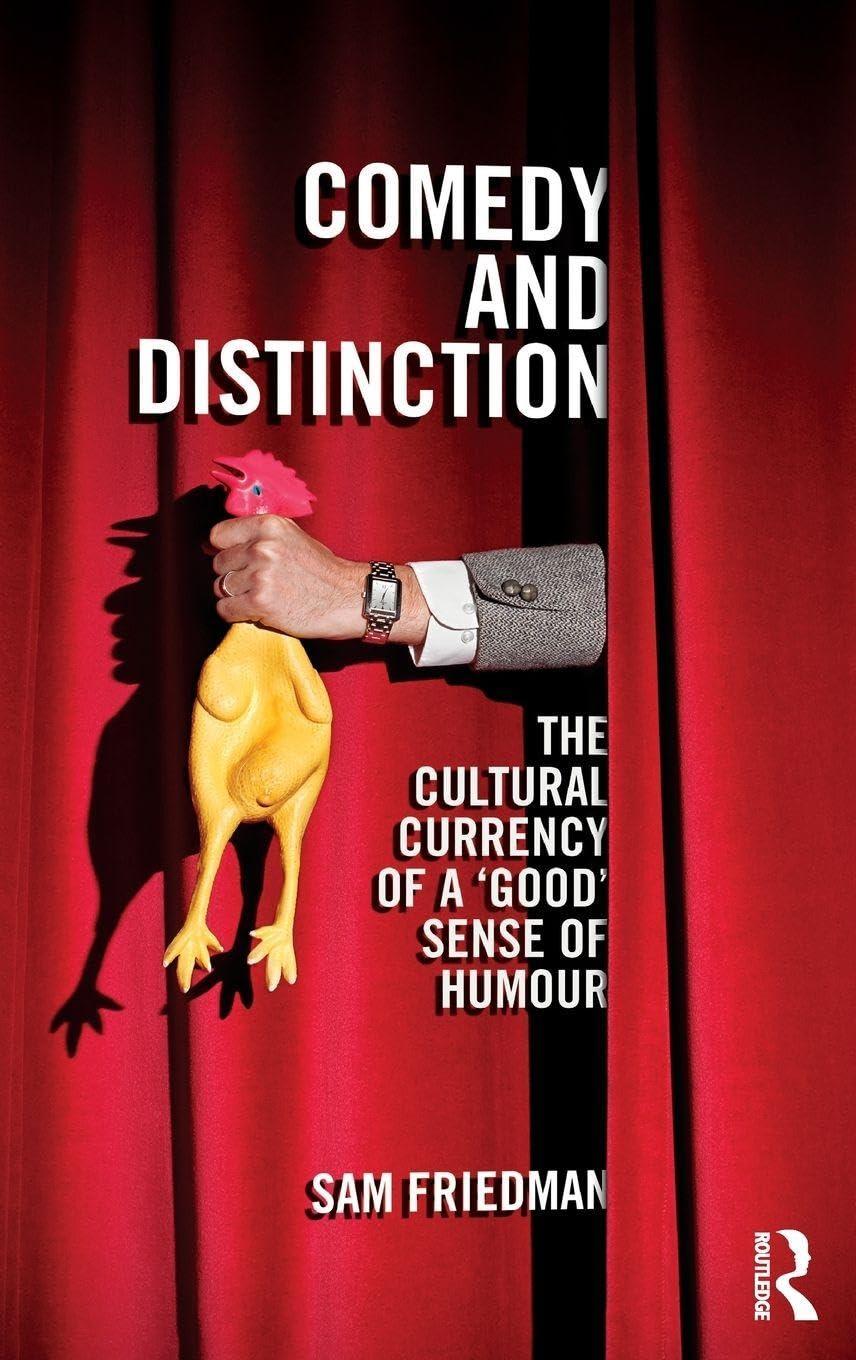
Comedy and Distinction
The Cultural Currency of a 'Good' Sense of Humour
Sam Friedman

Legislative Theatre
Using Performance to Make Politics
Augusto Boal
Improvise
Scene from the Inside Out
Mick Napier

The Second City Unscripted
Revolution and Revelation at the World-Famous Comedy Theater
Mike Thomas
Creating Improvised Theatre
Tools, Techniques, and Theories
Mark Jane
Related Games
Character Dial-Up
Character Dial-Up is a scene game in which a performer's character traits can be dialed up or down in intensity by the host or audience, as though adjusting a volume knob. At low settings the trait is barely perceptible; at maximum it overwhelms everything else. The game trains performers to modulate character choices across a wide range.
Rash
Rash is a short-form scene game in which a performer develops an increasingly strange physical affliction during a scene, which they must justify and maintain without breaking character. The condition escalates in intensity or spreads to other performers over the course of the game. The game tests the ability to integrate absurd physical premises into a scene's emotional reality without abandoning the scene's human stakes.
Overload
Overload is a short-form game in which one or two performers must manage multiple simultaneous scenes or conversations, switching between them on the host's cue. As additional threads are added, the performers' struggle to track and maintain each one becomes the primary source of comedy. The game tests rapid context-switching, the ability to sustain distinct emotional registers simultaneously, and physical composure under mounting cognitive pressure.
Narrator
Narrator is a short-form game in which one performer serves as an omniscient narrator who describes and directs the action while other players act out whatever is narrated. The performers must physicalize the narrator's words instantly, even when the descriptions become absurd, contradictory, or physically challenging. The game generates comedy from the tension between what is narrated and what the performers can actually do, and from the narrator's power to control the scene's reality with a single sentence. The game rewards quick physical commitment from the actors and creative, descriptive language from the narrator.
Mix and Match
Mix and Match is a character and scene game in which performers combine disparate audience-suggested traits, occupations, scenarios, or styles into a single scene. The game takes two or more elements that do not naturally belong together and challenges the performers to find coherent logic within the absurd combination. A brain surgeon with a fear of blood, a cowboy at a ballet class, or a romantic comedy set in a submarine: the game rewards specificity, commitment, and the ability to ground heightened premises in recognizable human behavior.
Malapropism
Malapropism is a short-form game in which performers play a scene while deliberately substituting incorrect but similar-sounding words for the intended ones. The audience enjoys the comic confusion that results from the mangled language, while the scene partners must stay committed to the reality of the conversation. The game trains verbal dexterity and the ability to maintain scene logic under an absurd constraint.
How to Reference This Page
The Improv Archive. (2026). More or Less. Retrieved March 17, 2026, from https://improvarchive.org/games/more-or-less
The Improv Archive. "More or Less." The Improv Archive, 2026. https://improvarchive.org/games/more-or-less.
The Improv Archive. "More or Less." The Improv Archive, 2026, https://improvarchive.org/games/more-or-less. Accessed March 17, 2026.
The Improv Archive is a systemically maintained repository. The archive itself acts as the corporate author.