Creatures of the Deep
Creatures of the Deep is a physicality exercise in which players create and embody imaginary sea creatures, exploring unusual movement patterns inspired by underwater life. The aquatic framing liberates players from habitual terrestrial movement habits, inviting exploration of slow, sustained, fluid motion as well as bursts of directional change that challenge the body's default patterns. The exercise is used to expand physical range and develop comfort with non-humanistic movement.
Structure
Setup
Players spread across the room. The coach guides them into imagining they are in an underwater environment: the resistance of water slows every movement, currents may pull in unexpected directions, and gravity behaves differently.
Creature Development
Each player develops their sea creature from a physical starting point: a specific movement quality (pulsing, undulating, darting, drifting), a body part that leads all motion, a repeating behavioral pattern, and a relationship to light or pressure. The creature may be recognizable (inspired by a jellyfish or eel) or entirely invented.
Inhabitation
Players move through the space as their creatures for five to ten minutes, encountering other creatures and responding to the environment. Interactions are physical and non-verbal.
Human Integration
The coach asks players to gradually introduce a human element: a need, a desire, a simple intent. The creature retains its physical logic while gaining a character impulse.
How to Teach It
Objectives
Creatures of the Deep targets physical range, non-habitual movement, and the exploration of character through physical logic rather than psychological backstory. It is useful for performers who default to upright, front-facing, human-proportioned movement.
How to Explain It
"You are a creature of the deep sea. You have never been to the surface. Everything about how you move is shaped by water, pressure, and depth. Find your creature from the outside -- find a movement first, then discover who you are."
Scaffolding
With beginners, start with recognizable creatures (jellyfish, sea horse, eel) before moving to invented ones. With advanced groups, challenge players to find creatures whose movement logic they cannot name or categorize.
Common Sidocoaching
- "What leads your movement? Is it your spine? Your hands? Your chest?"
- "The water resists you. Let it."
- "What does your creature want?"
Common Pitfalls
Players frequently import human upright posture and bilateral symmetry even when attempting non-human movement. Encourage exploration of asymmetry, different levels, and movement that does not originate from the center. Players who find a single movement and repeat it without variation should be prompted to respond to another creature or a change in the environment.
Worth Reading
See all books →
Group Improvisation
The Manual of Ensemble Improv Games
Peter Campbell Gwinn; Charna Halpern

Action Theater
The Improvisation of Presence
Ruth Zaporah
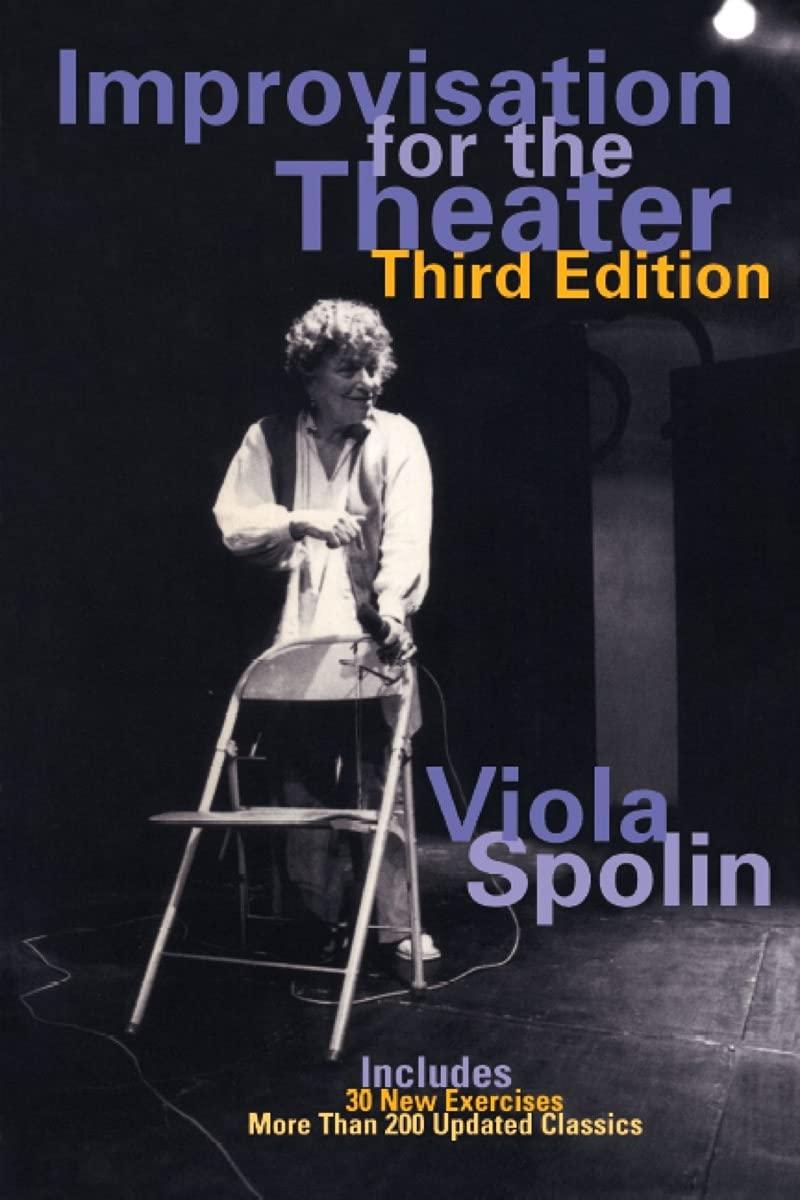
Improvisation for the Theater
A Handbook of Teaching and Directing Techniques
Viola Spolin
Theatre of the Oppressed
Augusto Boal

Improvisation the Michael Chekhov Way
Active Exploration of Acting Techniques
Wil Kilroy

Improvised Theatre and the Autism Spectrum
A Practical Guide
Gary Kramer; Richie Ploesch
Related Exercises
King Lizard
King Lizard is a physical status and transformation exercise in which participants alternate between embodying two extreme physical archetypes -- the king, characterized by elevated posture, expanded presence, and unhurried ease, and the lizard, characterized by a low center of gravity, darting speed, and close-to-the-ground alertness. The exercise uses the contrast between these two physical states to develop performers' range of physicalized status and presence.
Name the Monster
Name the Monster is a reflective exercise in which participants identify and name the internal critic, fear, or resistance that arises for them in improvisation or creative work. By giving the inner critic a distinct name and persona, the exercise creates psychological distance from self-limiting thought patterns, making them easier to recognize and set aside during performance or rehearsal.
Obstacle Course
Obstacle Course is a physical exercise in which players navigate a real or imagined series of obstacles using their bodies expressively. The exercise may be used to build physical confidence, practice environment work, or warm up the body before performance. It trains spatial awareness and encourages bold physical choices.
Object Endowment
Object Endowment is a foundational exercise in which a player interacts with an imaginary object, discovering its properties through physical exploration rather than predetermined ideas. The performer's task is to let the object reveal itself through weight, texture, temperature, and function. The exercise is central to the Spolin tradition and builds the sensory awareness that makes improvised environments believable.
Surprising Surface
Surprising Surface is a sensory exercise in which performers explore imaginary surfaces that change unexpectedly in texture, temperature, or stability. The exercise trains responsive physicality and the ability to communicate environmental details through genuine-seeming reactions rather than mime conventions.
Scene / Character Walkabout
Scene/Character Walkabout is an exercise in which performers walk around the space embodying a character or exploring a scene's environment before any dialogue begins. The physical exploration establishes character through movement, posture, and spatial behavior. The exercise teaches players to build characters from the body outward rather than from dialogue inward.
How to Reference This Page
The Improv Archive. (2026). Creatures of the Deep. Retrieved March 17, 2026, from https://improvarchive.org/exercises/creatures-of-the-deep
The Improv Archive. "Creatures of the Deep." The Improv Archive, 2026. https://improvarchive.org/exercises/creatures-of-the-deep.
The Improv Archive. "Creatures of the Deep." The Improv Archive, 2026, https://improvarchive.org/exercises/creatures-of-the-deep. Accessed March 17, 2026.
The Improv Archive is a systemically maintained repository. The archive itself acts as the corporate author.