Diversity is a category of applied improvisation activities that build awareness and appreciation of diverse perspectives, backgrounds, and communication styles through direct improvisational interaction. The activities use role-play, perspective-taking, and collaborative exercises to give participants embodied experience of different viewpoints and communication norms, making diversity concepts concrete and personally felt rather than abstract.
Structure
Perspective-Taking Scenarios
Participants engage in improvised exchanges in which they are given a character with a specified background, communication style, or organizational context different from their own. The scenario is then run from within that perspective, giving participants direct experience of how different contexts shape communication, decision-making, and response.
Assumption Surfacing
Groups engage in structured exercises that make their own assumptions about communication norms, professional behavior, and interpersonal interaction visible. This may involve improvisational encounters where participants' default assumptions produce misunderstanding, followed by debrief that names the assumptions and their origin.
Common Ground Building
Exercises similar to Come Over Here If... or other commonality-surfacing formats reveal shared experiences across participants who appear different, building genuine human connection as a complement to the intellectual awareness that diversity training typically develops.
Conclusion
The facilitator connects the exercise experiences to specific organizational behavior, policy, or practice.
How to Teach It
Objectives
Diversity exercises target the experiential dimension of diversity and inclusion work: moving participants from intellectual understanding of difference to felt, embodied awareness of how different backgrounds and communication norms shape organizational experience. They are most effective as a complement to, not a replacement for, structural and systemic approaches to inclusion.
How to Explain It
"We're going to try on a different perspective -- literally, by playing it. Your job is to inhabit the viewpoint as fully as you can, not to comment on it from the outside."
Common Pitfalls
Exercises that ask participants to play stereotyped versions of groups they do not belong to can produce harm rather than insight. Use exercises that focus on communication style, organizational context, and perspective rather than identity categories, and debrief carefully to focus on structural patterns rather than individual character.
In Applied Settings
Learning Objectives
Diversity exercises in applied settings address the experiential gap in most diversity and inclusion programs: participants can understand equity concepts intellectually without ever experiencing the felt reality of a different communicative or organizational position. The exercises develop perspective-taking capacity, reduce assumption-based behavior, and create shared language for discussing difference in organizational contexts.
Workplace Transfer
The capacity to take another person's perspective seriously -- not just acknowledge that it exists but genuinely inhabit it -- is fundamental to cross-cultural collaboration, inclusive leadership, equitable communication, and the kind of genuine listening that makes diverse teams effective. Diversity exercises develop this capacity through direct, embodied practice rather than through content delivery.
Facilitation Context
Diversity exercises are used in organizational diversity and inclusion programs, leadership development, team effectiveness work, cross-cultural communication training, and educational programs. They require careful facilitation and psychological safety; they are not appropriate as standalone warm-ups without explicit framing and a well-established group container.
Debrief Framing
Facilitators ask: "What did you notice from inside that perspective? What was different from what you expected? What assumptions did you discover you were making? Where in your actual organizational context does this perspective appear, and how does your awareness of it change how you want to engage with it?"
Worth Reading
See all books →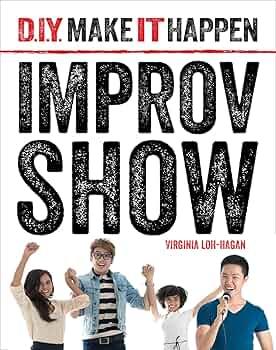
Improv Show
Virginia Loh-Hagan

Theatrical Improvisation
Short Form, Long Form, and Sketch-Based Improv
Jeanne Leep

You Can Teach Improv (Yes, You!)
The Ultimate Guide to Class Planning, Skill Building, and Helping Every Student Leave With a Win
Andrew Berkowitz

Pirate Robot Ninja
An Improv Fable
Billy Merritt; Will Hines
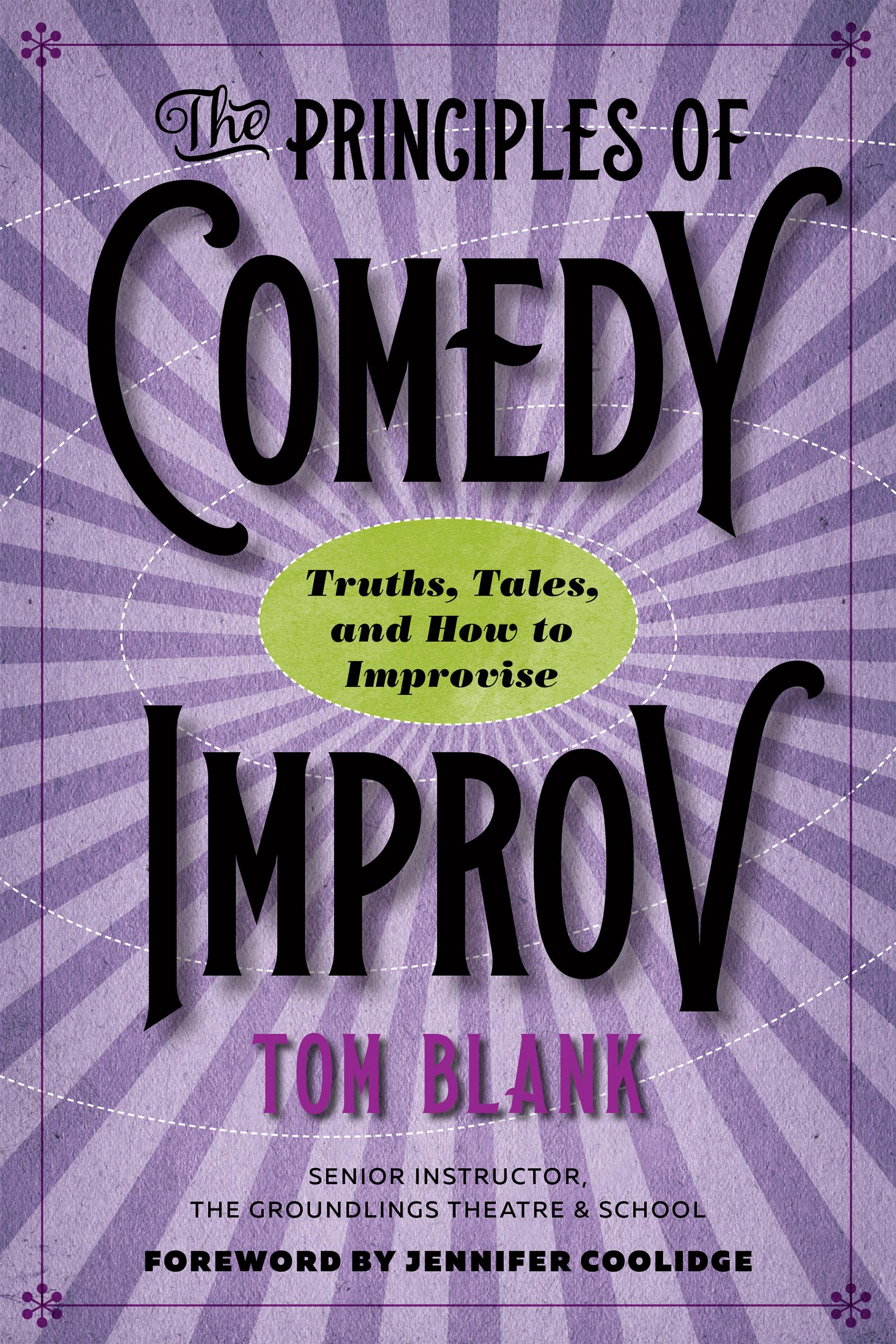
The Principles of Improv Comedy
Tom Blank

Group Improvisation
The Manual of Ensemble Improv Games
Peter Campbell Gwinn; Charna Halpern
Related Exercises
Cocktail Party
Cocktail Party is a multi-scene ensemble exercise and game in which several pairs of performers simultaneously engage in separate conversations at an imagined social gathering. The overlapping dialogues create a rich, layered environment in which performers must maintain their own character and scene while tracking the conversations happening around them. As connections emerge between the separate conversations, performers weave themes, characters, and references across the pairs. The game trains ensemble awareness, the ability to sustain a character in the background, and the skill of recognizing shared themes and patterns across simultaneous scenes. As described in Truth in Comedy, the Cocktail Party allows performers to explore the value of connections in improvisation.
Feedback
Feedback is an applied improv exercise in which participants construct conversations and letters one word at a time, practicing the principles of constructive feedback delivery and reception through a collaborative word-at-a-time structure. The constraint removes defensive preparation and forces participants to co-create the feedback conversation in real time, revealing the habits, avoidances, and instincts that govern how feedback is actually given and received in professional settings.
Building Rapport
Structured activities for establishing connection and trust with colleagues through improvisational active engagement.
That Scene Was About
That Scene Was About is a reflective exercise in which, after each scene, performers or observers articulate what the scene was really about beneath its surface content. The exercise builds the skill of identifying themes, relationship dynamics, and emotional cores that drive compelling improvisation. It teaches players to recognize what matters most in their work.
Creative Solution Building
Creative Solution Building is an applied improvisation exercise in which participants use improvisational principles -- acceptance, building, and collaborative emergence -- to develop solutions to presented problems or scenarios. Rather than analyzing the problem and generating solutions individually, participants build solutions incrementally through a structured ensemble process, with each contribution extending and complying with what has already been offered.
Effective Meetings
Effective Meetings is a category of applied improv exercises that use improvisational principles to make group meetings more productive, inclusive, and engaging. The exercises target the specific dysfunctions common in professional meeting culture -- passive participation, hierarchical gatekeeping of ideas, unfocused discussion, and unconstructive pushback -- by installing collaborative improv norms in their place.
How to Reference This Page
The Improv Archive. (2026). Diversity. Retrieved March 17, 2026, from https://improvarchive.org/exercises/diversity
The Improv Archive. "Diversity." The Improv Archive, 2026. https://improvarchive.org/exercises/diversity.
The Improv Archive. "Diversity." The Improv Archive, 2026, https://improvarchive.org/exercises/diversity. Accessed March 17, 2026.
The Improv Archive is a systemically maintained repository. The archive itself acts as the corporate author.