Effective Meetings
Effective Meetings is a category of applied improv exercises that use improvisational principles to make group meetings more productive, inclusive, and engaging. The exercises target the specific dysfunctions common in professional meeting culture -- passive participation, hierarchical gatekeeping of ideas, unfocused discussion, and unconstructive pushback -- by installing collaborative improv norms in their place.
Structure
Agreement and Ideation Structures
Exercises like Yes-And rounds, in which each participant must accept the previous idea and build on it before offering a new direction, replace defensive critique with forward momentum. The rule forces participants to engage with ideas before evaluating them, generating a larger pool of possibilities than traditional meeting formats produce.
Status and Participation Equity
Facilitators use structured turn-taking, talking sticks, or improv-style physical cues to ensure all voices are heard. The techniques interrupt the common pattern in which two or three high-status participants dominate while others disengage.
Improv Listening Contracts
Before a meeting, the group establishes listening norms using improv language: one conversation at a time, paraphrase before responding, and signal agreement physically before adding. These contracts reframe meeting norms as shared agreements rather than imposed rules.
Conclusion
Applied improv meeting exercises close with a brief debrief identifying which behaviors changed during the meeting and what participants want to carry forward.
How to Teach It
Objectives
Effective Meetings exercises target specific meeting dysfunctions: idea blockage, dominant voices, agenda drift, and passive participation. The improv frame gives facilitators a lightweight, non-threatening language for addressing these patterns without prescribing corporate process.
How to Explain It
"We're going to run this meeting using a few improv rules. The main one is Yes-And: before you push back on an idea, build on it first. You can still disagree -- but build first."
Scaffolding
Introduce one improv norm per meeting session rather than overhauling meeting structure all at once. Starting with the Yes-And rule alone produces measurable change in group dynamics without requiring participants to master a new format entirely.
Common Pitfalls
Participants sometimes treat Yes-And as a trick to avoid accountability or critical thinking. Facilitators should clarify that building on an idea is not endorsing it -- it is expanding it before evaluating it. Evaluation comes after the generative phase, not during.
In Applied Settings
Learning Objectives
Effective Meetings exercises address the gap between what organizations intend their meetings to accomplish and what meetings actually produce. The improv principles of acceptance, building, listening, and equal status participation directly counter the dynamics that make meetings unproductive: premature criticism, hierarchy-driven participation, and passive attendance. The exercises do not fix meeting agendas; they develop the human behavior that makes any agenda more likely to succeed.
Workplace Transfer
Organizations that apply improv meeting norms report faster ideation, fewer blocked conversations, and higher participation rates from quieter team members. The Yes-And structure, applied to brainstorming or problem-solving sessions, consistently produces a larger and more diverse set of ideas than traditional free-form discussion. The listening structures reduce the time spent on repetition and misunderstanding, because participants paraphrase and confirm before adding.
Facilitation Context
Effective Meetings exercises are used in leadership development programs, team effectiveness workshops, and communication training. They are most useful for teams with established dysfunctional meeting patterns -- chronic silences, dominant voices, or sessions that routinely end without decisions. Group sizes of 5 to 20 are optimal; very large meetings require additional structural support beyond the improv layer.
Debrief Framing
After the meeting or exercise, ask: "What felt different about how we talked to each other's ideas today? What did you notice about your own participation? Which of these norms would you want to keep?"
Skills Developed
Worth Reading
See all books →
The Improv Mindset
Change Your Brain. Change Your Business.
Gail Montgomery; Bruce T. Montgomery

Getting to Yes And
The Art of Business Improv
Bob Kulhan; Chuck Crisafulli

Brain Disruption
Radical Innovation in Business Through Improv
Bruce Montgomery; Gail Montgomery

Business Unscripted
Business is Improv
Ben Winter; Tara Hedberg

Business Improv
Experiential Learning Exercises to Train Employees
Val Gee
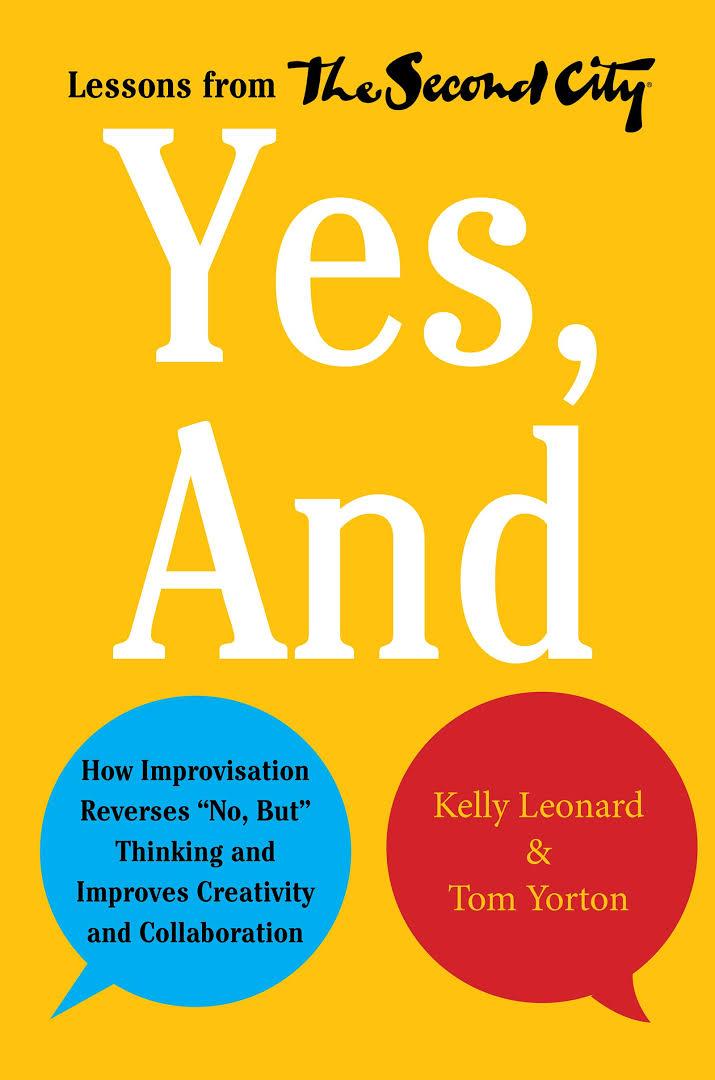
Yes, And
How Improvisation Reverses No, But Thinking and Improves Creativity and Collaboration
Kelly Leonard; Tom Yorton
Related Exercises
Creative Solution Building
Creative Solution Building is an applied improvisation exercise in which participants use improvisational principles -- acceptance, building, and collaborative emergence -- to develop solutions to presented problems or scenarios. Rather than analyzing the problem and generating solutions individually, participants build solutions incrementally through a structured ensemble process, with each contribution extending and complying with what has already been offered.
Diversity
Diversity is a category of applied improvisation activities that build awareness and appreciation of diverse perspectives, backgrounds, and communication styles through direct improvisational interaction. The activities use role-play, perspective-taking, and collaborative exercises to give participants embodied experience of different viewpoints and communication norms, making diversity concepts concrete and personally felt rather than abstract.
Feedback
Feedback is an applied improv exercise in which participants construct conversations and letters one word at a time, practicing the principles of constructive feedback delivery and reception through a collaborative word-at-a-time structure. The constraint removes defensive preparation and forces participants to co-create the feedback conversation in real time, revealing the habits, avoidances, and instincts that govern how feedback is actually given and received in professional settings.
Fabulous Conference Calls
Fabulous Conference Calls is an applied improv exercise that uses structured activities to make virtual or phone meetings more engaging, participatory, and purposeful. The exercises divide the agenda among participants, assign roles, and use improv-derived interaction norms to replace the passive, one-directional format typical of conference calls with a shared, active participation structure.
Building Rapport
Structured activities for establishing connection and trust with colleagues through improvisational active engagement.
Four-Chair Fishbowl
Four Chair Fishbowl is a facilitation technique in which four chairs are placed in the center of a larger group. The four center chairs hold a rotating conversation on a topic while all other participants observe. An open chair rule allows observers to enter the conversation by sitting in the empty seat, at which point another participant must leave to restore the open chair. The structure creates a dynamic, participatory discussion format that resists domination by any single voice.
How to Reference This Page
The Improv Archive. (2026). Effective Meetings. Retrieved March 17, 2026, from https://improvarchive.org/exercises/effective-meetings
The Improv Archive. "Effective Meetings." The Improv Archive, 2026. https://improvarchive.org/exercises/effective-meetings.
The Improv Archive. "Effective Meetings." The Improv Archive, 2026, https://improvarchive.org/exercises/effective-meetings. Accessed March 17, 2026.
The Improv Archive is a systemically maintained repository. The archive itself acts as the corporate author.