Empathy and Organizational Awareness
Empathy and Organizational Awareness is a category of applied improv exercises that develops sensitivity to the dynamics, power structures, unwritten rules, and lived experiences of people at different levels and functions within an organization. The exercises use improv role-play, perspective-taking, and scenario simulation to help participants understand the organizational landscape they operate in -- and the experiences of colleagues who navigate it differently.
Structure
Cross-Functional Perspective Scenes
Participants are assigned to roles outside their own function or level -- an engineer plays a sales role, a manager plays an individual contributor, a frontline employee plays an executive -- and improvise a common organizational scenario from that perspective. The physical inhabiting of a different organizational position generates understanding that cross-functional briefings cannot produce.
Power Mapping Role-Play
A facilitated scene establishes an organizational situation with clear power differentials -- a performance review, a budget discussion, an escalated complaint. Participants rotate through different roles in the scenario, experiencing the same situation from multiple positions in the organizational hierarchy.
Unwritten Rules Discovery
Small groups improvise a scene set in a workplace, then pause to list the unwritten rules that governed the scene: who spoke, who deferred, whose ideas got credit, what topics were avoided. The exercise makes invisible organizational norms visible for examination.
Conclusion
The facilitator closes with a debrief naming the specific organizational dynamics that appeared in the scenes and connecting them to participants' real organizational contexts.
How to Teach It
Objectives
Empathy and Organizational Awareness exercises target the capacity to understand the organizational experience of others -- across functions, levels, and roles -- and to recognize the structural dynamics that shape behavior in institutional settings. The exercises address a specific gap: participants who are technically skilled but organizationally naive, unaware of how their actions and communications land in the broader system they operate within.
How to Explain It
"Your job is to understand what it's like to be in a completely different part of this organization -- not to critique it, but to know it from the inside. What pressures does that role carry? What does success look like from there?"
Scaffolding
Begin with professionally adjacent perspectives before crossing significant hierarchy or function boundaries. The emotional and cognitive gap is smaller when participants start with roles they understand abstractly before moving to roles that are genuinely unfamiliar.
Common Pitfalls
Participants sometimes caricature unfamiliar roles rather than genuinely inhabiting them. Executives played as clueless, frontline workers played as beleaguered, sales representatives played as pushy -- these stereotypes produce laughs but not learning. The coaching note is to find the genuine humanity and real pressures of the role before playing from it.
In Applied Settings
Learning Objectives
In applied settings, Empathy and Organizational Awareness exercises address the organizational silos, hierarchy blindness, and cross-functional misunderstanding that reduce organizational effectiveness. Most organizational dysfunction is not caused by bad intentions but by people who cannot accurately model the experience, pressures, and incentives of colleagues in different parts of the system. These exercises develop that modeling capacity by making perspective-taking experiential.
Workplace Transfer
Participants who have inhabited another organizational role through improv exercise report changes in how they communicate across functions, how they frame requests to different levels of the organization, and how they interpret the behavior of colleagues who previously seemed difficult or disengaged. The exercises are particularly valuable for leaders whose isolation from frontline experience has produced organizational decisions that do not account for implementation reality, and for cross-functional teams whose collaboration is hampered by mutual misunderstanding of priorities and constraints.
Facilitation Context
Empathy and Organizational Awareness exercises are used in leadership development programs, cross-functional team workshops, organizational culture initiatives, and management training. They are most effective with groups that include multiple functions or levels, where the perspective gaps are real and the learning potential is highest. Groups of 10 to 25 work well.
Debrief Framing
Ask participants: "What did you understand about that role that you didn't understand before? What pressures were you carrying that you didn't expect? What would you do differently in your real role based on what you just experienced?"
Skills Developed
Worth Reading
See all books →
When I Say This, Do You Mean That?
Enhancing Communication
Cherie Kerr; Julia Sweeney

Improv to Improve Your Leadership Team
Tear down Walls and Build Bridges
Candy Campbell
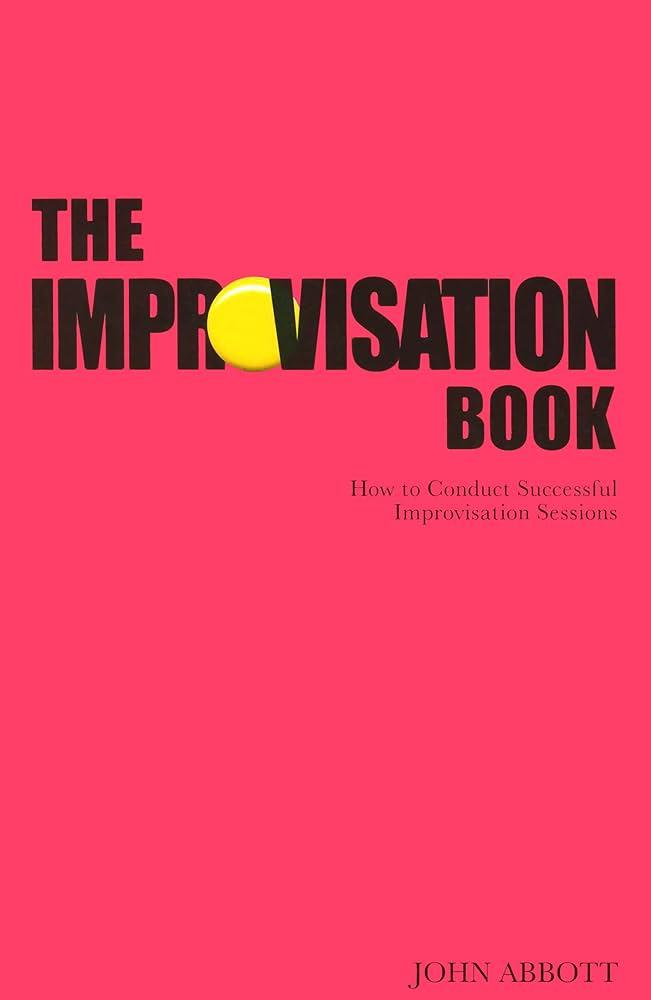
The Improvisation Book
How to Conduct Successful Improvisation Sessions
John S.C. Abbott

Improv Leadership
How to Lead Well in Every Moment
Stan Endicott; David A. Miller; Cory Hartman
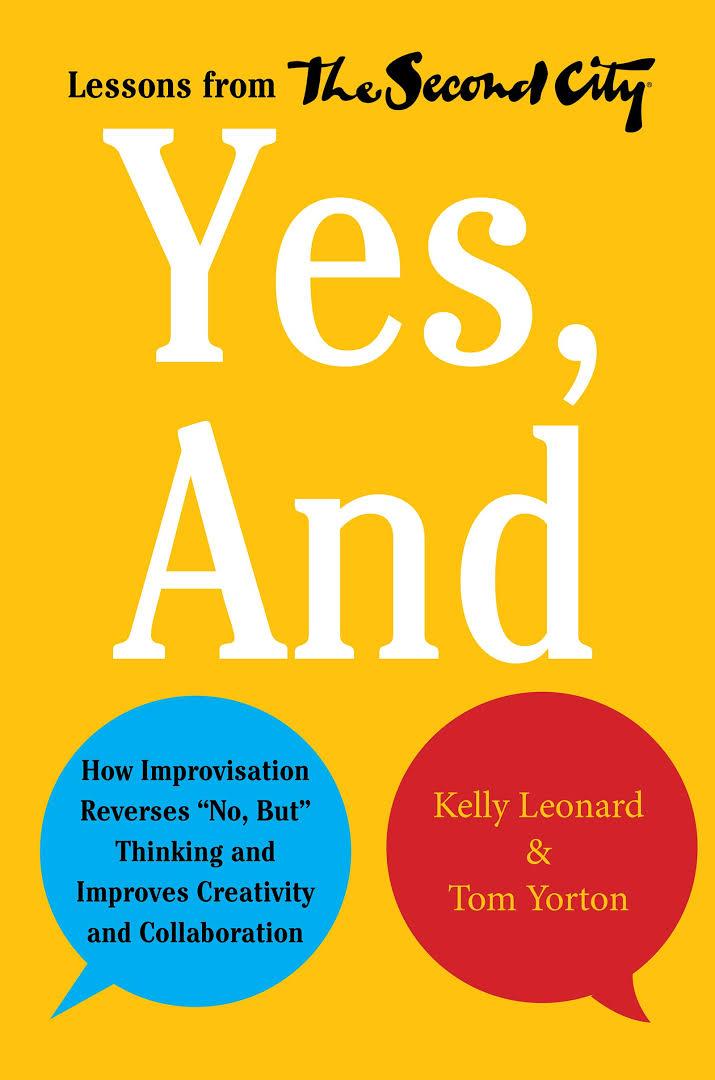
Yes, And
How Improvisation Reverses No, But Thinking and Improves Creativity and Collaboration
Kelly Leonard; Tom Yorton

The Applied Improvisation Mindset
Tools for Transforming Individuals, Organizations, and Communities
Theresa Robbins Dudeck; Caitlin McClure
Related Exercises
Emotional Self-Control
Emotional Self-Control is a category of applied improv exercises that develop the ability to manage emotional responses in high-stress, provocative, or emotionally charged situations. The exercises use improv techniques to create low-stakes environments in which participants practice recognizing their own emotional triggers, interrupting automatic reactions, and choosing intentional responses. The goal is to expand the gap between stimulus and response in situations where emotional reactivity typically causes professional and interpersonal harm.
Inspirational Leadership and Teamwork
Inspirational Leadership and Teamwork exercises explore how leaders inspire through vision, vulnerability, and genuine connection with team members, using improvisational structures to make visible the relational dynamics that separate transactional management from leadership that genuinely moves people. The exercises develop the specific behaviors -- listening, presence, authentic acknowledgment, and willingness to be changed by what others offer -- that produce inspired rather than merely compliant team performance.
Observe
Exercises in careful observation of verbal and nonverbal cues, developing awareness of what others communicate beyond words.
Empathy
Empathy is a category of applied improv exercises designed to develop perspective-taking and emotional understanding of others' experiences, viewpoints, and situations. The exercises use improvisational role-play, embodiment, and listening structures to move participants beyond intellectual acknowledgment of another person's experience toward felt, experiential understanding. They are used in organizational, educational, and therapeutic settings to build the capacity for genuine human connection across difference.
Royal Status Game
Royal Status Game is a status exercise inspired by Keith Johnstone's work in which players interact within a court hierarchy, each assigned a specific rank from monarch to commoner. Every interaction must reflect the relative status difference between the characters. The exercise develops awareness of how posture, eye contact, vocal tone, and spatial positioning communicate social power.
How to Reference This Page
The Improv Archive. (2026). Empathy and Organizational Awareness. Retrieved March 17, 2026, from https://improvarchive.org/exercises/empathy-and-organizational-awareness
The Improv Archive. "Empathy and Organizational Awareness." The Improv Archive, 2026. https://improvarchive.org/exercises/empathy-and-organizational-awareness.
The Improv Archive. "Empathy and Organizational Awareness." The Improv Archive, 2026, https://improvarchive.org/exercises/empathy-and-organizational-awareness. Accessed March 17, 2026.
The Improv Archive is a systemically maintained repository. The archive itself acts as the corporate author.