Play With
Play With is a scene exercise in which performers are directed to explore and heighten whatever elements have already emerged in a scene rather than driving toward a predetermined outcome. The coaching directive -- "play with it" -- asks players to treat each established detail, character behavior, or game pattern as material to revisit, expand, and discover rather than move past. The exercise trains the improv muscle of finding satisfaction in the present moment of a scene.
Structure
Setup
Two or more players begin an open scene. No suggestion of premise or outcome is given beforehand. The coach or director observes without intervening in the early moments of the scene.
Progression
As the scene develops, players establish details: a character behavior, an unusual relationship, an environmental fact, a repeated verbal pattern, a physical choice. The coaching directive "play with it" is issued by the director whenever a player appears to move past an established detail without exploring it, or when the scene appears to accelerate toward resolution before the material has been fully mined.
The exercise constrains players against driving for a destination. Any time a scene seems to be rushing toward a conclusion -- finding a "solution" to a conflict, resolving a mystery, completing a task -- the coach calls "play with it." Players must return to and heighten the element they were about to abandon.
The practical application: if one character has established that she always greets people by bowing, and the scene moves on without returning to that behavior, the director notes it. If one character has said something surprising -- "I've never eaten anything that wasn't green" -- and the scene passes over it without exploring the implications, the director calls attention to it.
Conclusion
The exercise is complete when players demonstrate an ability to catch themselves moving past material and voluntarily return to it without a coaching prompt. In advanced sessions, the coach withdraws the verbal cue entirely and asks players to internalize the question: "Is there something I've established that I haven't played with yet?"
Common Pitfalls
The most common failure is confusing "play with it" with "repeat it." Playing with an established element means exploring it from new angles, heightening it, or discovering what it implies -- not simply restating it. A player who responds to the directive by saying the same thing again has missed the principle.
A second failure is treating every established detail as equally worth revisiting. Not everything in a scene is a game worth playing with. The director helps players distinguish between details that are rich with comedic or dramatic potential and details that served only as set dressing.
A third failure occurs when players become self-conscious about the exercise and begin hunting for game elements rather than playing organically. The directive is meant to redirect attention, not to generate analytical paralysis.
How to Teach It
How to Explain It
"You are going to play a scene. Your job is not to add new material: your job is to play with what is already there. If your partner sits, play with the sitting. If they mention a word, play with the word. The scene generates its own game. Find it and play it."
Objectives
Play With trains scene-work awareness and the capacity to recognize material that has been established but not fully explored. The target skill is identifying the game of a scene -- or any element with comic or dramatic potential -- and returning to it deliberately rather than skating past it in search of something new.
Scaffolding
Begin by running scenes without the directive and asking players afterward to identify one thing they passed over without exploring. This diagnostic pass reveals whether players recognize their own tendency to move forward before a scene is ready.
Once players can identify missed opportunities in retrospect, introduce the live coaching prompt during scenes. The prompt should be delivered at the moment of the missed opportunity, not afterward.
For advanced players, replace the external prompt with a self-monitoring practice: players call their own "play with it" moment by physically re-engaging with something they already established.
Common Coaching Notes
- "You just established something interesting. Stay with it."
- "Don't solve it. Play with it."
- "What does that behavior mean? Find out by doing it again."
- "You left that on the table. Go back and pick it up."
- "What happens if you heighten that one more time?"
History
The "play with it" directive appears across multiple improv teaching traditions as a sidocoach prompt rather than as a named exercise. The concept connects directly to the game-identification work developed at The Upright Citizens Brigade Theatre in New York, where finding and playing with the game of a scene -- the pattern of behavior that is funny -- became a central pedagogical emphasis documented by Matt Besser, Ian Roberts, and Matt Walsh in The Upright Citizens Brigade Comedy Improvisation Manual (2013).
The broader principle that players should explore the present moment of a scene rather than driving toward an outcome is documented across the literature. Viola Spolin emphasizes point of concentration as a mechanism for keeping players in the immediate experience of the scene rather than planning ahead. Keith Johnstone addresses the same failure mode -- players imposing their plans on a scene -- throughout Impro (1979).
The named exercise Play With, as a structured rehearsal drill built around the coaching directive, appears to have developed from this sidocoaching tradition without being traced to a single originator in the available record.
Worth Reading
See all books →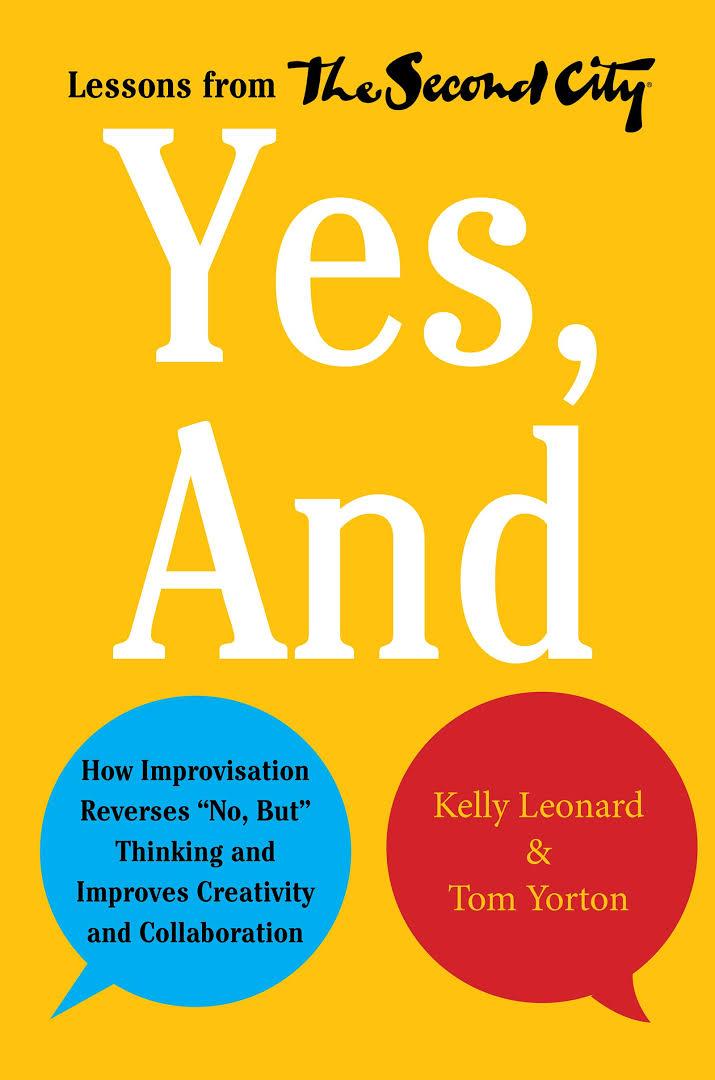
Yes, And
How Improvisation Reverses No, But Thinking and Improves Creativity and Collaboration
Kelly Leonard; Tom Yorton

Business Improv
Experiential Learning Exercises to Train Employees
Val Gee
The Actor's Book of Improvisation
Sandra Caruso; Paul Clemens

Comedy and Distinction
The Cultural Currency of a 'Good' Sense of Humour
Sam Friedman

Legislative Theatre
Using Performance to Make Politics
Augusto Boal

Theatrical Improvisation
Short Form, Long Form, and Sketch-Based Improv
Jeanne Leep
Related Exercises
Annoyance Scenes
Annoyance Scenes is an exercise rooted in the Annoyance Theatre tradition of finding the truth in aggressive, high-energy play. Performers practice scenes in which characters pursue strong wants with unapologetic directness. The exercise builds confidence in making bold choices and playing at the top of one's intelligence.
Move On
Move On is a scene exercise in which a facilitator calls out the directive to prompt performers to abandon their current scene beat and transition immediately to a new choice. The call forces performers to leave comfortable territory and advance the scene rather than circling the same material. The exercise builds editorial instincts about when a moment has been fully explored and trains the habit of moving forward rather than sideways. It develops the internal sense of pacing that distinguishes dynamic scene work from repetitive scene work.
Pivot
Pivot is a scene exercise in which performers identify the moment when a scene needs to shift direction and make a deliberate choice to change it. The facilitator may call "Pivot" to signal the moment, or players practice identifying pivot points themselves. The exercise develops editorial awareness and trains the skill of knowing when a scene needs to evolve rather than repeat.
Make More Interesting
Make More Interesting is a hybrid game and directing exercise in which a director or facilitator watches a scene and, at any point, stops the performers and asks them to replay the most recent moment -- the same beat, the same content -- but made more interesting. The request does not define what "more interesting" means; performers must find a more specific, more committed, more unexpected, or more resonant version of what they just did, discovering through the iteration what raised the scene's quality.
Three Rules
Three Rules is a scene exercise in which the facilitator establishes three specific constraints that performers must maintain throughout their scene. The constraints can be physical (always touching the wall, never letting your hands go below your waist), verbal (never using the letter S, only asking questions), or behavioral (treat your partner as royalty, move as if underwater). The exercise demonstrates that limitations generate rather than restrict creative choices, and trains performers to divide attention between scene work and rule compliance.
In-Out
In-Out is a scene exercise in which performers practice entering and leaving scenes with purpose and clarity. Each entrance must contribute something specific and each exit must feel earned. The exercise trains awareness of when a scene needs a new element and when a character has served their function.
How to Reference This Page
The Improv Archive. (2026). Play With. Retrieved March 17, 2026, from https://improvarchive.org/exercises/play-with
The Improv Archive. "Play With." The Improv Archive, 2026. https://improvarchive.org/exercises/play-with.
The Improv Archive. "Play With." The Improv Archive, 2026, https://improvarchive.org/exercises/play-with. Accessed March 17, 2026.
The Improv Archive is a systemically maintained repository. The archive itself acts as the corporate author.