Samurai
Samurai is an energetic warm-up exercise in which players stand in a circle and pass an imaginary sword strike to each other using a sharp downward motion and a vocalized sound. The recipient and their two neighbors must react in coordinated unison before the strike is redirected to another player. The exercise builds group energy, physical focus, and responsive ensemble awareness. It exists in multiple versions ranging from circle energy-passing to competitive elimination formats.
Structure
Setup
All players form a circle, standing with enough space to move freely. There are no props; the sword is entirely imaginary. The facilitator demonstrates the attack motion and the coordinated response before beginning.
Gameplay
The Circle Version (energy-passing format): One player attacks another player across or around the circle with a sharp downward sword motion and a vocalized sound ("Ha!" or a similar sharp exhalation). The targeted player ducks or deflects the strike, while the two players on either side of the target simultaneously raise their own swords in a matching defensive motion. Having deflected the attack, the targeted player immediately attacks another player, redirecting the energy around the circle.
Asaf Ronen in Directing Improv documents the Poison-Arm Samurai variant, in which players form a circle and are told they have poison blades extending from each arm. The poison element adds an elimination mechanic: players whose arms are touched (even accidentally) lose that arm for the rest of the exercise, restricting their range of motion and adding physical comedy to the constraint.
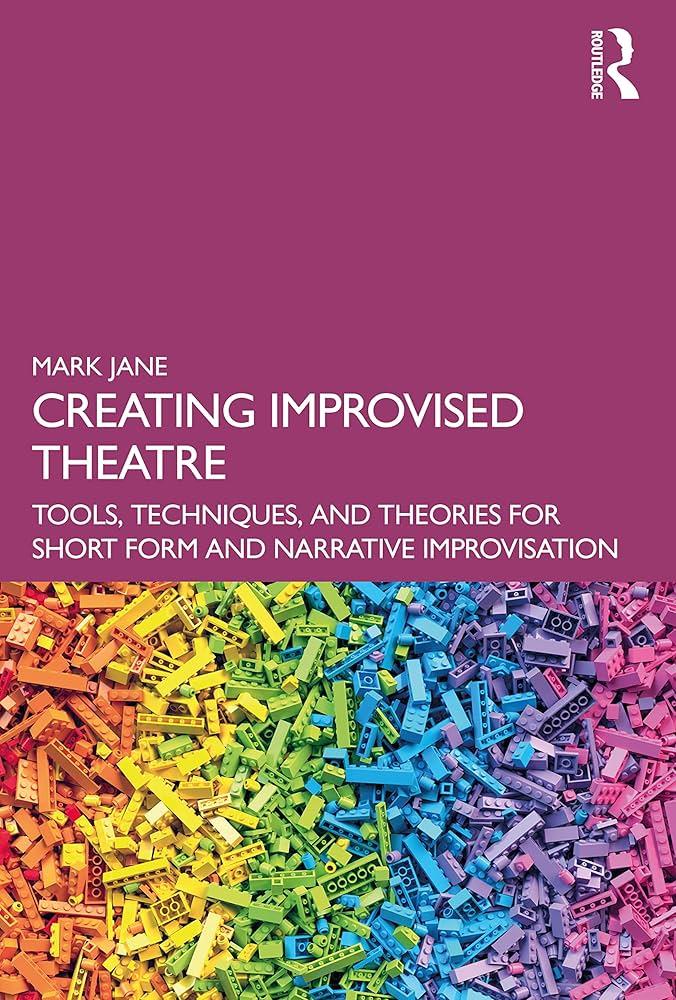
The Competitive Version is documented by James Mark in Creating Improvised Theatre as "Samurai Version 1": all actors stand around the space playing samurai warriors in a fight to the death. Players duel opponents, and those who are struck are eliminated. Mark presents this version in contrast to a more playful, collaborative version, using the exercise to illustrate the difference between competitive and playful performance relationships.
In Daniel Hohn's applied improv version from Putting Improv to Work, the exercise is adapted for both in-person and virtual formats, with the group standing in a circle and following a structured sequence that allows the exercise to function across distance learning platforms.
Debrief
After the exercise, players discuss the quality of attention required to stay in the circle: the combination of focused awareness on the current attacker and peripheral awareness of the entire group. The exercise provides a kinesthetic experience of ensemble focus that can be referenced in later scene work.
How to Teach It
How to Explain It
"Stand in a circle. You have a sword. It is imaginary, but it is real. When you attack, attack with commitment: a sharp downward strike and a vocalization. The person you attack must respond with the defense sound. The circle responds together. Begin."
Objectives
Samurai develops three capacities. The first is physical readiness: the exercise requires the body to be alert and responsive, sustaining a state of energized attention without premature action. The second is peripheral awareness: each player must monitor the whole circle, not only the current attacker, because the redirected strike can arrive from any direction. The third is group timing: the coordinated reaction of the target and their two neighbors must occur in unison, which requires the three players to attend to each other's timing as well as to the incoming attack.
Scaffolding
Begin by teaching the motion and vocalization separately before combining them. Players practice the downward attack motion silently, then add the vocalization, then combine. This prevents the common early failure of players who make the right sound at the wrong time or vice versa.
For the coordinated reaction, slow the exercise down initially: the attacker holds the strike until the target and their neighbors have had time to find their positions, then gradually increase speed until the reaction becomes reflexive rather than deliberate.
For the competitive version, introduce elimination slowly. Beginning with elimination from the first round often produces anxiety that prevents players from fully committing to the exercise. Running a few rounds without elimination first builds confidence.
Common Coaching Notes
- "Watch the whole circle. The attack can come from anywhere."
- "Neighbors: don't wait to see what the target does. You all react together."
- "Make the sound and the motion at the same time. One without the other breaks the energy."
- "You're not trying to trick anyone. Send the attack clearly."
In Applied Settings
Learning Objectives
Samurai develops physical readiness, peripheral awareness, and coordinated group response in applied settings. The exercise is used to demonstrate that ensemble attention can be sustained through a shared physical practice and that precise, synchronized action builds group cohesion without verbal instruction.
Workplace Transfer
Samurai is used in team development programs to address reactive listening, coordination under time pressure, and the physical dimension of shared focus. Participants who struggle to stay present in meetings often find that the exercise reveals a capacity for attention they were not accessing verbally.
Facilitation Context
Samurai works with groups of 8 to 25 participants standing in a circle. The facilitator demonstrates the attack motion and defense response before starting. Begin with slow, deliberate exchanges and allow the group to find its own rhythm before introducing speed variations.
Debrief Framing
- "What changed in your body between the first exchange and the last?"
- "When did the group start to feel synchronized rather than reactive?"
- "Where in your work does coordinated response without prior discussion become necessary?"
- "What did it feel like to be the one initiating versus responding?"
Skills Developed
History
James Mark in Creating Improvised Theatre documents Samurai in at least two versions, presenting the exercise as an illustration of the contrast between competitive performance relationships (Version 1, fight to the death) and playful performance relationships. Mark's framing situates the exercise within a broader pedagogical argument about the relationship between competitive and collaborative performance dynamics.
The exercise belongs to a family of circle energy-passing warm-ups that appear across improv, physical theatre, and ensemble training curricula worldwide. The specific Samurai framing (imaginary sword, sharp vocalization, coordinated group response) is a widely used variant within this family. Asaf Ronen in Directing Improv documents the Poison-Arm Samurai variant, which adds an elimination mechanic through the conceit of poisoned blades.
The exercise has been adopted in applied improv contexts: Daniel Hohn in Putting Improv to Work includes it as a group warm-up suitable for organizational settings, noting that it functions in both in-person and virtual formats.
Worth Reading
See all books →
The Second City Unscripted
Revolution and Revelation at the World-Famous Comedy Theater
Mike Thomas
Creating Improvised Theatre
Tools, Techniques, and Theories
Mark Jane

Impro
Improvisation and the Theatre
Keith Johnstone

Something Wonderful Right Away
An Oral History of The Second City and The Compass Players
Jeffrey Sweet

Long Form Improvisation and American Comedy
The Harold
Matt Fotis
Improv Nation
How We Made a Great American Art
Sam Wasson
Related Exercises
Whoosh
Whoosh is an energetic circle exercise in which players pass a sound-and-gesture impulse around the group with the option to reverse, deflect, or redirect using different sounds and movements. The exercise is typically played as a layered game in which new moves are introduced one at a time, building complexity and requiring players to hold multiple rules simultaneously. The exercise builds group energy, quick decision-making, and the habit of sending and receiving clear physical signals.
What Are You Doing
What Are You Doing is a circle or pair game in which one player performs a physical activity while another player asks what they are doing. The performer names a completely different action, which the asking player then performs. The disconnect between the stated action and the performed action trains free association, spontaneity, and the separation of verbal and physical channels. The game is a standard warm-up across improv, educational, and applied contexts.
The Wave
The Wave is a group exercise in which players send a wave of movement or energy around a circle, each person picking up and passing on the previous player's motion. The exercise trains group rhythm, physical sensitivity, and the instinct to receive and transmit energy without breaking the chain. It is accessible to players of all ages and experience levels.
Sock 'Em
Sock 'Em is a physical warm-up exercise in which players engage in a playful combat game using soft objects or exaggerated mimed punches. The exercise builds physical confidence, stage combat awareness, and the ability to react convincingly to imagined contact. It teaches performers to sell physical action through committed reactions.
Shuffle
Shuffle is a physical warm-up exercise in which players mill through the space and must quickly form groups of a called-out number when the facilitator gives the signal. Players who cannot find a complete group in time are eliminated or take a forfeit. The exercise builds physical energy, spatial awareness, and the habit of actively and immediately seeking connection with other players.
Barney
Barney is an energy and movement warm-up exercise in which players adopt an exaggerated, lumbering physical character and interact with the group through simple, playful commands. The exercise asks participants to embody a large, slow, friendly creature (often described as a dinosaur or monster) and move through the space with maximum physical commitment and minimum self-consciousness. The inherent silliness of the character lowers inhibitions quickly, making Barney effective as an early warm-up for groups that are new to physical work or uncomfortable with large physical choices. The exercise builds comfort with exaggerated movement, vocal projection, and the willingness to look ridiculous in front of others, all foundational skills for improv performance.
How to Reference This Page
The Improv Archive. (2026). Samurai. Retrieved March 17, 2026, from https://improvarchive.org/exercises/samurai
The Improv Archive. "Samurai." The Improv Archive, 2026. https://improvarchive.org/exercises/samurai.
The Improv Archive. "Samurai." The Improv Archive, 2026, https://improvarchive.org/exercises/samurai. Accessed March 17, 2026.
The Improv Archive is a systemically maintained repository. The archive itself acts as the corporate author.