Shuffle
Shuffle is a physical warm-up exercise in which players mill through the space and must quickly form groups of a called-out number when the facilitator gives the signal. Players who cannot find a complete group in time are eliminated or take a forfeit. The exercise builds physical energy, spatial awareness, and the habit of actively and immediately seeking connection with other players.
Structure
Setup
All players spread out and begin walking through the space at a normal, even pace. Players should fill the space rather than clustering.
Exercise
The facilitator watches the group and calls out a number at any moment: "Three!" or "Five!" or "Two!" Players must immediately stop milling and form groups of exactly that size, linking arms, touching hands, or clustering together as specified by the facilitator. Groups that form quickly and completely are safe. Players who are left over (who cannot complete a group of the required size) are called out.
In the elimination version, called-out players sit or stand at the edge of the space and watch. In the non-elimination version, incomplete groupers receive a brief forfeit (a sound, a pose, a word) and immediately rejoin the milling.
The facilitator controls pacing: slower calls at the start to let the group warm up, accelerating as the exercise progresses. Calling numbers that do not divide evenly into the group size (calling "Four" when twelve players remain) ensures there will always be leftover players.
Variations
Some versions add a physical or character challenge to the grouping: players must form their group while all doing the same sound, or while staying in a specific character. Others specify that the group must immediately say something to each other (an offer, a greeting) before the facilitator can call the next number.
How to Teach It
How to Explain It
"Walk through the space. Seek connection with the people around you: a look, a proximity, a gesture of acknowledgment. No one is excluded. No one stands at the edge. Move until the space feels shared."
Objectives
Shuffle trains physical responsiveness and the impulse to actively seek connection. Many new ensemble members move through space passively, waiting for others to come to them. The exercise's elimination mechanic creates an immediate consequence for passive movement: players who drift to the edges of the space or avoid contact find themselves unable to form groups quickly enough.
The exercise also warms up spatial intelligence: the ability to see the whole room, identify partners at a distance, and move toward them without hesitation.
Facilitation
Watch for players who consistently linger at the edge of the space. Calling them out once or twice for slow grouping is enough; the behavioral habit is what matters, not the punishment. Debrief briefly on what made it difficult to find groups: were players scanning the room or looking at the floor? Were they moving toward people or waiting to be approached?
Common Coaching Notes
- "Fill the space. Don't cluster."
- "Move toward people. Don't wait for them to come to you."
- "You should know where everyone is at all times. That's the exercise."
- "Speed comes from awareness. If you know where the fours are before the call, you can get there first."
History
Shuffle belongs to a family of number-grouping warm-up games found widely across improv, drama education, and outdoor education curricula. Games in this family share the same core mechanic: players move through a space and must rapidly reconfigure into groups of a specified size on command. The elimination variant is the basis for competitive versions; the non-elimination variant is the basis for ensemble-building uses.
The exercise appears under multiple names in different curricula: Numbers, Groupings, and variations of Fruit Salad follow similar mechanics. The specific game under the name Shuffle has not been documented under that name in published improv sources reviewed.
Worth Reading
See all books →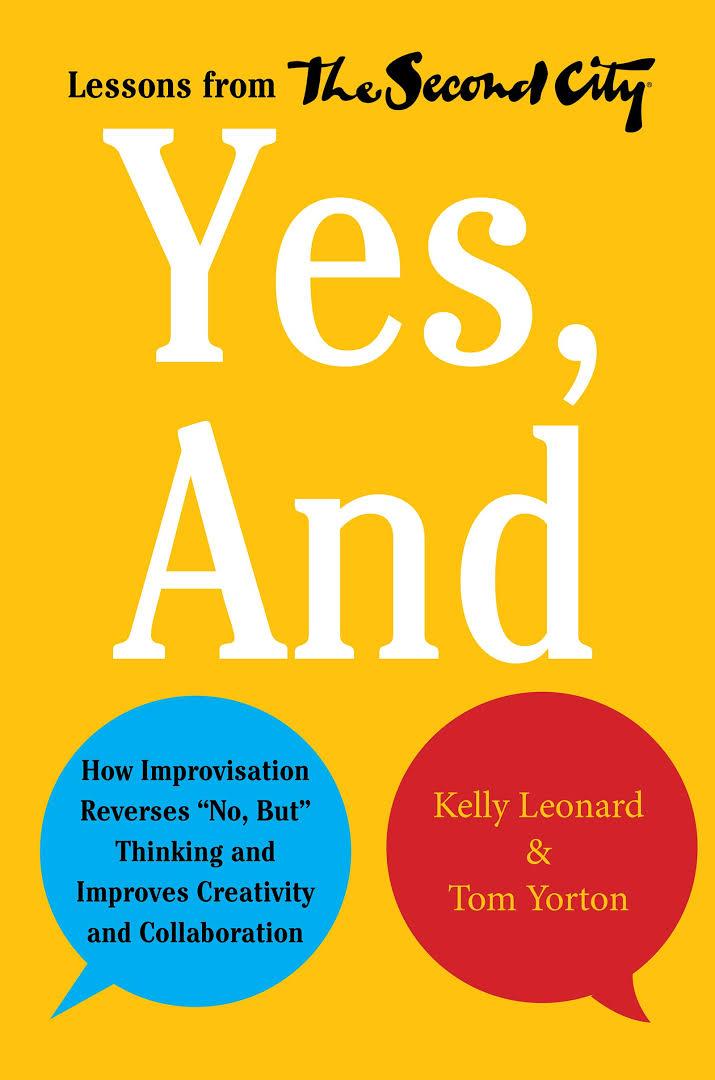
Yes, And
How Improvisation Reverses No, But Thinking and Improves Creativity and Collaboration
Kelly Leonard; Tom Yorton

The Improv Handbook
The Ultimate Guide to Improvising in Comedy, Theatre, and Beyond
Tom Salinsky; Deborah Frances-White

Acting Up!
An Innovative Approach to Creative Drama for Older Adults
Marcie Telander; Flora Quinlan; Karol Verson

Theatrical Improvisation, Consciousness, and Cognition
Clayton D. Drinko

Getting to Yes And
The Art of Business Improv
Bob Kulhan; Chuck Crisafulli

Spontaneous Performance
Acting Through Improv
Marsh Cassady
Related Exercises
Toaster
Toaster is a physical warm-up game in which all players mill through the space, and when the facilitator calls out a word, players must quickly form groups of a specified size and arrange their bodies into a designated formation. Players who are slow to form a group or who execute the wrong formation are eliminated. The game builds physical responsiveness, group coordination, and quick spatial decision-making.
Run Around
Run Around is a physical warm-up exercise in which players move through the space and respond to commands called by the facilitator. The exercise builds spatial awareness, group attentiveness, and physical readiness by requiring participants to shift direction, speed, or movement quality on cue.
Activity Starter
Activity Starter is a group exercise in which one player begins a physical activity and other players gradually enter to mirror or extend it. The exercise builds ensemble attunement and physical awareness by requiring players to read and respond to a shared movement rather than a verbal cue.
Anyone Who
Anyone Who is a high-energy chair-based warm-up exercise in which players sit in a circle with one fewer seat than participants. The person left standing moves to the center and calls out a statement beginning with "Anyone who..." followed by a trait, experience, or preference. Everyone to whom the statement applies must leave their seat and find a new one, while the caller also scrambles for a seat. The last player left standing becomes the new caller. The exercise energizes the room, breaks down social barriers, and reveals shared experiences across the group. It functions as both a physical warm-up and a group-bonding exercise, making it particularly effective at the start of rehearsals, workshops, and applied improv sessions where participants may not know each other well.
Bobsledding Bodies
Bobsledding Bodies is a physical warm-up exercise in which players form a tight line and navigate the space together, shifting direction and speed as a unit. The exercise builds group awareness, physical coordination, and the ability to respond as an ensemble to subtle changes in momentum.
Popcorn
Popcorn is an ensemble energy exercise in which players crouch on the ground and pop up one at a time to shout a word, sound, or short phrase before dropping back down. The group must self-regulate so that pops do not overlap and the rhythm stays dynamic. The exercise builds group awareness, spontaneity, and the instinct to fill empty space without stepping on others.
How to Reference This Page
The Improv Archive. (2026). Shuffle. Retrieved March 17, 2026, from https://improvarchive.org/exercises/shuffle
The Improv Archive. "Shuffle." The Improv Archive, 2026. https://improvarchive.org/exercises/shuffle.
The Improv Archive. "Shuffle." The Improv Archive, 2026, https://improvarchive.org/exercises/shuffle. Accessed March 17, 2026.
The Improv Archive is a systemically maintained repository. The archive itself acts as the corporate author.