Simon Says
Simon Says is an adaptation of the classic children's game for improv and actor training. A leader gives commands, and participants must execute only those commands preceded by the phrase "Simon says." Commands given without the phrase should be ignored; following them is an error. The exercise trains selective listening, impulse control, and the ability to distinguish qualified instructions from unqualified ones under time pressure.
Structure
Basic Game
Participants stand with space to move. One player is designated Simon. Simon gives a series of instructions in quick succession:
- "Simon says, touch your nose." (players comply)
- "Simon says, raise your arms." (players comply)
- "Put your hands on your hips." (players do not comply; those who do are out)
The game accelerates as Simon works to catch participants moving without the prefix. Participants who follow an unprefixed command are eliminated or designated as having failed. The game continues until one player remains or the facilitator ends the round.
Improv Adaptation
Levy uses Simon Says as Exercise 74 in a curriculum sequence linking familiar children's games to actor training objectives. The exercise uses the participants' prior knowledge of the game to eliminate explanation time and provide immediate access to the training concept.
Lynn documents the game's improv use, noting its prevalence: "Current usage: Common."
How to Teach It
How to Explain It
"Simon says look at the person across from you. Simon says raise your right hand. Lower your hand. That last one did not begin with Simon says. The filter runs between the instruction and the action. Train that filter."
Objectives
Simon Says trains selective listening and impulse control: the ability to filter incoming information according to a specific criterion and to override an impulse to respond when the criterion is not met. Both skills are directly relevant to improv performance, in which performers must continuously distinguish information they should act on from information that does not require response.
Brian Levy frames the game as a technique for linking familiar prior knowledge to new training objectives. Participants who already know Simon Says can direct their attention to the training concept (selective listening) rather than the game rules.
Hohn on the Power Dynamics
Mark Hohn observes in Putting Improv to Work that Simon Says and related children's games have implicit power dynamics worth examining: the leader wins when followers fail. Hohn notes that what seems playful in children conceals a structure of authority and compliance that is worth making conscious when using the game in adult training contexts. Facilitators working with organizational groups may find this framing a useful entry point for discussions of authority, attentiveness, and organizational compliance.
Variations for Advanced Groups
For groups already fluent in the basic game, facilitators can increase the cognitive demand by having Simon give commands at high speed, by having multiple Simons simultaneously, or by using movement sequences ("Simon says do what you just did; now do what you did before that") that require recall rather than simple response.
History
Simon Says has ancient antecedents as a command-following game. The specific "Simon says" formulation in English has no identified single inventor; variants of the game appear across many cultures and languages under different names ("Jacques a dit" in French).
Brian Levy documents Simon Says as Exercise 74 in 112 Acting Games (2005), framing it as an example of how facilitators can "link familiar games to" specific actor training objectives. The familiarity of the game reduces the cognitive overhead of learning new rules and allows participants to focus on the training skill immediately. Bill Lynn documents the game in Improvisation for Actors and Writers as a standard ensemble exercise in common use.
Worth Reading
See all books →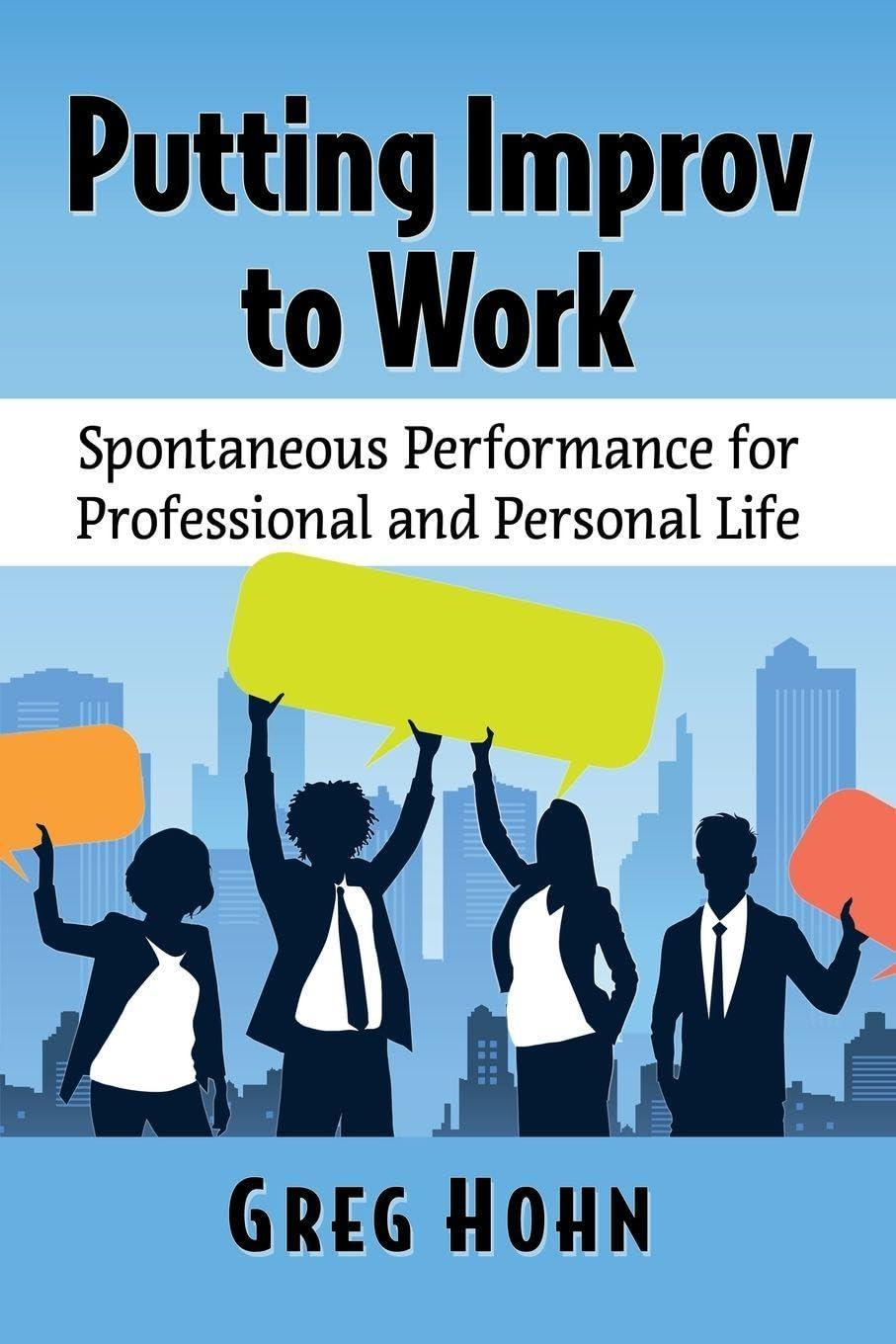
Putting Improv to Work
Spontaneous Performance for Leadership, Learning, and Life
Greg Hohn

Truth in Comedy
The Manual of Improvisation
Charna Halpern; Del Close; Kim Howard Johnson

Improvisation for Actors and Writers
A Guidebook for Improv Lessons in Comedy
Bill Lynn
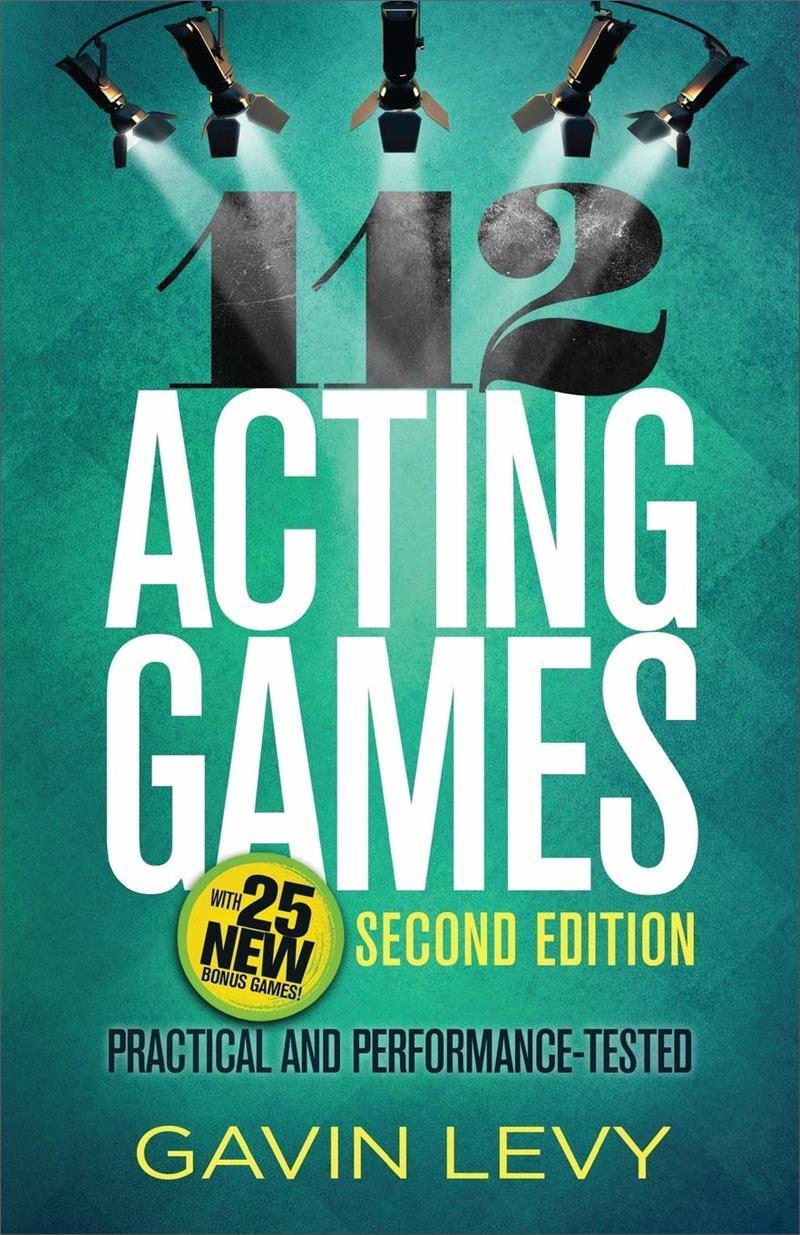
112 Acting Games
Gavin Levy

Business Improv
Experiential Learning Exercises to Train Employees
Val Gee

Pirate Robot Ninja
An Improv Fable
Billy Merritt; Will Hines
Related Exercises
Free Association
Free Association is a foundational improv exercise in which players say the first word that comes to mind in response to the previous word. The exercise trains the spontaneous, uncensored response that forms the basis of all improvisation. Speed is critical: hesitation reveals the internal censor at work, and the exercise's purpose is to bypass that censor entirely. Free Association develops the mental agility to generate offers without pre-planning and builds trust in the unfiltered creative impulse. The exercise is widely used in both theatrical improv training and applied improvisation contexts, where it builds rapid ideation skills and breaks down overthinking.
Play With
Play With is a scene exercise in which performers are directed to explore and heighten whatever elements have already emerged in a scene rather than driving toward a predetermined outcome. The coaching directive -- "play with it" -- asks players to treat each established detail, character behavior, or game pattern as material to revisit, expand, and discover rather than move past. The exercise trains the improv muscle of finding satisfaction in the present moment of a scene.
Whoosh
Whoosh is an energetic circle exercise in which players pass a sound-and-gesture impulse around the group with the option to reverse, deflect, or redirect using different sounds and movements. The exercise is typically played as a layered game in which new moves are introduced one at a time, building complexity and requiring players to hold multiple rules simultaneously. The exercise builds group energy, quick decision-making, and the habit of sending and receiving clear physical signals.
Big Fish Small Fish
Big Fish Small Fish is a quick-reflex exercise in which players respond to commands by miming the opposite of what is called. When the leader says "big fish," players gesture small, and vice versa. The exercise trains the ability to process and invert information rapidly, building the mental agility needed for fast-paced improv.
New Choice
New Choice is a short-form game in which a caller interrupts performers mid-scene by shouting "New Choice," forcing the last speaker to immediately replace their most recent line or action with something entirely different. The caller may fire multiple calls in rapid succession, pushing performers through a cascade of alternatives under pressure. The game trains verbal agility, commitment to offers, and the capacity to abandon choices without hesitation.
Last Letter
Last Letter is a verbal agility exercise in which each player must begin their word or sentence with the last letter of the previous player's word or sentence. The constraint forces constant attention to word endings and beginnings, preventing performers from pre-planning their responses. The exercise trains verbal awareness, the ability to think and speak simultaneously, and the habit of listening all the way to the end of a partner's contribution before formulating a response.
How to Reference This Page
The Improv Archive. (2026). Simon Says. Retrieved March 17, 2026, from https://improvarchive.org/exercises/simon-says
The Improv Archive. "Simon Says." The Improv Archive, 2026. https://improvarchive.org/exercises/simon-says.
The Improv Archive. "Simon Says." The Improv Archive, 2026, https://improvarchive.org/exercises/simon-says. Accessed March 17, 2026.
The Improv Archive is a systemically maintained repository. The archive itself acts as the corporate author.