Story Spine
Story Spine is a narrative exercise that uses a sequential template of sentence prompts to build a complete story: "Once upon a time... Every day... Until one day... Because of that... Because of that... Until finally... And ever since then..." The template teaches the fundamental architecture of story , establishing world, routine, disruption, consequence, and resolution , in a form accessible to performers at any level. Invented by Kenn Adams, the Story Spine has become one of the most widely used narrative tools in improv pedagogy and applied improvisation training.
Structure
Solo Version
One participant completes the full Story Spine alone, supplying one or more sentences per prompt:
- Once upon a time... (establishes the world, character, and routine situation)
- Every day... (describes the ordinary pattern of life before disruption)
- Until one day... (introduces the inciting incident that breaks the routine)
- Because of that... (first consequence of the disruption)
- Because of that... (second consequence; chain of cause and effect continues)
- Until finally... (climax and resolution)
- And ever since then... (establishes the new normal; what has permanently changed)
Group Version
Participants pass the spine around a circle, each person completing one prompt before passing to the next. The group collectively builds a single story, with each person's contribution required to flow from and inform the next.
Applied Uses
In applied improvisation contexts, the Story Spine is used as a collaborative storytelling tool for organizational narratives, change communication, and leadership development. Dudeck documents its use in facilitation and provides a table of prompts with examples for applied workshop use. Campbell integrates the Story Spine into leadership team training as a framework for understanding and communicating change.
How to Teach It
How to Explain It
"We are going to tell a story together using a template. Once upon a time. Every day. Until one day. Because of that. Because of that. Because of that. Until finally. And ever since then. One sentence per beat. Build causally. Let the template do the work."
Objectives
Story Spine teaches the essential architecture of narrative: a world in equilibrium, a disruption, a causal chain of consequences, and a new equilibrium. The template gives performers who struggle with story structure an explicit scaffold to work from and then internalize. The exercise is foundational in narrative improv pedagogy and functions as an entry point to longer-form storytelling work.
Using the Template Progressively
Begin by having participants complete the spine with simple, concrete content. The template is forgiving: any story that follows the prompts will have structural coherence, even if the content is mundane. The goal of early exercises is structural fluency, not storytelling brilliance.
Once the structure is familiar, the more interesting teaching work begins. Ask participants to pay attention to the "Because of that" sections: are they genuinely causally linked to the preceding line, or are they merely sequential ("and then")? The distinction between causation and sequence is one of the most important concepts in narrative improv, and the Story Spine makes it visible.
Applied Context
Dudeck frames the Story Spine as a tool for applied facilitation: the template can be used to have groups narrate organizational change, product development arcs, or team history in a structure that produces coherent, shareable stories. The exercise works in corporate contexts because it is simple, reliable, and clearly attributed, giving facilitators a credible tool with a known origin.
Campbell integrates the Story Spine into leadership training as part of a broader applied improv curriculum, citing it as one of the primary tools for helping leaders understand and communicate through change.
Variations
Known variants of Story Spine with distinct rules or structure.
The Story Spine
Article-led alternate title for Story Spine.
In Applied Settings
Learning Objectives
Story Spine teaches narrative structure as a practical tool for organizing information, framing proposals, and communicating change. The template gives participants a transferable model for causal storytelling that can be applied in meetings, reports, and presentations.
Workplace Transfer
Story Spine is used in communication coaching, leadership development, and design thinking contexts. Participants learn to reframe problem statements and project updates as narratives with a disruption, a causal chain, and a resolution. Debrief discussions often address how organizations tell their own stories.
Facilitation Context
The exercise works with groups of any size as a writing activity or verbal round-robin. In organizational settings, apply the template to a real challenge: have participants tell the story of a project or change initiative using the spine.
Debrief Framing
- "Which beat was hardest to complete?"
- "Where did causality break down in the story?"
- "How might you use this template to frame a proposal or pitch?"
- "What does your team's story look like right now? Where are you in the spine?"
Skills Developed
History
Kenn Adams invented the Story Spine. Mark identifies Adams by name, calling it the "Basic Story Spine" and crediting Adams as "the author of How to Improvise a Full-Length Play." Ronen describes the genesis: Adams studied the commonalities between plays and found that the structure underlying most plays, movies, and novels could be articulated as an arc with specific events. The Story Spine was the result: a simple template for encoding that arc.
Adams founded Synergy Theater and published How to Improvise a Full-Length Play (2011), which documents the Story Spine and other structural tools he developed. The book represents Adams' full theoretical account of the exercise and its applications.
The Story Spine has been adopted widely beyond traditional improv: Dudeck documents its integration into applied improvisation curricula for corporate, educational, and organizational contexts; Campbell uses it as a central framework in leadership team training. The exercise is among the most widely attributed improv tools in applied settings, cited consistently as an invention of Adams across multiple independent sources.
Worth Reading
See all books →
Creating Improvised Theatre
Tools, Techniques, and Theories
Mark Jane

Applied Improvisation
Leading, Collaborating, and Creating Beyond the Theatre
Theresa Robbins Dudeck; Caitlin McClure

The Applied Improvisation Mindset
Tools for Transforming Individuals, Organizations, and Communities
Theresa Robbins Dudeck; Caitlin McClure

Improv to Improve Your Leadership Team
Tear down Walls and Build Bridges
Candy Campbell

Pirate Robot Ninja
An Improv Fable
Billy Merritt; Will Hines
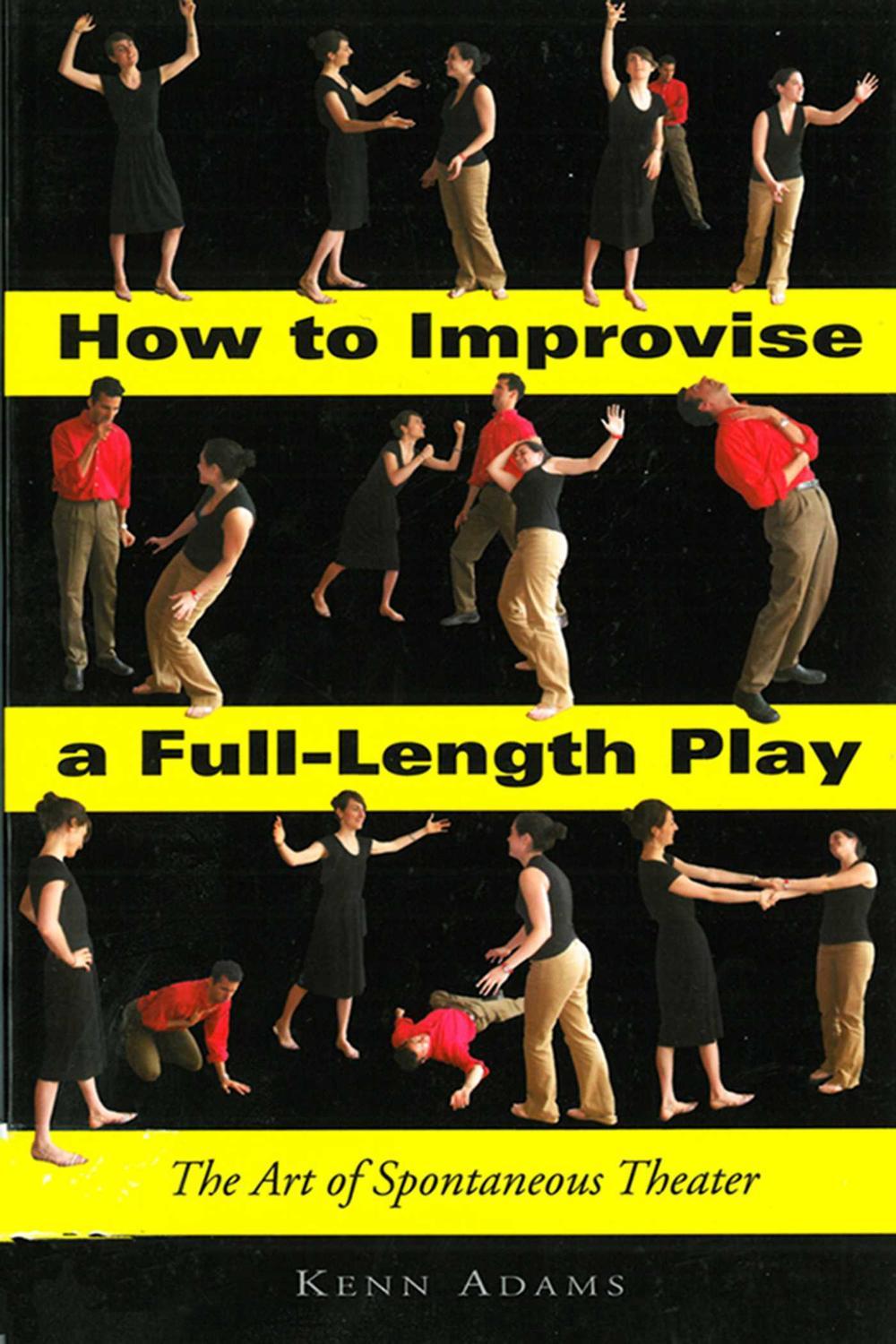
How to Improvise a Full-Length Play
The Art of Spontaneous Theater
Kenn Adams
Related Exercises
Anecdotes
Anecdotes is an exercise in which players take turns telling short true or fictional stories in response to a theme, prompt, or partner's contribution. The practice develops narrative structure, personal voice, active listening, and the ability to find the essential shape in real experience. In its paired version, as documented by Max Dickins in Improvise, two players build a shared fictional memory using "Yes, And" to co-construct the narrative. In its solo version, players practice distilling personal experiences into concise, engaging stories with clear beginnings, middles, and ends. Strong anecdote skills feed directly into monologue-based long-form formats such as the Armando and the Evente, where a performer's personal story serves as the source material for subsequent scenes. The exercise is also widely used in applied improvisation settings for developing communication, listening, and storytelling skills in professional contexts.
Automatic Storytelling
Automatic Storytelling is an exercise in which a player tells a story as rapidly as possible, following the first narrative impulse that arises without planning or editing. The technique bypasses the conscious mind's desire to control and produces raw, surprising material. It trains the instinct to trust one's first offer.
Ace
Ace (Advance, Color, Emotion) is a storytelling exercise in which one player narrates while a caller directs them to advance the plot, add descriptive color, or express emotion. The commands train improvisers to balance narrative momentum with sensory detail and emotional depth. It develops well-rounded storytelling instincts that translate directly to scene work.
And Then
And Then is a storytelling exercise in which each contribution to a group story must begin with the phrase "and then." The connective phrase enforces forward momentum and prevents storytellers from stalling or backtracking. The exercise trains narrative drive and the habit of advancing rather than circling.
How to Reference This Page
The Improv Archive. (2026). Story Spine. Retrieved March 17, 2026, from https://improvarchive.org/exercises/story-spine
The Improv Archive. "Story Spine." The Improv Archive, 2026. https://improvarchive.org/exercises/story-spine.
The Improv Archive. "Story Spine." The Improv Archive, 2026, https://improvarchive.org/exercises/story-spine. Accessed March 17, 2026.
The Improv Archive is a systemically maintained repository. The archive itself acts as the corporate author.