To the Point
Activities for practicing concise, clear communication, eliminating filler and getting to the essence of a message.
Worth Reading
See all books →
The "Yes And" Business Evolution
Improv Skills for Leadership and Life
Tracy Shea-Porter

When I Say This, Do You Mean That?
Enhancing Communication
Cherie Kerr; Julia Sweeney

The Improv Mindset
How to Make Improvisation Your Superpower for Success
Keith Saltojanes

Group Improvisation
The Manual of Ensemble Improv Games
Peter Campbell Gwinn; Charna Halpern
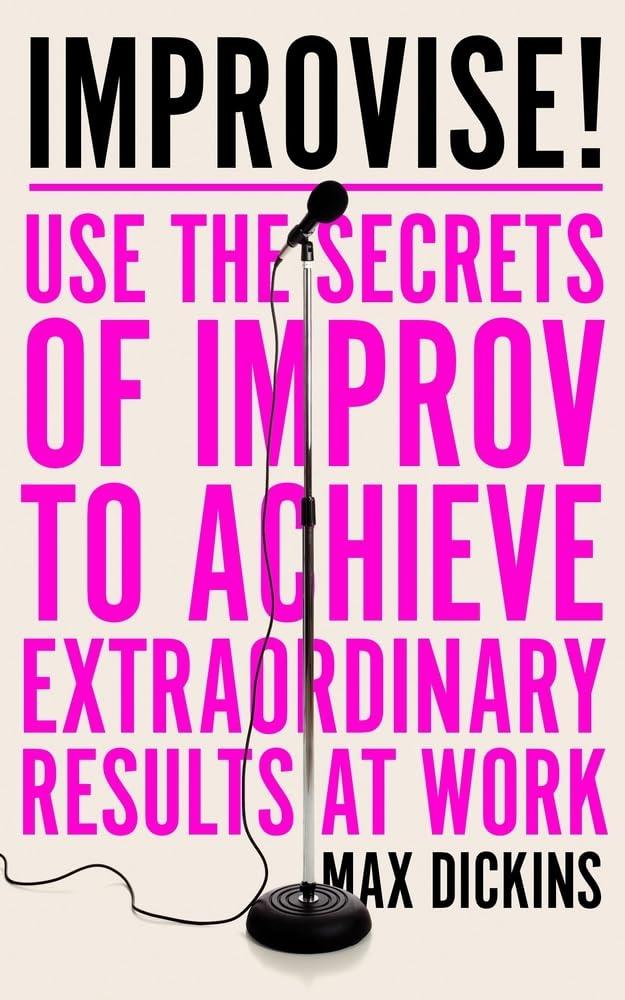
Improvise!
Use the Secrets of Improv to Achieve Extraordinary Results at Work
Max Dickins

The Art of Making Sh!t Up
Using the Principles of Improv to Become an Unstoppable Powerhouse
Norm LaViolette; Bob Melley
Related Exercises
Gibberish Commands
Gibberish Commands is an exercise in which a facilitator gives instructions entirely in gibberish -- an invented, wordless language -- and the group must interpret and execute what they believe was communicated. The exercise sharpens nonverbal reading: tone, gesture, pacing, and physical demonstration carry meaning in the absence of recognizable words. The group discovers how much information travels through channels other than vocabulary, and develops responsiveness to a speaker's full communicative presence.
Crazy Talk
Crazy Talk is a verbal exercise in which players speak in deliberate nonsense or stream-of-consciousness gibberish while maintaining committed emotional delivery. The exercise separates expressive intention from semantic content, proving that how something is said matters as much as what is said. It frees performers from the need to be clever or coherent.
Drop Inhibitions
Drop Inhibitions is a category of applied improvisation exercises designed to reduce self-consciousness and free participants for more authentic expression. The exercises use physical activity, group play, absurdity, and supportive social norms to displace the internal critical voice that typically moderates spontaneous expression. They are used to prepare groups for creative, collaborative, or personally vulnerable work by lowering the threshold for authentic participation.
Observe
Exercises in careful observation of verbal and nonverbal cues, developing awareness of what others communicate beyond words.
Me, Me, Me Syndrome
Me-Me-Me Syndrome is an applied improv exercise that surfaces and interrupts the habitual tendency to redirect conversations toward oneself -- to respond to a colleague's story, concern, or idea by relating it back to one's own experience rather than staying with theirs. The exercise makes this pattern visible through structured conversation in which participants are coached to notice and resist the autobiographical redirect, building the capacity for genuine other-directed attention.
Yes Based Conversations
Yes Based Conversations is an exercise in which performers practice having conversations built entirely on agreement and mutual support. Each speaker accepts what the other has said and adds their own perspective without contradiction. The exercise breaks the habit of default negation and demonstrates how agreement generates more productive scenes than conflict.
How to Reference This Page
The Improv Archive. (2026). To the Point. Retrieved March 17, 2026, from https://improvarchive.org/exercises/to-the-point
The Improv Archive. "To the Point." The Improv Archive, 2026. https://improvarchive.org/exercises/to-the-point.
The Improv Archive. "To the Point." The Improv Archive, 2026, https://improvarchive.org/exercises/to-the-point. Accessed March 17, 2026.
The Improv Archive is a systemically maintained repository. The archive itself acts as the corporate author.