Free-Form Improv
Free-Form Improv is a long-form approach in which performers follow no predetermined format or structure, allowing scenes, characters, and themes to emerge and connect organically. The absence of structural rules places maximum demand on ensemble instinct and editorial judgment. It is both the simplest and most demanding form of improvised performance.
Worth Reading
See all books →
Whose Improv Is It Anyway?
Beyond Second City
Amy E. Seham

The Upright Citizens Brigade Comedy Improvisation Manual
Matt Besser; Ian Roberts; Matt Walsh
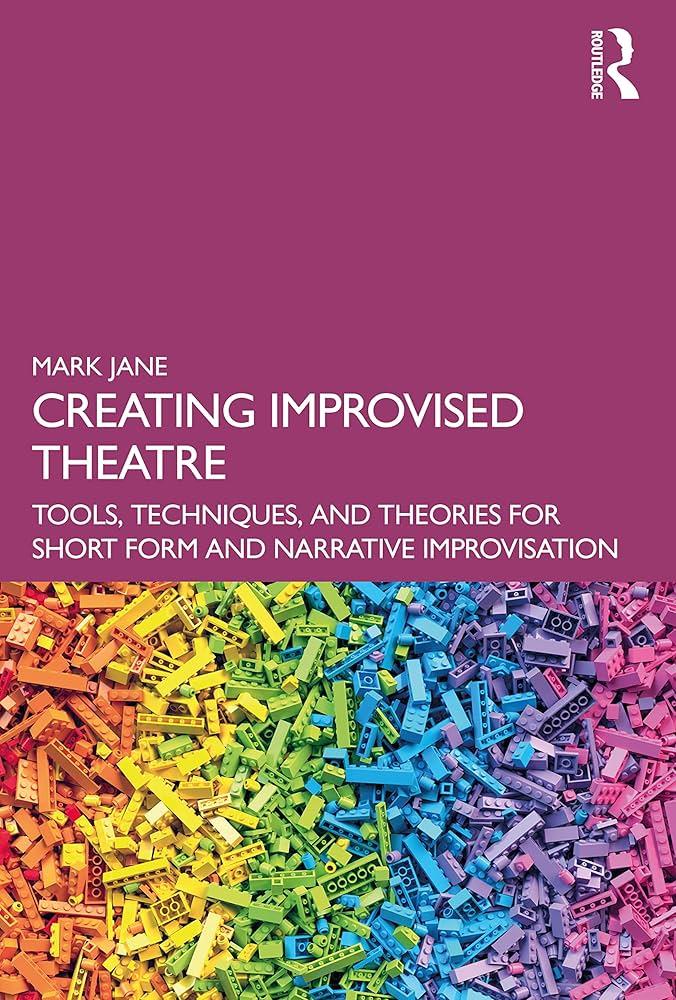
Creating Improvised Theatre
Tools, Techniques, and Theories
Mark Jane

Acting Through Improv
Improv Through Theatresports
Lynda Belt; Rebecca Stockley

Pirate Robot Ninja
An Improv Fable
Billy Merritt; Will Hines

Long Form Improvisation and American Comedy
The Harold
Matt Fotis
Related Formats
Postmodern Musical
Postmodern Musical is a long-form musical format that deconstructs traditional musical theatre conventions through improvisation. Performers create an original musical in real time, often incorporating meta-theatrical commentary, non-linear storytelling, or genre subversion. The format demands strong musical improv skills and an awareness of the tropes being played with.
Montage
Montage is a long-form improvised format in which performers present a series of thematically connected scenes inspired by a single audience suggestion. Scenes are linked by shared ideas, recurring motifs, emotional resonances, or occasional character callbacks rather than a continuous plot. The format's strength is its flexibility: any scene can follow any scene as long as the thematic connection holds. Montage is one of the foundational structures in Chicago-tradition long-form improvisation and is among the most widely performed long-form formats worldwide.
Slacker
Slacker is a long-form format built around a naturalistic, low-key performance aesthetic. The format prioritizes unhurried conversation, authentic character behavior, and organic scene discovery over high-status games or plotted narrative. Slacker scenes find their material in the texture of everyday life: the ordinary interactions, minor conflicts, and quiet moments that conventional improv formats tend to skip past in favor of more theatrical events.
Standard Musical
Standard Musical is a long-form format in which the ensemble improvises a complete musical in the style of a traditional Broadway show, with an original plot, characters, and songs created in the moment. The format follows conventional musical theatre structure with an opening number, ensemble scenes, solos, and a finale. It demands strong musical improv skills and narrative tracking.
Blind Harold
Blind Harold is a long-form format that follows the Harold structure but removes one or more elements of awareness from the performers. Players may not know the suggestion, cannot see edits, or are otherwise denied information they would normally use. The format tests how deeply ensemble instincts can carry a show when conscious planning is stripped away.
The Harold
The Harold is the foundational long-form improv structure, serving as the "Latin" of the art form. Developed by **Del Close** and popularized through **The Committee** in San Francisco and later **iO Chicago**, it is a complex, collage-like structure that uses a single suggestion to build a series of interconnected scenes, group games, and thematic explorations. According to the *Upright Citizens Brigade Comedy Improvisation Manual*, the Harold is not just a format but a training tool that teaches improvisers how to listen, find patterns, and connect disparate ideas into a unified whole. It is characterized by its three-beat structure, where three distinct storylines are established, heightened, and eventually merged. It represents the transition of improv from short-form games into a cohesive, long-form theatrical piece, demanding a high level of "group mind" and thematic awareness from its players. The Harold is often described as a "symphony" of improv, where individual melodies (scenes) are woven into a complex, thematic tapestry.
How to Reference This Page
The Improv Archive. (2026). Free-Form Improv. Retrieved March 17, 2026, from https://improvarchive.org/formats/free-form-improv
The Improv Archive. "Free-Form Improv." The Improv Archive, 2026. https://improvarchive.org/formats/free-form-improv.
The Improv Archive. "Free-Form Improv." The Improv Archive, 2026, https://improvarchive.org/formats/free-form-improv. Accessed March 17, 2026.
The Improv Archive is a systemically maintained repository. The archive itself acts as the corporate author.