Standard Musical
Standard Musical is a long-form format in which the ensemble improvises a complete musical in the style of a traditional Broadway show, with an original plot, characters, and songs created in the moment. The format follows conventional musical theatre structure with an opening number, ensemble scenes, solos, and a finale. It demands strong musical improv skills and narrative tracking.
Worth Reading
See all books →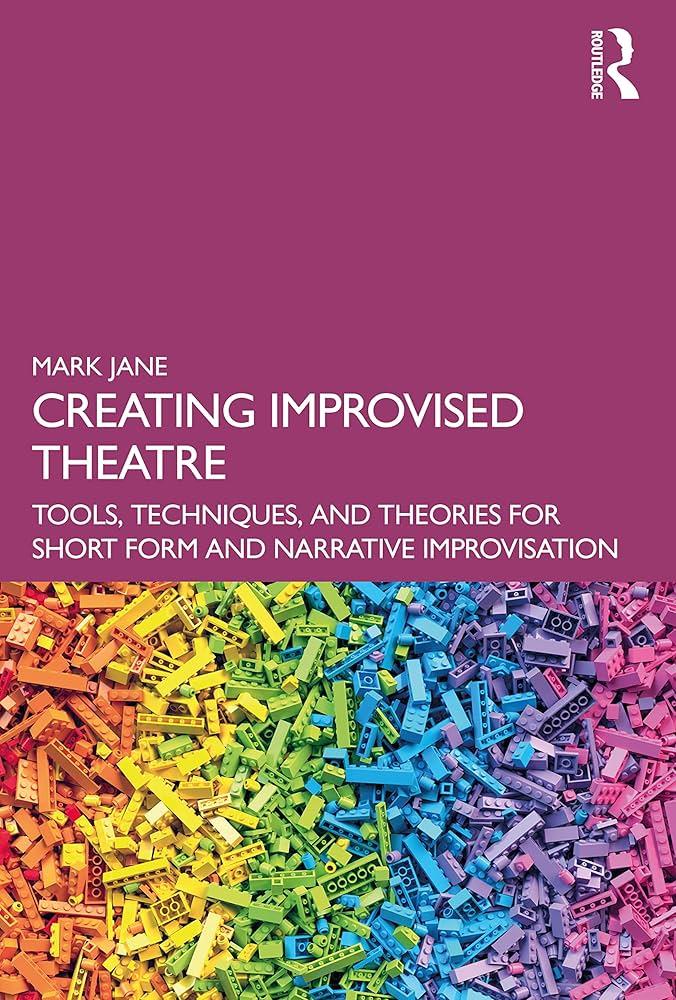
Creating Improvised Theatre
Tools, Techniques, and Theories
Mark Jane

Long Form Improvisation and American Comedy
The Harold
Matt Fotis

Theatrical Improvisation
Short Form, Long Form, and Sketch-Based Improv
Jeanne Leep

Acting Through Improv
Improv Through Theatresports
Lynda Belt; Rebecca Stockley

Pirate Robot Ninja
An Improv Fable
Billy Merritt; Will Hines

Group Improvisation
The Manual of Ensemble Improv Games
Peter Campbell Gwinn; Charna Halpern
Related Formats
Postmodern Musical
Postmodern Musical is a long-form musical format that deconstructs traditional musical theatre conventions through improvisation. Performers create an original musical in real time, often incorporating meta-theatrical commentary, non-linear storytelling, or genre subversion. The format demands strong musical improv skills and an awareness of the tropes being played with.
Montage
Montage is a long-form improvised format in which performers present a series of thematically connected scenes inspired by a single audience suggestion. Scenes are linked by shared ideas, recurring motifs, emotional resonances, or occasional character callbacks rather than a continuous plot. The format's strength is its flexibility: any scene can follow any scene as long as the thematic connection holds. Montage is one of the foundational structures in Chicago-tradition long-form improvisation and is among the most widely performed long-form formats worldwide.
Whose Line Is It Anyway?
Whose Line Is It Anyway? is a short-form performance format adapted from the long-running television show in which performers play a rotation of quick improv games based on audience suggestions. The format features a host who introduces each game and manages the energy. It is one of the most widely recognized improv formats in popular culture.
Micetro
Micetro is a competitive long-form format created by Keith Johnstone. A large cast of improvisers performs scenes that are scored by the audience, and the lowest-scoring performers are progressively eliminated until a single winner remains. The format combines the spontaneity of improvisation with the tension of a tournament structure.
Tapestry
Tapestry is a long-form format in which multiple seemingly unrelated scenes are played across a full show, gradually revealing thematic, character, and narrative connections between them. The full picture emerges only as the show progresses, requiring ensemble patience, callback discipline, and trust that the disparate threads will cohere. The format rewards thematic awareness and is named for the way its elements, invisible in isolation, reveal their pattern once complete.
Deconstruction
The Deconstruction is a long-form improv format that takes a single opening scene and systematically revisits its elements from different angles, time periods, perspectives, or contexts. Each subsequent scene deconstructs an aspect of the original, exploring a character's backstory, a theme's implications, or a relationship's origin. The format demands structural thinking, the ability to identify multiple entry points within a single premise, and the ensemble skill of building an interconnected web of scenes that deepen the audience's understanding of the original material. The Deconstruction rewards analytical improvisers who can identify the richest elements of a scene and expand them into full explorations.
How to Reference This Page
The Improv Archive. (2026). Standard Musical. Retrieved March 17, 2026, from https://improvarchive.org/formats/standard-musical
The Improv Archive. "Standard Musical." The Improv Archive, 2026. https://improvarchive.org/formats/standard-musical.
The Improv Archive. "Standard Musical." The Improv Archive, 2026, https://improvarchive.org/formats/standard-musical. Accessed March 17, 2026.
The Improv Archive is a systemically maintained repository. The archive itself acts as the corporate author.