Ding Characters
Ding Characters is a variant of the Ding game in which a bell or signal causes a performer to change their character rather than repeat their previous line. Each ding produces a new persona with different physicality, voice, status, or emotional register, while the scene's action and circumstances continue. The game trains rapid character transformation and physical range.
Structure
Setup
Two or more performers play a scene. A caller (the host or a designated player) stands to the side with a bell or signal mechanism.
Character Ding
At any point, the caller rings the bell. The designated performer (or all performers simultaneously, depending on the variant) instantly shifts to a completely new character: new voice, new physicality, new status or attitude. The previous character is abandoned immediately. The scene's circumstances and the other performer's character remain.
Continuity
The scene continues under the new character. The new character must accept the circumstances already established by the previous character and continue the scene's logic forward, even if that logic is now incongruous with the new persona.
Conclusion
The host wraps when a sufficient number of character changes have been demonstrated or when a particularly rich character transformation produces a strong comedic or dramatic moment.
How to Teach It
Objectives
Ding Characters targets rapid character transformation, physical range, and the ability to commit fully to a new physicality and vocal register instantaneously. It develops the performer's character library and the speed at which they can access different physical and vocal choices.
How to Explain It
"When the bell rings, you're a completely new character. Not a slightly different person -- a completely different person. New voice, new body, new way of being. The old character is gone. Go."
Common Pitfalls
Performers produce character changes that are subtle variations of the same type rather than genuine shifts across the full range of physical and vocal possibility. Challenge performers to move across status (high to low or vice versa), across physical size (large and commanding to small and contained), and across emotional register with each change.
How to Perform It
Audience Intro
"Our performers are going to play a scene, but every time I ring the bell, [performer] becomes a completely different character. Same scene, new person. Let's see how many they can give us."
Cast Size
Two to four performers. The character ding can apply to one performer or all simultaneously.
Wrap Logic
The game ends when the accumulation of character changes has produced sufficient variety or when the scene has reached a natural resolution with an interesting character combination.
Worth Reading
See all books →
Group Improvisation
The Manual of Ensemble Improv Games
Peter Campbell Gwinn; Charna Halpern

Business Improv
Experiential Learning Exercises to Train Employees
Val Gee

Pirate Robot Ninja
An Improv Fable
Billy Merritt; Will Hines

Acting Through Improv
Improv Through Theatresports
Lynda Belt; Rebecca Stockley

Improvised Theatre and the Autism Spectrum
A Practical Guide
Gary Kramer; Richie Ploesch
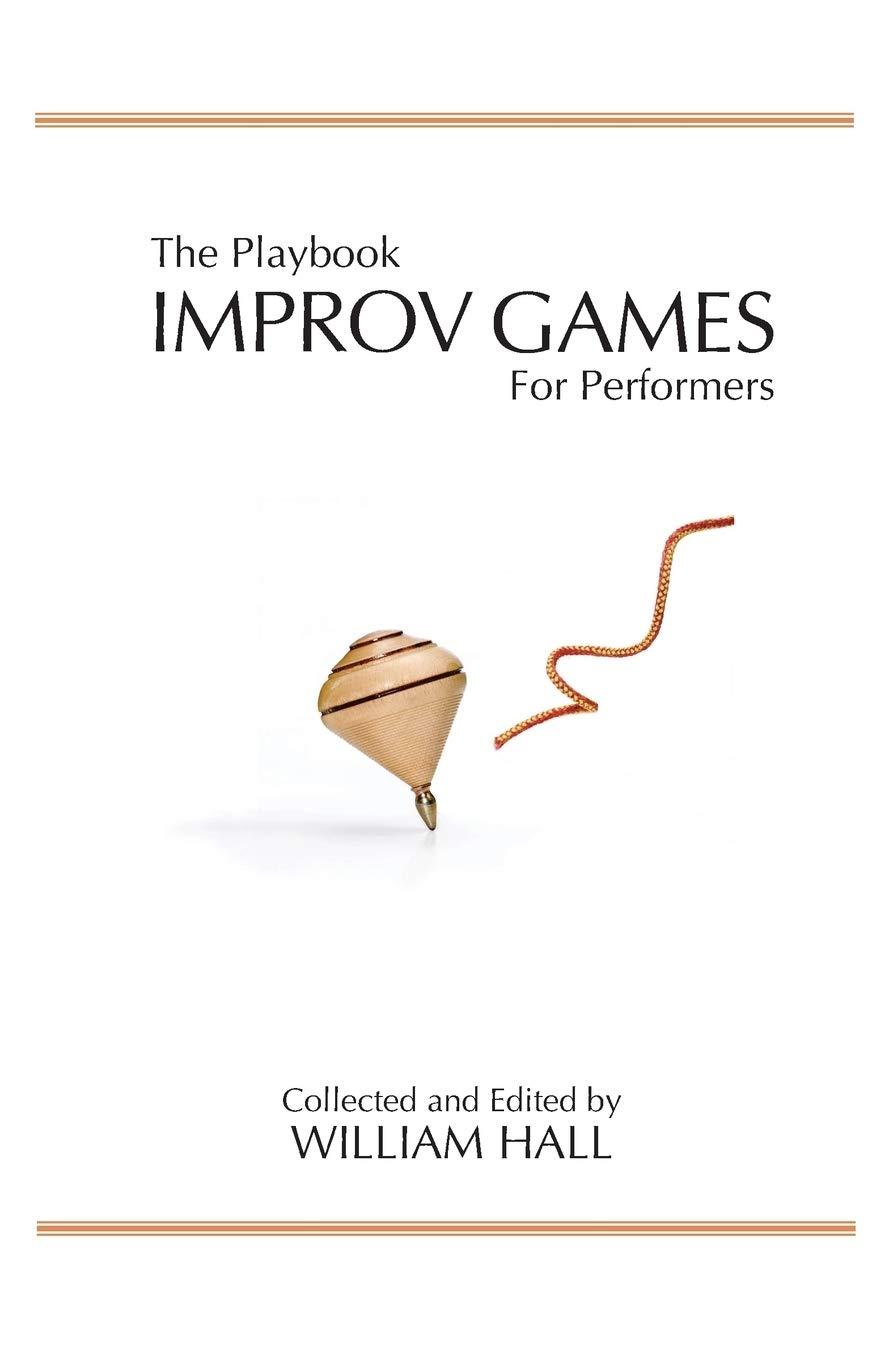
The Playbook
Improv Games for Performers
William Hall
Related Games
Wacky Word Wizard
Wacky Word Wizard is a game in which a performer plays a character who has the power to transform the scene whenever they say a specific trigger word. Each utterance of the word changes the genre, setting, or emotional tone. The game rewards creative use of the trigger and the ability to justify sudden transformations within scene logic.
Switcheroo
Switcheroo is a game in which performers swap roles, characters, or positions within a scene on command. Each player must immediately adopt the voice, physicality, and perspective of the character they are inheriting. The game tests observational skills and the ability to replicate a scene partner's specific choices.
Ding
Ding is a short-form game in which a host rings a bell or buzzer to signal a performer to replace their last line of dialogue with a new one. The host can ring repeatedly, demanding multiple replacements for the same moment, each new line erasing the previous one within the scene's reality. The game is one of the most widely performed short-form games in the world, popularized through its frequent appearance on Whose Line Is It Anyway? Ding rewards fast verbal invention, the ability to generate multiple alternatives under pressure, and the willingness to abandon a safe choice in favor of a riskier, funnier one.
New Choice
New Choice is a short-form game in which a caller interrupts performers mid-scene by shouting "New Choice," forcing the last speaker to immediately replace their most recent line or action with something entirely different. The caller may fire multiple calls in rapid succession, pushing performers through a cascade of alternatives under pressure. The game trains verbal agility, commitment to offers, and the capacity to abandon choices without hesitation.
Character Switch
Character Switch is a scene game in which a caller signals performers to rotate characters, each inheriting the role of the player to their left or right. Unlike Character Swap, which involves a single exchange, Character Switch cycles all characters simultaneously. The game demands close observation and the ability to pick up another performer's character instantly.
How to Reference This Page
The Improv Archive. (2026). Ding Characters. Retrieved March 17, 2026, from https://improvarchive.org/games/ding-characters
The Improv Archive. "Ding Characters." The Improv Archive, 2026. https://improvarchive.org/games/ding-characters.
The Improv Archive. "Ding Characters." The Improv Archive, 2026, https://improvarchive.org/games/ding-characters. Accessed March 17, 2026.
The Improv Archive is a systemically maintained repository. The archive itself acts as the corporate author.