New Choice
New Choice is a short-form game in which a caller interrupts performers mid-scene by shouting "New Choice," forcing the last speaker to immediately replace their most recent line or action with something entirely different. The caller may fire multiple calls in rapid succession, pushing performers through a cascade of alternatives under pressure. The game trains verbal agility, commitment to offers, and the capacity to abandon choices without hesitation.
Structure
Setup
Two players begin a scene in the usual way. A third person serves as the caller and stands to the side. The caller may be the host, another performer, or an audience member. When a bell is used, the game is sometimes called Ding.
Gameplay
The players perform a scene and make offers normally. At any moment, the caller interrupts by shouting "New Choice" (or ringing a bell). The performer who spoke or acted most recently must immediately replace that line or action with a different one. The scene continues from whatever new choice was made.
The caller may repeat the call several times in quick succession on the same line, forcing the performer through a rapid chain of alternatives before the scene resumes. The caller controls the pacing: leaving stretches of uninterrupted play to establish the scene, then deploying calls at moments of commitment or routine.
When a player replaces an action rather than a line, the physical choice changes: a player who was sitting stands, a player who was pointing uses a different gesture.
Variations
Some facilitators use "Take That Back" as the caller phrase in place of "New Choice." Some versions allow the caller to target physical actions exclusively for a period, building body-level responsiveness alongside verbal agility.
How to Teach It
How to Explain It
"You are in a scene. At any point, I will shout 'New Choice.' When I do, the last line that was spoken is replaced immediately. Say something different. Keep going. If I shout again, replace it again. There is no wrong answer. There is only: what else?"
Objectives
New Choice builds the muscle of non-attachment: the capacity to abandon an offer at the moment of maximum investment. Players who struggle with New Choice typically struggle with the same pattern in scenes: they hold to their own ideas rather than tracking what the scene requires. The game makes that pattern visible and provides repetitions for breaking it.
The exercise also addresses verbal agility and trains performers to access alternatives without editing them in advance.
Common Coaching Notes
- "Don't pause. Your first replacement is the right one."
- "Commit to the new line as fully as you committed to the one you just abandoned."
- "Callers: interrupt at the worst possible moment. That's the game."
- "If you find yourself making the same choices repeatedly, that's information about your defaults."
Applied Contexts
In applied settings, New Choice is used to build cognitive flexibility and tolerance of rapid change. Facilitators running New Choice in corporate or educational contexts should frame the debrief around what made it difficult to abandon choices: what assumptions about being "right" came up, and what the exercise reveals about habitual thinking under pressure.
How to Perform It
Caller Strategy
The caller's skill determines the game's quality. Poor callers interrupt too uniformly (every other line) or too infrequently (once per minute). Strong callers wait for moments of commitment, then interrupt: the more invested the performer appears in a line, the more effective the "New Choice" lands for the audience.
The caller should also interrupt physical actions deliberately, not just verbal ones. Audiences respond strongly when a physical commitment is reversed mid-gesture.
Performer Strategy
The error that kills New Choice is the performer who pauses to think. The first impulse is nearly always the best choice under rapid-fire calls. Players who stall for a "better" idea produce dead air and signal to the audience that they are searching rather than playing.
The replacement must be committed to immediately: a new line delivered with the same conviction as the original. A half-hearted replacement looks like a mistake; a fully committed replacement looks like a game.
Pacing as Structure
The game has a natural arc: slow calls early to establish relationship and circumstance, accelerating calls at mid-game to build energy, a climactic rapid-fire sequence, and a clean end. A caller who sustains rapid fire for too long exhausts the game before its natural peak.
In Applied Settings
Learning Objectives
New Choice trains flexibility and the ability to de-attach from a committed position. The forced replacement mechanic makes visible the instinct to defend a choice after it has been made, and gives participants practice in pivoting without loss of face.
Workplace Transfer
In team settings, the "new choice" moment mirrors situations where a plan, proposal, or approach must change after it has already been committed to. New Choice normalizes revision as part of the process rather than a failure of the original decision. Participants who practice it develop greater comfort with course-correction and less attachment to the first version of any idea.
Facilitation Context
Suitable for corporate workshops, leadership development sessions, and creative team training. Works well in pairs or with a full group. The caller role can rotate or be held by the facilitator. Runs well in five to ten minutes.
Adaptation Notes
For participants with no improv background, frame the exercise as a rapid iteration drill. The instruction is: every time I say "new choice," give me a different version of the last thing you said. The theatrical context is optional; the practice of flexible revision is the content.
Debrief Framing
"What was your instinct when you heard 'new choice'? Did you want to defend the choice you just made?"
"When did pivoting feel easy? When did it feel hard?"
"Where in your work does the same thing happen: you commit to something, and then circumstances change?"
Skills Developed
History
New Choice is associated with Whose Line Is It Anyway?, both the British series (1988-1999) and the American adaptation (1998-2007), where it appeared under the name Ding and used a bell or buzzer as the caller's instrument. The game's television exposure made it one of the most widely recognized short-form games outside of theatre settings.
The game belongs to a category of restriction games that impose external interruption on a scene to break habitual offers. Asaf Ronen categorizes New Choice alongside Forward Reverse, Ding, and Freeze Tag as restriction games that manipulate how time operates within a scene. The concept has also been called "Change" in some curricula.
Beyond short-form performance, New Choice has been adopted as an applied improvisation exercise. Theresa Dudeck documents it as Workbook exercise 4.3 in Applied Improvisation, framing it as a tool for remaking verbal and physical offers and building cognitive flexibility in non-performance contexts.
Matt Fotis identifies New Choice as useful for solo and collaborative writers as a creativity exercise: the forced replacement of offers breaks habitual thinking and generates alternatives the writer would not have reached through deliberate selection.
Worth Reading
See all books →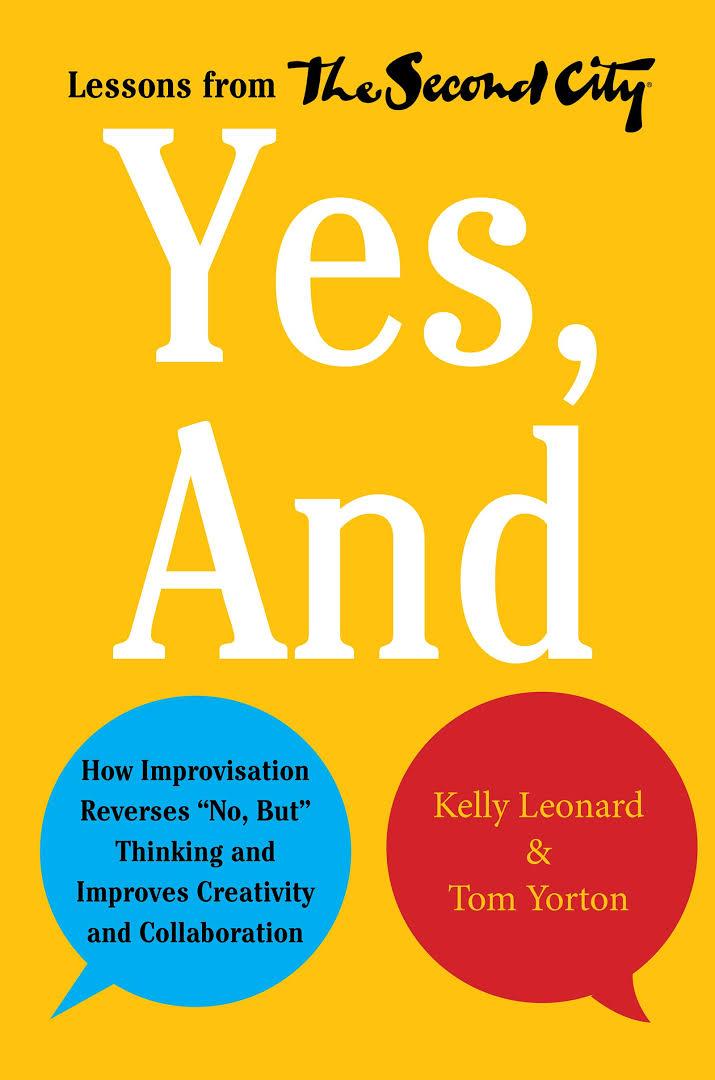
Yes, And
How Improvisation Reverses No, But Thinking and Improves Creativity and Collaboration
Kelly Leonard; Tom Yorton
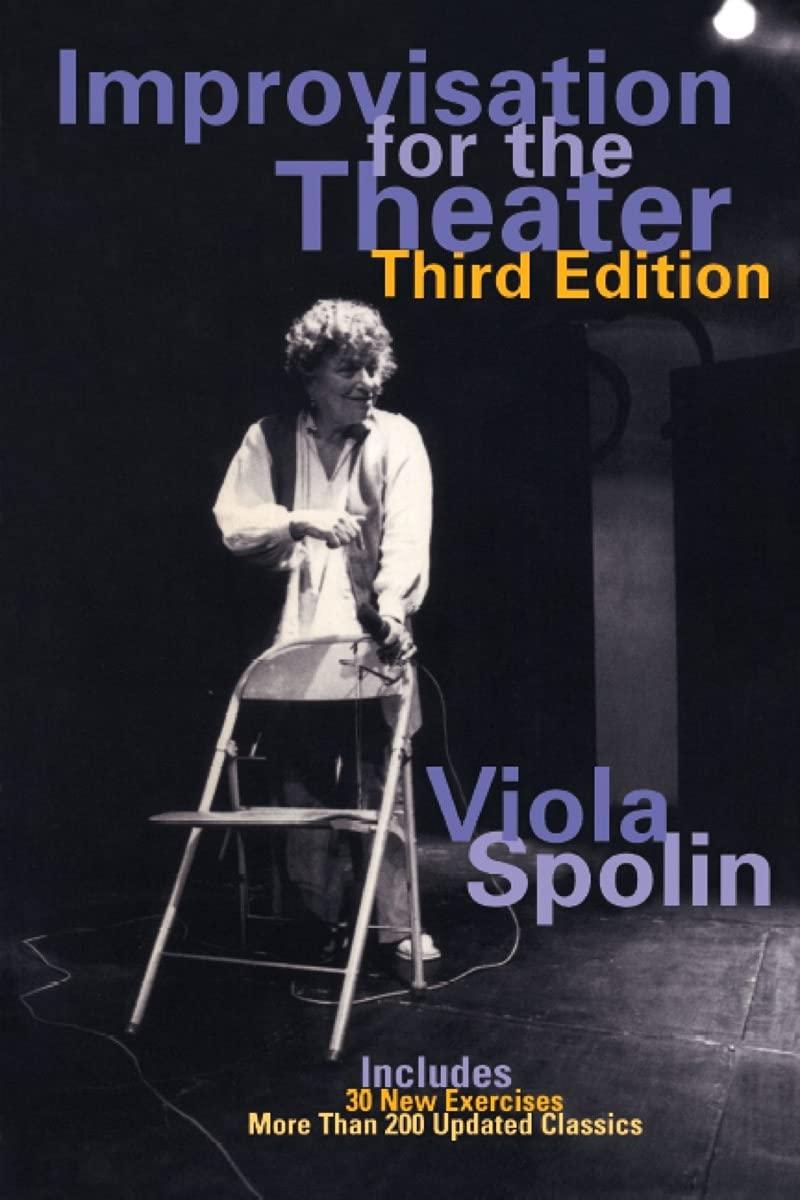
Improvisation for the Theater
A Handbook of Teaching and Directing Techniques
Viola Spolin

The Improv Handbook
The Ultimate Guide to Improvising in Comedy, Theatre, and Beyond
Tom Salinsky; Deborah Frances-White

The Upright Citizens Brigade Comedy Improvisation Manual
Matt Besser; Ian Roberts; Matt Walsh

Long Form Improvisation and American Comedy
The Harold
Matt Fotis

Applied Improvisation
Leading, Collaborating, and Creating Beyond the Theatre
Theresa Robbins Dudeck; Caitlin McClure
Related Games
Change
Change is a short-form game in which a caller says "change" at any point during a scene, forcing the last speaker to replace their most recent line with a new one. Repeated calls on the same line demand increasingly creative alternatives. The game trains verbal agility and the ability to generate multiple options for any moment.
Ding
Ding is a short-form game in which a host rings a bell or buzzer to signal a performer to replace their last line of dialogue with a new one. The host can ring repeatedly, demanding multiple replacements for the same moment, each new line erasing the previous one within the scene's reality. The game is one of the most widely performed short-form games in the world, popularized through its frequent appearance on Whose Line Is It Anyway? Ding rewards fast verbal invention, the ability to generate multiple alternatives under pressure, and the willingness to abandon a safe choice in favor of a riskier, funnier one.
Other Choice
Other Choice is a short-form host game in which a host interrupts performers mid-scene and prompts them to replace their most recent line or action with an alternative. Unlike New Choice, which accepts any substitution, Other Choice may impose a constraint on the replacement: the new choice must match a specified genre, emotional register, or style. The game tests verbal flexibility and the ability to generate alternatives under specific conditions.
Sing It
Sing It is a short-form game in which a host signals performers to interrupt their scene dialogue and immediately sing a song containing the word or phrase just spoken. The performer sings a relevant portion of the song, then returns to the scene. The game rewards broad musical knowledge, quick verbal association, and the willingness to commit to an unplanned song in public.
Call from Ray
Call from Ray is a short-form game in which a scene is interrupted by a phone call from an unseen character named Ray, whose offstage dialogue (supplied by another performer) introduces new information that shifts the scene. Each call raises the stakes or redirects the narrative. The game trains adaptability and the ability to incorporate external offers mid-scene.
Rewind
Rewind is a short-form game in which a host calls out during a scene, causing performers to physically and verbally reverse their actions back to an earlier moment, then replay forward with different choices. The game rewards strong physical memory, comedic timing at the point of replay, and the ability to generate distinct alternatives quickly when the scene resumes.
How to Reference This Page
The Improv Archive. (2026). New Choice. Retrieved March 17, 2026, from https://improvarchive.org/games/new-choice
The Improv Archive. "New Choice." The Improv Archive, 2026. https://improvarchive.org/games/new-choice.
The Improv Archive. "New Choice." The Improv Archive, 2026, https://improvarchive.org/games/new-choice. Accessed March 17, 2026.
The Improv Archive is a systemically maintained repository. The archive itself acts as the corporate author.