Dubbing
Dubbing is a performance game in which one performer provides the physical actions for a character while a separate performer supplies that character's voice from offstage or from behind. The deliberate separation of voice and body creates inherent comedy as the two performers attempt to synchronize, producing a character that appears to have a mind of its own. Dubbing trains complementary skills: the body performer must generate clear, readable physical actions, while the voice performer must interpret and justify those movements through dialogue. The game appears across many short-form formats and is one of the most audience-accessible improv games due to its immediately visible comic mechanism.
Structure
Two performers partner to play a single character. One performer (the body) stands in the scene and performs all physical actions, gestures, and facial expressions. The other performer (the voice) stands to the side, behind, or offstage and speaks all dialogue for that character.
A second character, played normally by a single performer, initiates a scene with the dubbed character. The scene proceeds with the body performer reacting physically and the voice performer providing dialogue that attempts to match the physical performance.
The comedy emerges from the inevitable mismatches. The body performer reaches for an object, and the voice performer must justify the reach. The voice performer initiates an emotional outburst, and the body performer must physicalize it. Each performer must watch and listen to their partner while simultaneously creating their own contribution.
The game escalates as the scene develops and the physical and vocal demands increase. A body performer who begins eating must be supported by the voice performer through dialogue delivered with a full mouth. A voice performer who starts crying must be matched by the body performer with physical tears.
The scene concludes with a blackout. Some versions feature multiple dubbed characters, doubling the synchronization challenges.
How to Teach It
How to Explain It
"Two performers will move. Two performers will voice them. Movement and voice are separate: you are dubbing a scene like a foreign film. Movers, commit to specific physical action. Dubbers, give them a voice that fits."
Begin by having pairs practice simple activities (ordering coffee, introducing themselves) before adding the complexity of a full scene. The foundational skill is the body-voice feedback loop: each performer must continuously adjust to the other's choices.
Coach the body performer to slow down. Rapid, small gestures give the voice performer nothing to work with. Large, sustained physical choices provide clear targets for vocal justification.
Coach the voice performer to commit to whatever the body does, no matter how unexpected. If the body performer suddenly lies on the floor, the voice performer should justify it immediately rather than waiting for the body to return to a standing position.
A common failure mode is both performers trying to lead. When the body performer generates independent physical ideas while the voice performer drives independent dialogue, the character fractures. Coach for mutual responsiveness: one performer leads, the other follows, and they trade the lead organically.
For advanced groups, try reverse dubbing: one performer provides the voice while a different performer must provide appropriate physical actions to match.
How to Perform It
The body performer must prioritize clarity. Every physical action should be large, deliberate, and readable from the audience's perspective. Ambiguous gestures force the voice performer to guess, producing confusion rather than comedy.
The voice performer must react to the physical performance rather than driving the scene independently. Dialogue that ignores what the body is doing breaks the game's central conceit. The strongest voice performers watch the body performer continuously and adjust their delivery in real time.
The non-dubbed scene partner has a critical role: providing the dubbed character with reasons to speak and act. Questions, provocations, and physical interactions give both the body and voice performers material to respond to.
Mouth movement creates a specific challenge. When the body performer speaks (moving lips without sound), the voice performer must match the timing. When the body performer's mouth is closed, the voice performer should pause. This synchronization, even when imperfect, sells the illusion.
Worth Reading
See all books →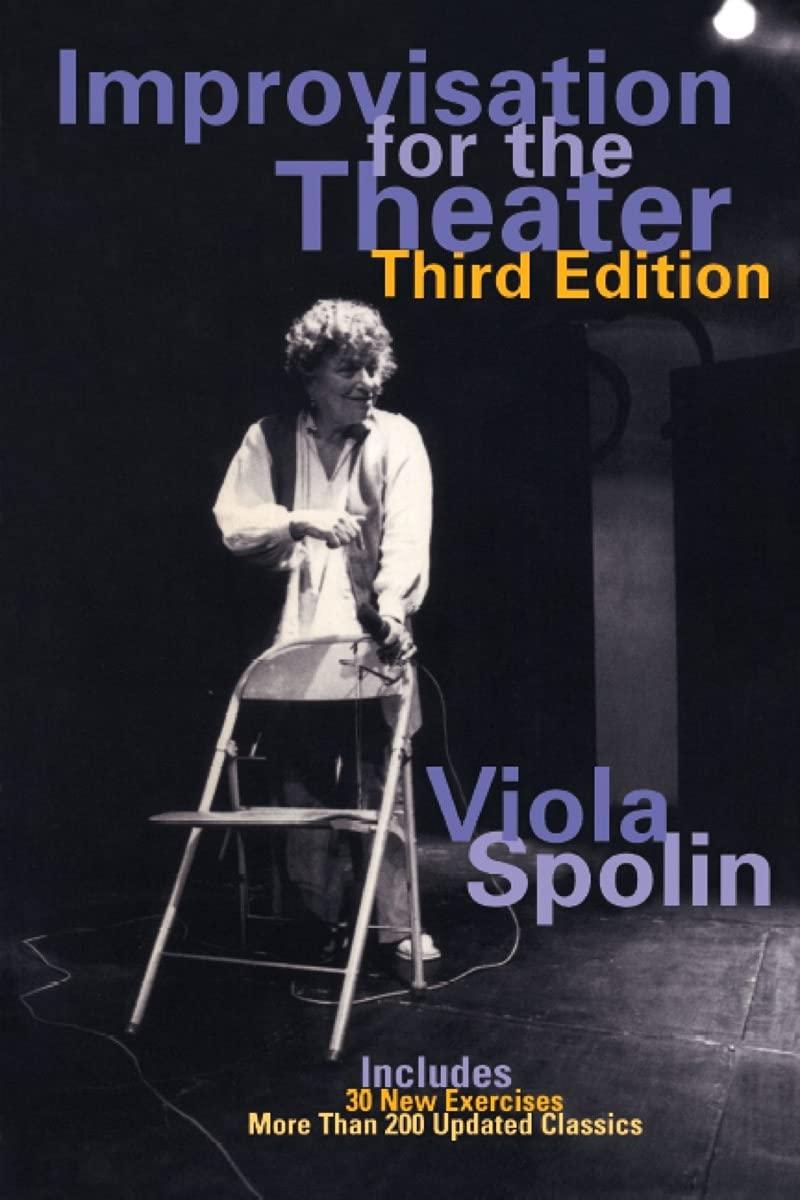
Improvisation for the Theater
A Handbook of Teaching and Directing Techniques
Viola Spolin

The Improv Handbook
The Ultimate Guide to Improvising in Comedy, Theatre, and Beyond
Tom Salinsky; Deborah Frances-White

Improvisation
Use What You Know, Make Up What You Don't
Brad Newton

Acting Through Improv
Improv Through Theatresports
Lynda Belt; Rebecca Stockley

Theatrical Improvisation, Consciousness, and Cognition
Clayton D. Drinko

The Improv Illusionist
Using Object Work, Environment, and Physicality in Performance
David Raitt
Related Games
Ventriloquist
Ventriloquist is a two-player game in which one performer provides the voice and another provides the body of a single character. The voice player speaks; the body player moves, gestures, and reacts physically, without speaking. The two must coordinate in real time without prior planning to create a coherent, unified character. The structural split between voice and body generates comedy from the inevitable misalignments while training deep physical listening and ensemble coordination.
Bidirectional Satellite TV
Bidirectional Satellite TV is a dubbing game in which two pairs of performers are placed in separate areas, each watching the other on an imaginary screen. One pair provides the physical action while the other provides the voices, and they switch roles back and forth. The disconnection between bodies and voices generates comedy through mismatched timing and interpretation.
One Mouth
One Mouth is a game in which two performers stand close together and operate as a single character. One player provides the voice while the other provides the body and gestures, or both alternate control. The disconnection between voice and body creates physical comedy and demands intense coordination between the pair.
Siamese Twins
Siamese Twins is a physical scene game in which two performers stand side by side and operate together as a single character, each using only their outer arm. The constraint requires close physical coordination and continuous nonverbal negotiation about every action, gesture, and movement. The game generates comedy from the inevitable mismatches between the two players' intentions and from the absurdity of watching two bodies attempt to function as one.
Dubbed Movie
Dubbed Movie is a scene game in which one set of performers provides the physical action while a separate group supplies all voices from offstage or from the side. The disconnect between bodies and voices generates comedy through mismatched timing, unexpected interpretations, and the challenge of physical performers having to commit fully to words they cannot predict. The game trains both physical storytelling and vocal responsiveness.
Understudy
Understudy is a scene game in which performers replace one another mid-scene and must instantly continue as the character just vacated, adopting their voice, physicality, and emotional state. The replacing performer must observe closely while waiting and commit to a specific replication rather than a generic impression. The game trains character observation, physical specificity, and the ability to enter mid-scene without disrupting its reality.
How to Reference This Page
The Improv Archive. (2026). Dubbing. Retrieved March 17, 2026, from https://improvarchive.org/games/dubbing
The Improv Archive. "Dubbing." The Improv Archive, 2026. https://improvarchive.org/games/dubbing.
The Improv Archive. "Dubbing." The Improv Archive, 2026, https://improvarchive.org/games/dubbing. Accessed March 17, 2026.
The Improv Archive is a systemically maintained repository. The archive itself acts as the corporate author.