Fast Forward
Fast Forward is a scene game in which a caller can jump the scene forward in time, skipping past slow moments to the next point of dramatic interest. Performers must instantly establish the new time frame through changed behavior, dialogue, and physical context. The game trains temporal agility and the ability to communicate the passage of time.
Worth Reading
See all books →
Devising Performance
A Critical History
Deirdre Heddon; Jane Milling
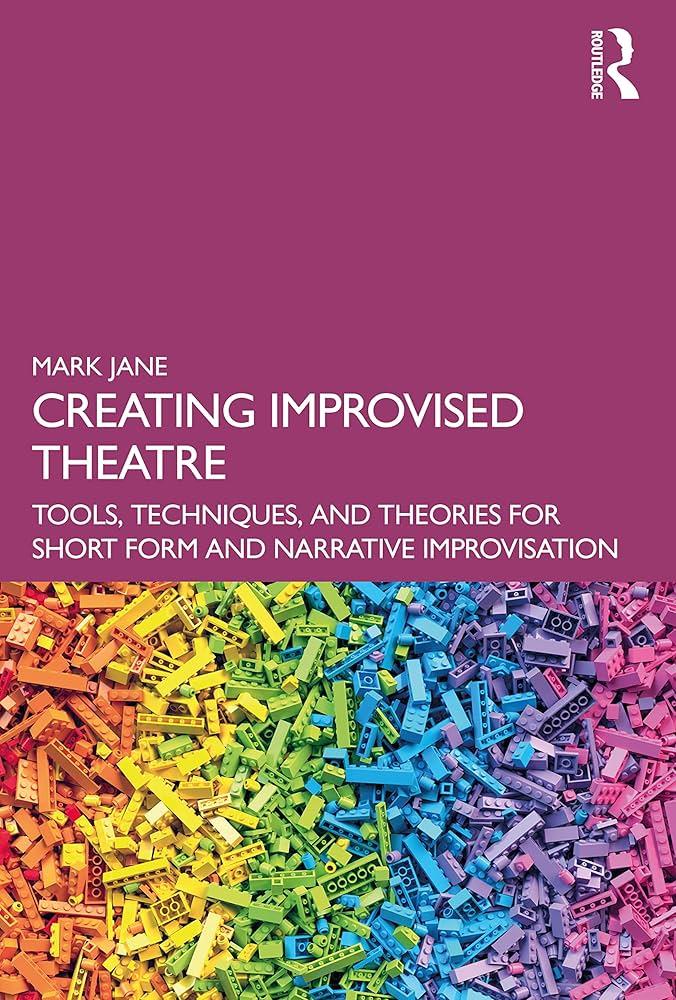
Creating Improvised Theatre
Tools, Techniques, and Theories
Mark Jane

The Ultimate Improv Book
A Complete Guide to Comedy Improvisation
Edward J. Nevraumont; Kurt Smeaton; Nicholas P. Hanson

Business Improv
Experiential Learning Exercises to Train Employees
Val Gee

Improvisation
Use What You Know, Make Up What You Don't
Brad Newton
Theater Games for Rehearsal
Viola Spolin
Related Games
Time Jump
Time Jump is a scene game in which a host calls out jumps forward or backward in time during a scene, forcing performers to show how their characters and situations change across years, decades, or centuries. The game rewards consistent character development and the ability to quickly physicalize the effects of time's passage.
Time Bomb
Time Bomb is a fast-paced game in which players must complete a task, answer a question, or contribute to a scene before an imaginary or real timer expires. The countdown creates urgency that eliminates hesitation. The game rewards quick instincts and teaches performers to trust their first response.
Genre Rollercoaster
Genre Rollercoaster is a scene game in which the performance style shifts rapidly between genres at the host's command. A scene might move from western to soap opera to sci-fi within minutes. The game demands instant genre recognition and the flexibility to transform a scene's entire aesthetic without losing its content.
Behind Closed Doors
Behind Closed Doors is a scene game in which the audience sees only the moments before characters enter and after they exit a room, never what happens inside. Players must convey dramatic events through their changed demeanor, dialogue, and physical state upon emerging. The game trains performers to communicate offstage action through behavior.
Pan Left
Pan Left is a short-form game in which the stage is divided into multiple locations, and a host calls camera directions to shift the audience's attention from one scene to another. Each scene freezes when the camera pans away and resumes when it returns. The game trains performers to maintain continuity across interrupted scenes and rewards strong callbacks.
Only Questions
Only Questions is a scene game in which performers must communicate exclusively through questions. Any player who makes a statement, hesitates too long, or repeats a question structure is replaced. The game was popularized by Whose Line Is It Anyway and has roots in Keith Johnstone's TheatreSports. It trains quick thinking and the ability to advance a scene without declarative dialogue.
How to Reference This Page
The Improv Archive. (2026). Fast Forward. Retrieved March 17, 2026, from https://improvarchive.org/games/fast-forward
The Improv Archive. "Fast Forward." The Improv Archive, 2026. https://improvarchive.org/games/fast-forward.
The Improv Archive. "Fast Forward." The Improv Archive, 2026, https://improvarchive.org/games/fast-forward. Accessed March 17, 2026.
The Improv Archive is a systemically maintained repository. The archive itself acts as the corporate author.