First Line Last Line
First Line Last Line is a scene game in which the audience provides both the first and last lines of a scene, and performers must build a coherent narrative between the two endpoints. The fixed destination changes how performers construct the scene, requiring backward-thinking and strategic steering. The game rewards narrative architecture.
Worth Reading
See all books →The Triangle of the Scene
A Simple, Practical, Powerful Method for Approaching Improvisation
Paul Vaillancourt
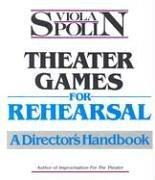
Theater Games for Rehearsal
Viola Spolin

Pirate Robot Ninja
An Improv Fable
Billy Merritt; Will Hines

Acting Through Improv
Improv Through Theatresports
Lynda Belt; Rebecca Stockley

The Upright Citizens Brigade Comedy Improvisation Manual
Matt Besser; Ian Roberts; Matt Walsh

Improvisation
Use What You Know, Make Up What You Don't
Brad Newton
Related Games
Last Line
Last Line is a scene game in which the audience provides a line of dialogue that must serve as the final words of the scene. The performers build a narrative that makes the predetermined ending feel inevitable and earned rather than forced. The game trains the ability to reverse-engineer a story toward a fixed conclusion, developing narrative instinct and the skill of planting details early that pay off at the end. The audience's awareness of the destination creates dramatic irony and anticipation throughout the scene.
Split Screen
Split Screen is a scene game in which the stage is divided into two or more zones, each containing a separate scene that runs simultaneously. A host or the performers themselves cut between the zones. The game rewards discoveries of thematic parallels between the scenes and the ability to maintain continuity through interruptions.
He Said While She
He Said While She (also called Two-Headed Expert or Narration Game) is a scene game in which narration and action interweave: one performer narrates what a character says while the other physically performs and voices the character's actions. The split between narrator and performer creates a dual-track reality in which the narration and the physical performance can align, diverge, or generate irony through contrast. The game rewards physical specificity and the narrator's ability to use the performer's choices.
Triple Play
Triple Play is a short-form game in which three separate scenes run simultaneously on stage, with performers switching between them on command. The challenge of maintaining three distinct narrative threads tests memory, character consistency, and quick context-switching. The game rewards performers who can resume a scene exactly where it left off.
Switch Gibberish
Switch Gibberish is a scene game in which performers alternate between speaking coherent dialogue and gibberish on command. Scene partners must maintain the scene's emotional arc and narrative logic regardless of which mode they are in. The game demonstrates how much communication happens through tone and physicality independent of words.
Cloud Atlas
Cloud Atlas is a long-form narrative game in which an ensemble builds multiple storylines across different time periods or settings, connected not by shared plot but by shared thematic resonance. Performers track parallel narrative threads, each carrying a version of a central image or emotional truth, allowing meaning to emerge from pattern and echo rather than linear causation.
How to Reference This Page
The Improv Archive. (2026). First Line Last Line. Retrieved March 17, 2026, from https://improvarchive.org/games/first-line-last-line
The Improv Archive. "First Line Last Line." The Improv Archive, 2026. https://improvarchive.org/games/first-line-last-line.
The Improv Archive. "First Line Last Line." The Improv Archive, 2026, https://improvarchive.org/games/first-line-last-line. Accessed March 17, 2026.
The Improv Archive is a systemically maintained repository. The archive itself acts as the corporate author.