Good, Bad, Worst Advice
Good, Bad, Worst Advice is a short-form game in which performers offer three tiers of advice on an audience-suggested problem: sensible, questionable, and catastrophically terrible. The escalating absurdity creates a reliable comic structure, and the contrast between tiers generates the game's comedy. The game rewards calibrated comedic intensity -- each tier must be clearly distinct from the last -- and the ability to commit fully to advice that is increasingly outrageous.
Structure
Setup
An audience member describes a problem or dilemma -- typically a real-life situation -- that the performers will advise on. Three performers are assigned to the three advice tiers.
Round Structure
Each performer offers advice on the same problem according to their assigned tier:
- Good Advice: Sensible, practical, and reasonable. This is the baseline against which the other tiers are measured. The comedy begins when the contrast with subsequent tiers becomes apparent.
- Bad Advice: Questionable, misguided, or irresponsible. Escalation from the good tier is clear, but the advice remains within a recognizable frame of thought.
- Worst Advice: Catastrophically terrible, dangerous, or absurd. Maximum commitment to the bit. The advice escalates as far as the performer can take it.
Multiple Rounds
The game can run multiple rounds with the same or different problems. Performers may rotate tiers across rounds to keep the game varied.
Ending
The game ends after a set number of rounds or when the host determines the game has peaked. A strong closing moment from the Worst Advice tier typically provides the natural button.
How to Teach It
Objectives
Good, Bad, Worst Advice trains calibrated escalation: each tier must be clearly distinguishable from the previous one. It also develops commitment to outrageous premises and the ability to find the logic inside an absurd position.
How to Explain It
"Three kinds of advice on one problem. One of you gives advice you'd actually follow. One gives advice that might get someone in trouble. One gives advice so bad it should be illegal. Calibrate -- make sure each tier is clearly different from the last."
Scaffolding
Introduce the tier structure before asking performers to improvise within it. Run a demonstration round to establish the expected range before performers attempt the game themselves.
Common Pitfalls
Performers often drift toward the same comedic register across all three tiers, making Good and Bad advice indistinguishable. The game loses its engine when escalation is absent. Coach performers to locate the Worst tier first -- the maximum -- and then work backward to calibrate Good and Bad relative to it.
How to Perform It
Audience Intro
"We need a real problem from someone in the audience -- something you'd actually like advice on. Our performers are going to give you three kinds of help: good advice, bad advice, and the worst advice anyone has ever given."
Cast Size
Ideal: 3 performers, one per tier. Can be played with 2 performers alternating tiers.
Staging
Performers stand in a line or are spatially distinguished by their tier. Clear physical separation helps the audience track which tier is speaking.
Wrap-Up Logic
End after the Worst Advice tier lands a strong beat. The host can close with a callback to the contrast: "And that's why we don't give that person a radio call-in show."
Worth Reading
See all books →
The Upright Citizens Brigade Comedy Improvisation Manual
Matt Besser; Ian Roberts; Matt Walsh

Acting Through Improv
Improv Through Theatresports
Lynda Belt; Rebecca Stockley

Pirate Robot Ninja
An Improv Fable
Billy Merritt; Will Hines

How to Be the Greatest Improviser on Earth
Will Hines
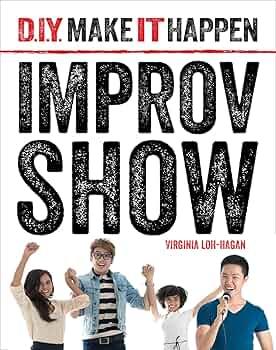
Improv Show
Virginia Loh-Hagan

Group Improvisation
The Manual of Ensemble Improv Games
Peter Campbell Gwinn; Charna Halpern
Related Games
Ted Talks
Ted Talks is a short-form game in which a performer delivers an improvised presentation in the style of a TED Talk on an audience-suggested topic. Other players may provide slides, demonstrations, or audience participation. The game rewards confident public speaking, the ability to sound authoritative on any subject, and the comedic gap between expertise and ignorance.
Complaint Letter
Complaint Letter is a short-form game in which a performer delivers an increasingly overwrought letter of complaint, often composed from audience suggestions. The letter escalates in specificity, emotional intensity, and absurdity as it progresses, culminating in an outrageous demand. Supporting performers may act out the events described or respond as arbiters of the grievance.
Pet Peeves
Pet Peeves is a short-form game in which performers play scenes built around audience-suggested annoyances or irritations. The characters' pet peeves drive the conflict and provide a built-in source of escalation. The game rewards relatable specificity and the ability to find comedy in shared frustrations.
Smart Fellas
Smart Fellas is a short-form game in which performers play characters who are conspicuously intelligent or educated, using the contrast between intellectual posturing and the chaos of improv for comedic effect. The game may involve academic debates, expert panels, or scholarly discussions on absurd topics. It rewards confident jargon improvisation and deadpan authority.
Malapropism
Malapropism is a short-form game in which performers play a scene while deliberately substituting incorrect but similar-sounding words for the intended ones. The audience enjoys the comic confusion that results from the mangled language, while the scene partners must stay committed to the reality of the conversation. The game trains verbal dexterity and the ability to maintain scene logic under an absurd constraint.
Worlds Worst
Worlds Worst is a short-form game in which performers step forward to demonstrate the world's worst version of an audience-suggested profession, character, or situation. Each offering is a quick one-liner or brief physical gag. The game was a popular segment on Whose Line Is It Anyway and rewards speed, confidence, and the ability to find the worst possible example of anything.
How to Reference This Page
The Improv Archive. (2026). Good, Bad, Worst Advice. Retrieved March 17, 2026, from https://improvarchive.org/games/good-bad-worst-advice
The Improv Archive. "Good, Bad, Worst Advice." The Improv Archive, 2026. https://improvarchive.org/games/good-bad-worst-advice.
The Improv Archive. "Good, Bad, Worst Advice." The Improv Archive, 2026, https://improvarchive.org/games/good-bad-worst-advice. Accessed March 17, 2026.
The Improv Archive is a systemically maintained repository. The archive itself acts as the corporate author.