Kurosawa
Kurosawa is a scene game played in the style of director Akira Kurosawa's samurai films, emphasizing dramatic pauses, formalized physical movement, intense emotional gravity, and epic visual composition. The heightened genre conventions provide strong guardrails for committed performance. Every gesture is deliberate, every silence charged, and every movement carries the weight of consequence. The game rewards physicality, patience, and the ability to sustain dramatic tension through restraint rather than acceleration.
Structure
The audience suggests a conflict, a location, or a character type. The performers begin a scene using the conventions of Kurosawa's samurai cinema: formal spatial composition, ritualized movement, and weighted silence.
Performers move slowly and deliberately through the space. Physical choices are large and purposeful: a hand resting on an imagined sword hilt, a formal bow, a long gaze across the stage before speaking. Dialogue is sparse, delivered with gravity, and separated by significant pauses.
The scene builds through escalating tension rather than escalating action. Two samurai facing each other across the stage, exchanging minimal dialogue while the physical tension increases, creates more dramatic engagement than a flurry of sword fighting. The genre rewards the approach to conflict more than the conflict itself.
When action does arrive, it is sudden and decisive. A prolonged standoff resolved in a single stroke. The contrast between extended stillness and explosive movement is the genre's signature dynamic.
Variations include Kurosawa with narrator (a performer narrates in the style of a film's voice-over), ensemble Kurosawa (the full cast creates a village or army scene with multiple status levels), and modern Kurosawa (the samurai conventions applied to contemporary settings, creating a mashup of epic formality and mundane content).
How to Teach It
How to Explain It
"This scene has no sound. No dialogue. All communication is physical and facial. When something important happens, play it in slow motion. You are in a Kurosawa film: precision, silence, commitment."
Kurosawa is an effective game for teaching physical commitment and the use of silence as a dramatic tool. Performers who default to verbal comedy discover that stillness, gravity, and physical precision can generate equal or greater audience engagement.
Coach performers to study the source material. Even a brief exposure to Kurosawa's visual style (the framing, the movement, the use of weather and landscape) gives performers concrete references to draw on. Without these references, the game reduces to "speaking slowly," which is not the same as sustained dramatic tension.
The game reveals performers who cannot sustain stillness. Fidgeting, breaking eye contact, and rushing to the next line all indicate discomfort with silence. Use the game as a diagnostic tool for developing comfort with sustained physical presence.
Kurosawa teaches the principle that less is more. Performers who discover the power of a single deliberate gesture, delivered in silence, often carry that economy of movement into their regular scene work.
How to Perform It
Patience is the game's primary skill. Performers trained in fast-paced improv must resist the impulse to fill silence with words or movement. The game's power comes from restraint. A performer who can hold a pose for ten seconds while the audience leans forward in anticipation has mastered the game's engine.
Physical stillness communicates more than physical activity in this game. A hand that moves slowly toward a sword communicates threat. A head that turns deliberately to face a rival communicates challenge. These micro-movements read as enormous gestures when framed by stillness.
The vocal quality must match the physical restraint. Dialogue is delivered with low, measured tones. Sentences are short. Words carry weight. The vocal style of typical improv (fast, casual, conversational) must be abandoned entirely for the game to work.
The comedy, when it emerges, comes from the gap between the epic formality and the underlying content. A samurai drama about a parking dispute or a sandwich order becomes funny precisely because the performers treat the trivial with deadly seriousness.
Worth Reading
See all books →
Impro
Improvisation and the Theatre
Keith Johnstone
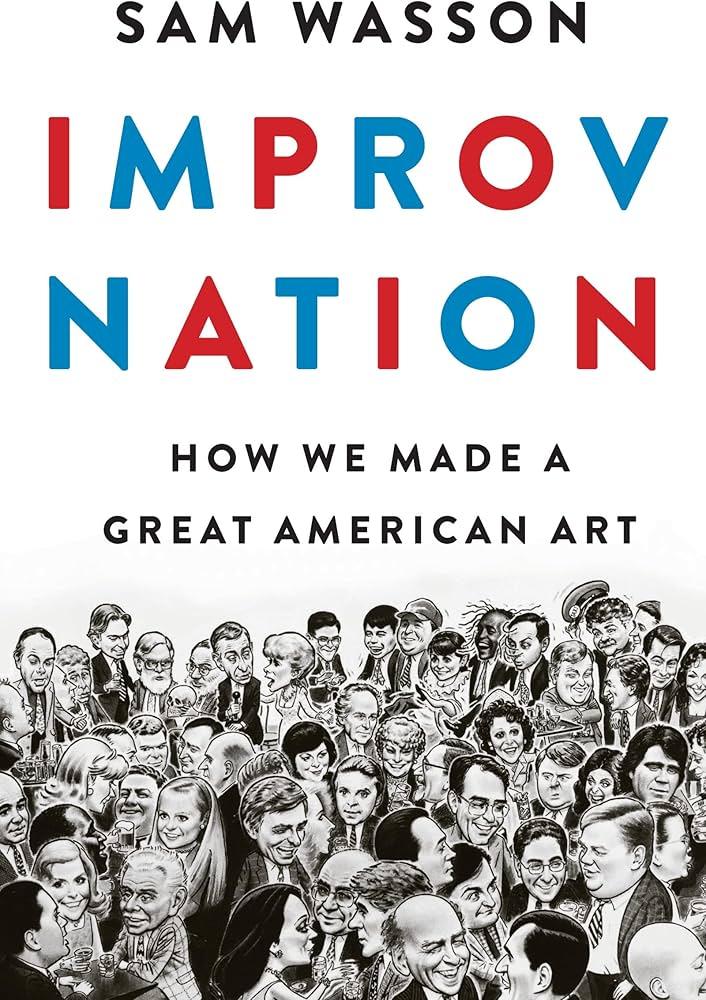
Improv Nation
How We Made a Great American Art
Sam Wasson
Putting Improv to Work
Spontaneous Performance for Leadership, Learning, and Life
Greg Hohn

Improv Comedy (20th Anniversary Edition)
Andy Goldberg
Theater Games for Rehearsal
Viola Spolin
Improvising Cinema
Gilles Mouëllic
Related Games
More or Less
More or Less is a short-form game in which the audience or a director calls out "more" or "less" during a scene, instructing performers to intensify or diminish a specific element of their performance. Players must adjust their energy, emotion, physicality, or character choice on command, calibrating their performance in real time. The game trains responsiveness to external direction and teaches performers that every choice exists on a spectrum that can be dialed up or down. It also demonstrates to audiences the mechanics of performance calibration, making the invisible craft visible.
Hesitation
Hesitation is a scene game in which performers deliberately pause before delivering each line, as though searching for the right words. The forced pauses change the scene's rhythm and reveal subtext that rapid-fire delivery obscures. Silence becomes an active tool: each pause creates anticipation, exposes the character's internal process, and gives the audience time to read the emotional undercurrents of the scene. The game trains performers to use silence as a dramatic instrument rather than treating it as dead space to be filled.
Narrator
Narrator is a short-form game in which one performer serves as an omniscient narrator who describes and directs the action while other players act out whatever is narrated. The performers must physicalize the narrator's words instantly, even when the descriptions become absurd, contradictory, or physically challenging. The game generates comedy from the tension between what is narrated and what the performers can actually do, and from the narrator's power to control the scene's reality with a single sentence. The game rewards quick physical commitment from the actors and creative, descriptive language from the narrator.
Switch Gibberish
Switch Gibberish is a scene game in which performers alternate between speaking coherent dialogue and gibberish on command. Scene partners must maintain the scene's emotional arc and narrative logic regardless of which mode they are in. The game demonstrates how much communication happens through tone and physicality independent of words.
Slomo Samurai
Slomo Samurai is a slow-motion combat game in which performers enact an elaborate fight scene at greatly reduced speed. The slow pace demands precise physical control and allows for exaggerated dramatic reactions. The game is a crowd-pleasing spectacle that trains physical commitment and comedic timing through the contrast of epic action and glacial pace.
How to Reference This Page
The Improv Archive. (2026). Kurosawa. Retrieved March 17, 2026, from https://improvarchive.org/games/kurosawa
The Improv Archive. "Kurosawa." The Improv Archive, 2026. https://improvarchive.org/games/kurosawa.
The Improv Archive. "Kurosawa." The Improv Archive, 2026, https://improvarchive.org/games/kurosawa. Accessed March 17, 2026.
The Improv Archive is a systemically maintained repository. The archive itself acts as the corporate author.