Last Letter Scene
Last Letter Scene is a hybrid game and exercise in which each line of dialogue must begin with the last letter of the previous line. The constraint forces performers to listen with acute precision -- not to the general content of what is said but to the exact final sound of each utterance -- while maintaining scene coherence, character, and forward momentum simultaneously.
Structure
Setup
Two or more performers establish a scene with a suggestion. Before beginning, the facilitator confirms the rule: every line of dialogue must begin with the last letter of the previous line. The last letter is taken from the final word of the previous speaker's line.
Progression
The scene proceeds as a standard two-person or group scene. Each performer must listen through to the very end of their partner's line to identify the final letter before beginning their own. The verbal constraint is layered onto active scene work -- performers are expected to maintain character, relationship, and narrative while following the letter rule.
Ending
The scene ends at a natural or directed conclusion. In game contexts, a host may call scene when the verbal constraint has generated sufficient comic energy from the audience.
How to Teach It
Objectives
Last Letter Scene trains fine-grained listening -- attending to the final word and letter of a partner's line rather than the semantic content -- while maintaining scene work. It identifies and addresses the common habit of formulating a response before the partner has finished speaking.
How to Explain It
"You have to wait until the very last word -- the very last letter -- before you know where to start. That means you can't be writing your next line in your head while your partner is still talking. You have to listen all the way to the end."
Scaffolding
Begin as a pure exercise without scene content -- participants stand in a circle and pass single words beginning with the last letter of the previous word before adding scenes. Introduce scene context once the letter rule is internalized.
Common Pitfalls
Performers consistently attempt to begin their response before their partner's line is complete, selecting a starting letter from a middle word rather than the final one. This is the exercise's primary insight: most performers listen for meaning and stop before the sentence ends.
How to Perform It
Audience Intro
"Every line in this scene has to start with the last letter of the line before. The performers have to listen all the way to the end of every sentence. Let's see if they can keep up."
Cast Size
Ideal: 2 to 3 performers. Works with larger groups in a rotating line format.
Staging
Standard scene staging. No special arrangement needed. The host may stand near the performers to watch for violations if playing competitively.
Wrap-Up Logic
End the scene at a natural comic or narrative peak, or after a predetermined number of exchanges in the workshop context.
Worth Reading
See all books →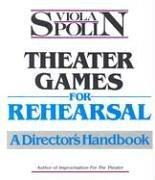
Theater Games for Rehearsal
Viola Spolin

Acting Through Improv
Improv Through Theatresports
Lynda Belt; Rebecca Stockley

Improvisation
Use What You Know, Make Up What You Don't
Brad Newton
The Triangle of the Scene
A Simple, Practical, Powerful Method for Approaching Improvisation
Paul Vaillancourt

Improv Ideas
A Book of Games and Lists
Mary Ann Kelley; Justine Jones

Pirate Robot Ninja
An Improv Fable
Billy Merritt; Will Hines
Related Games
The Alphabet Game
The Alphabet Game is a scene game in which each successive line of dialogue must begin with the next letter of the alphabet, starting from A and progressing through Z. Players must advance a coherent scene while satisfying the alphabetical constraint. The game trains verbal agility and the ability to justify unexpected sentence openings.
Alphabet Game
Alphabet Game is a short-form scene game in which each line of dialogue must begin with the next successive letter of the alphabet. Players navigate a coherent scene while wrestling with difficult letters, making it both a verbal agility test and a shared comedic endurance challenge.
Famous Last Words
Famous Last Words is a short-form game in which performers deliver dramatic or comedic final statements in response to various scenarios provided by the audience or host. Each performer must produce a distinct, character-specific statement appropriate to the conditions of their fictional demise or farewell. The game rewards invention, quick character establishment, and the ability to find the specific, surprising last thing a particular person would say.
Script Tease
Script Tease is a short-form game in which performers hold actual scripts or random text and must incorporate whatever lines they read into an improvised scene, making the pre-written words seem like natural dialogue. The game rewards the ability to justify unexpected text within a coherent dramatic context.
Word Restriction
Word Restriction is a scene game in which performers must play a scene without using a specific common word or category of words. The restriction forces creative circumlocution and reveals how much performers rely on habitual language. The game trains verbal agility and the ability to communicate ideas through alternative phrasing.
Mystery Word
Mystery Word is a short-form game in which performers play a scene while one performer -- unbeknownst to the others -- has been given a specific secret word that they must work into the dialogue naturally and without drawing attention to it. The rest of the performers and audience try to identify when the mystery word has been successfully used, creating a dual layer of engagement: the scene itself and the detective puzzle of watching for the hidden word.
How to Reference This Page
The Improv Archive. (2026). Last Letter Scene. Retrieved March 17, 2026, from https://improvarchive.org/games/last-letter-scene
The Improv Archive. "Last Letter Scene." The Improv Archive, 2026. https://improvarchive.org/games/last-letter-scene.
The Improv Archive. "Last Letter Scene." The Improv Archive, 2026, https://improvarchive.org/games/last-letter-scene. Accessed March 17, 2026.
The Improv Archive is a systemically maintained repository. The archive itself acts as the corporate author.