Little Voice
Little Voice is a scene game in which one performer provides a running internal monologue for another performer's character, speaking the private thoughts aloud while the character plays the scene with a different outward presentation. The technique adds psychological depth by externalizing what the character would never say. The gap between the inner voice and the outer behavior creates comedy, dramatic irony, and character complexity. The game trains performers to play with subtext and demonstrates how much scene work depends on the difference between what characters think and what they reveal.
Structure
Two performers take the stage: the actor and the voice. The actor plays a character in a scene with one or more other performers. The voice sits or stands to the side, close enough to be associated with the actor's character but physically separated from the scene.
The actor plays the scene normally, speaking and behaving as the character. The voice periodically interrupts with the character's private thoughts: fears, desires, judgments, and uncensored reactions that the character would never express openly. The voice says what the character is actually thinking while the actor says what the character chooses to reveal.
The comedy and drama emerge from the gap between inner and outer life. A character who says "what a lovely dinner" while the voice says "this food is inedible and these people are insufferable" creates a comic split. A character who says "everything is fine" while the voice says "everything is falling apart" creates dramatic tension.
The actor responds to the voice's contributions by adjusting their behavior, allowing the inner thoughts to leak through in subtle ways: a hesitation, a forced smile, a change in posture. This leakage makes the character feel psychologically complete.
Variations include dueling voices (two characters each have a voice, creating four simultaneous perspectives), shifting voice (the voice changes its alignment mid-scene, becoming an antagonist or a conscience), and audience voice (audience members provide the internal monologue through suggestions).
How to Teach It
How to Explain It
"One performer plays the scene. A second performer voices what the first is actually thinking but would never say aloud. The character cannot acknowledge the voice. The voice cannot stop the scene. Both run simultaneously."
Little Voice is an effective game for teaching subtext. Students learn to build scenes with two simultaneous layers of meaning: the public conversation and the private experience. This layered approach produces richer scene work than single-layer dialogue.
Coach the voice to discover the character's inner life rather than imposing one. The voice should listen to how the actor plays the character and then amplify what is already implied. An actor who plays nervously gives the voice material about anxiety. An actor who plays with excessive friendliness gives the voice material about desperation or people-pleasing.
The most common failure is the voice going for easy laughs rather than genuine psychological insight. A voice that says "this person smells bad" is making a joke. A voice that says "if this conversation goes wrong, the character has no one left" is building a scene. Both can be funny, but the second creates a scene with stakes.
The game teaches performers that every character has an inner life, and the most interesting scene work happens when that inner life is visible to the audience but hidden from the other characters onstage.
How to Perform It
The voice must listen closely to the actor's scene work and provide thoughts that complement rather than contradict the scene's reality. A voice that invents disconnected thoughts ("the character is secretly a spy") derails the scene. A voice that deepens the existing emotional reality ("the character is terrified of losing this friendship") enriches it.
Timing is critical. The voice should speak during natural pauses in the actor's dialogue, not over the top of ongoing conversation. Well-timed interjections from the voice create rhythmic counterpoint to the scene. Poorly timed interjections create noise.
The actor must acknowledge the voice without breaking character. The acknowledgment is physical rather than verbal: a slight flinch, a suppressed reaction, a moment of distraction. The actor who plays as though the voice does not exist wastes the dynamic. The actor who directly responds to the voice breaks the game's premise.
The game works best when the voice reveals genuine vulnerability. Comedy emerges from the contrast between the character's public composure and private chaos, but the emotional truth of the inner voice is what makes the game resonate beyond simple laughs.
Audience Intro
"One of our performers will play the scene. Another will voice exactly what that character is thinking but would never say out loud. The character cannot acknowledge the voice. Watch how the two layers talk to each other."
Worth Reading
See all books →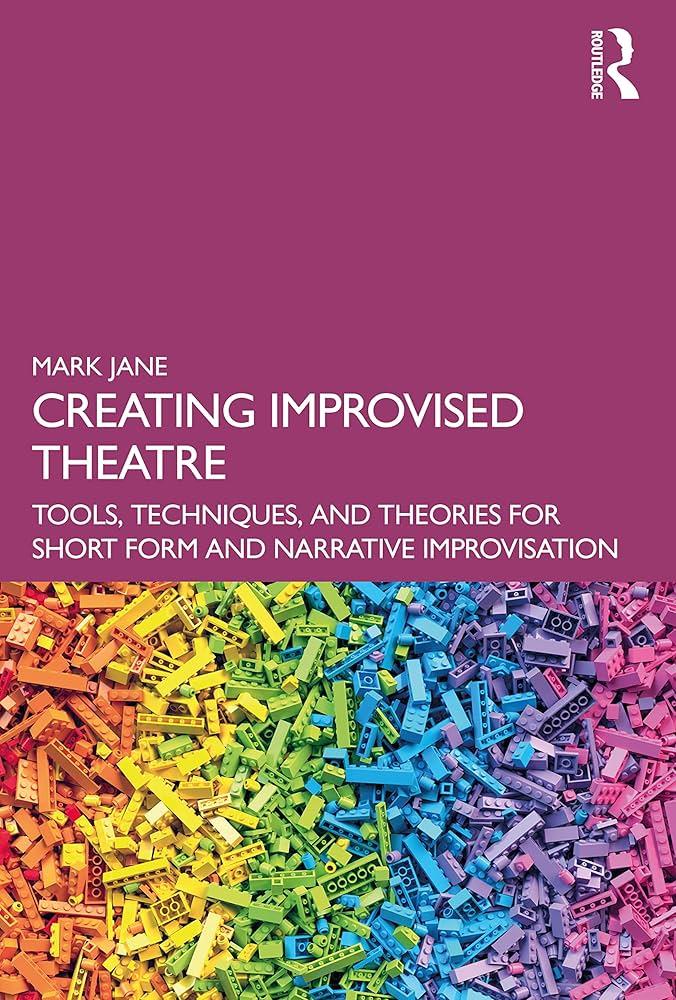
Creating Improvised Theatre
Tools, Techniques, and Theories
Mark Jane

Acting Through Improv
Improv Through Theatresports
Lynda Belt; Rebecca Stockley

Improvisation for the Spirit
Live a More Creative, Spontaneous, and Courageous Life
Katie Goodman

Improv Ideas
A Book of Games and Lists
Mary Ann Kelley; Justine Jones

Improv to Improve Your Leadership Team
Tear down Walls and Build Bridges
Candy Campbell
Theater Games for Rehearsal
Viola Spolin
Related Games
Alter Ego
Alter Ego is a short-form scene game in which each main character has a second performer standing directly behind them who voices the character's inner thoughts. Two players perform a scene with dialogue and action while their respective alter egos narrate the unspoken subtext: desires, fears, judgments, and contradictions that the characters would never say aloud. The contrast between what a character says publicly and what they actually think generates natural comedy and dramatic irony. The game highlights the role of subtext in scene work and rewards performers who create clear, exploitable gaps between surface behavior and true feelings. Alter Ego appears across multiple improv traditions and is documented in Andy Goldberg's Improv Comedy among other sources.
Arpeggio
Arpeggio is a scene game in which multiple performers play aspects of a single character's personality, speaking in rapid succession like notes in a musical chord. The fragmented delivery reveals a character's internal contradictions and complexity. The game produces rich, layered characterization that a single performer could not achieve alone.
Id
Id is a scene game in which a performer's unfiltered subconscious desires are voiced by a second player, creating a running commentary of primal wants beneath the surface dialogue. The tension between polite conversation and raw impulse generates comedy and dramatic irony. The game highlights the gap between social behavior and inner life.
Asides
Asides is a scene technique game in which performers periodically break from the action to address the audience directly with their character's private thoughts. Borrowed from theatrical convention dating back to Shakespeare and the Restoration comedy tradition, the aside allows a character to reveal inner monologue, secret motives, or contradictory feelings while other characters on stage cannot hear what is said. In improv, the technique layers subtext over surface dialogue, creating dramatic irony and comedy through the gap between what characters say to each other and what they confide to the audience. The game trains performers to maintain dual awareness of both the scene and the audience, and to develop rich inner lives for their characters that extend beyond spoken dialogue.
Dubbing
Dubbing is a performance game in which one performer provides the physical actions for a character while a separate performer supplies that character's voice from offstage or from behind. The deliberate separation of voice and body creates inherent comedy as the two performers attempt to synchronize, producing a character that appears to have a mind of its own. Dubbing trains complementary skills: the body performer must generate clear, readable physical actions, while the voice performer must interpret and justify those movements through dialogue. The game appears across many short-form formats and is one of the most audience-accessible improv games due to its immediately visible comic mechanism.
Switch Gibberish
Switch Gibberish is a scene game in which performers alternate between speaking coherent dialogue and gibberish on command. Scene partners must maintain the scene's emotional arc and narrative logic regardless of which mode they are in. The game demonstrates how much communication happens through tone and physicality independent of words.
How to Reference This Page
The Improv Archive. (2026). Little Voice. Retrieved March 17, 2026, from https://improvarchive.org/games/little-voice
The Improv Archive. "Little Voice." The Improv Archive, 2026. https://improvarchive.org/games/little-voice.
The Improv Archive. "Little Voice." The Improv Archive, 2026, https://improvarchive.org/games/little-voice. Accessed March 17, 2026.
The Improv Archive is a systemically maintained repository. The archive itself acts as the corporate author.