Sing It
Sing It is a short-form game in which a host signals performers to interrupt their scene dialogue and immediately sing a song containing the word or phrase just spoken. The performer sings a relevant portion of the song, then returns to the scene. The game rewards broad musical knowledge, quick verbal association, and the willingness to commit to an unplanned song in public.
Structure
Setup
Two or more performers play a scene. A host or emcee watches from the side. The game requires no props, though a buzzer or bell may be used as the trigger signal.
Gameplay
The scene plays normally. When a performer says a word or phrase that triggers a song association for the host, the host calls "Sing It!" (or sounds a buzzer). The performer who just spoke must immediately sing a song that contains the trigger word or phrase. The song should be recognizable , from popular music, musicals, folk standards, or film , and the performer sings until the host indicates they may stop, typically after completing a phrase or short verse.
The performer then continues the scene from exactly where it was interrupted. The content of the song may comment on, advance, or simply interrupt the scene; the performer decides how or whether to integrate the musical detour into the scene's reality.
The host may call multiple times in rapid succession, or allow long stretches of uninterrupted scene before triggering. Calling on mundane words creates comedy through unexpected songs; calling on emotionally loaded words creates moments of accidental aptness.
Variations
In some versions, any performer may call "Sing It" on any other performer. In others, the audience triggers the call. Duet versions require the responding performer to be joined immediately by their scene partner.
How to Teach It
How to Explain It
"You are in a scene. At any point, the host calls 'sing it.' Whoever just spoke has to immediately sing the next line, or sing a song inspired by the last thing they said. Then you go back to the scene. No hesitation. Sing whatever comes."
Objectives
Sing It develops rapid musical association, the capacity to perform under surprise-triggered conditions, and the habit of committing without preparation. The game is also a vocabulary-building exercise: performers who know a wide range of songs across genres, eras, and styles have more options and recover faster from the trigger.
Facilitation
Brief the host before the game: calls should vary in timing and triggered word. Too-frequent calls flatten the scene; too-infrequent calls lose the game's tension. The best hosts call at moments of dramatic investment: the more the performer is committed to a scene beat, the more effective the interruption.
Common Coaching Notes
- "First song, full commitment. Don't think."
- "Hold the scene while your partner sings. Don't break your state."
- "When you return, pick it up from the last word before the call. The scene didn't stop."
- "If you don't know a song, hum something. An incorrect song committed to is better than a gap."
How to Perform It
The Association Reflex
The game's quality is determined by the speed and specificity of the performer's association. A performer who pauses after the call and visibly searches for a song breaks the energy that the game depends on. The first song that comes to mind, committed to fully, is almost always better than the optimal song arrived at after five seconds of thought.
Song choices that reflect the emotional content of the scene create the game's most satisfying moments: a song whose lyrics accidentally comment on what was just said produces a different quality of surprise than a song that only happens to share a word.
Returning to the Scene
The return to scene is its own skill. The performer must pick up exactly where the scene left off rather than recapping or restarting. The song interruption is a parenthesis; the scene continues through it. Partners who maintain their physical and emotional state during the song make the return seamless.
Audience Intro
A host simply signals when the call will happen and what performers must do: sing the first song that comes to mind based on the last thing said, then return to the scene. The intro can be as brief as: "Whenever I call 'sing it,' you have to sing. Ready?"
History
Sing It is documented by Asaf Ronen in Directing Improv as part of a list of musical improv game formats, alongside Beatbox, Poet's Corner, and Improvised Musical Emotion. The game belongs to the family of interruption games that impose a performance requirement on a scene at a triggered moment, sharing structural kinship with New Choice, Ding, and Forward Reverse.
The specific mechanic of singing a song containing a trigger word is found across short-form curricula. Linda Newton documents a related exercise called Singing Phrases in both editions of Improvisation, in which performers sing any prepared text to any tune rather than triggering on specific words , a related exercise that develops musical fluency and verse memory rather than rapid association.
Worth Reading
See all books →
The Second City Unscripted
Revolution and Revelation at the World-Famous Comedy Theater
Mike Thomas

Improvisation
Use What You Know, Make Up What You Don't
Brad Newton
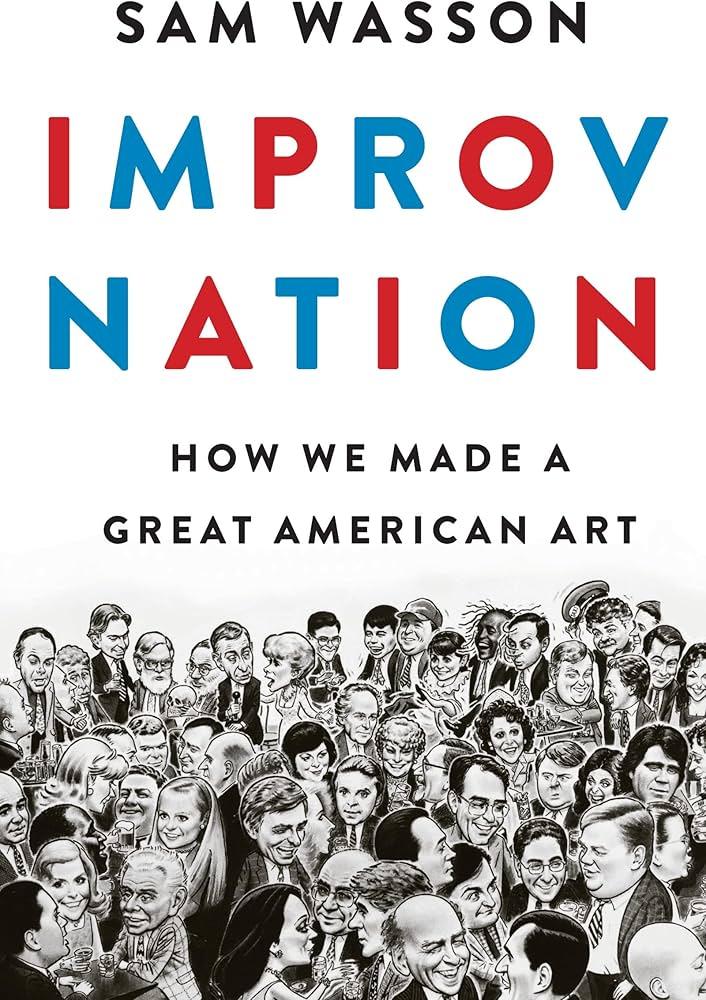
Improv Nation
How We Made a Great American Art
Sam Wasson

Something from Nothing
The Technique of Improvisation
Richard Goteri
Putting Improv to Work
Spontaneous Performance for Leadership, Learning, and Life
Greg Hohn

Improvisation In The Arts Of The Middle Ages And Renaissance
Timothy J. McGee
Related Games
New Choice
New Choice is a short-form game in which a caller interrupts performers mid-scene by shouting "New Choice," forcing the last speaker to immediately replace their most recent line or action with something entirely different. The caller may fire multiple calls in rapid succession, pushing performers through a cascade of alternatives under pressure. The game trains verbal agility, commitment to offers, and the capacity to abandon choices without hesitation.
Verses
Verses is a musical improv game in which performers trade improvised song verses on a given topic, each verse building on or responding to the previous one. The alternating structure creates a musical conversation that develops through successive exchanges, with each performer advancing the song's argument, narrative, or emotional arc. The game rewards lyrical creativity, melodic consistency, and the ability to support a partner's musical choices.
Ding
Ding is a short-form game in which a host rings a bell or buzzer to signal a performer to replace their last line of dialogue with a new one. The host can ring repeatedly, demanding multiple replacements for the same moment, each new line erasing the previous one within the scene's reality. The game is one of the most widely performed short-form games in the world, popularized through its frequent appearance on Whose Line Is It Anyway? Ding rewards fast verbal invention, the ability to generate multiple alternatives under pressure, and the willingness to abandon a safe choice in favor of a riskier, funnier one.
Balladeer
Balladeer (1) is a short-form game in which a musical performer narrates and comments on a scene through improvised song, functioning as a one-person Greek chorus. The balladeer may advance time, reveal subtext, or editorialize on the action. The game requires strong musical improv skills and the ability to serve the scene through song.
Lounge Singer
Lounge Singer is a musical performance game in which a performer adopts the persona of a Vegas-style lounge entertainer and sings improvised songs about topics suggested by the audience. The exaggerated showmanship of the lounge act provides a strong character framework for musical improvisation: the performer can address the audience directly, banter between songs, and treat every topic with the same overblown sincerity. The game rewards vocal confidence, the ability to write lyrics in real time, and the commitment to maintain a larger-than-life persona throughout the performance.
Song Style Galore
Song Style Galore is a musical improv game in which performers must sing improvised songs in a variety of audience-suggested musical genres, switching styles rapidly. The game tests musical versatility and the ability to capture the vocal and rhythmic signatures of different genres on the fly. It rewards performers with broad musical knowledge and confident singing.
How to Reference This Page
The Improv Archive. (2026). Sing It. Retrieved March 17, 2026, from https://improvarchive.org/games/sing-it
The Improv Archive. "Sing It." The Improv Archive, 2026. https://improvarchive.org/games/sing-it.
The Improv Archive. "Sing It." The Improv Archive, 2026, https://improvarchive.org/games/sing-it. Accessed March 17, 2026.
The Improv Archive is a systemically maintained repository. The archive itself acts as the corporate author.