Nightmare
Nightmare is a short-form game in which performers improvise a surreal, dreamlike scene based on a real fear, anxiety, or story contributed by an audience member or fellow performer. The scene follows dream logic rather than realistic causality, permitting sudden shifts, symbolic imagery, exaggerated repetition, and uncanny atmosphere. The game rewards bold emotional commitment, physical specificity, and the ability to sustain theatrical unreality over several minutes.
Structure
Setup
An audience member is asked to describe a fear, recurring anxiety, real nightmare, or stressful scenario from their life. The description should be specific enough to provide material but need not be dramatic: mundane fears (being late, saying the wrong thing, forgetting a name) work as well as explicit nightmares.
The ensemble listens and then performs a short scene that dramatizes and amplifies the described experience, using dream logic as the operating principle.
Gameplay
The scene is not a literal enactment of the described situation. Instead, performers free-associate from the elements given: specific images, recurring themes, anxiety-laden details. The scene may compress time, introduce impossible events, repeat key moments with escalating intensity, or suddenly shift location or character without explanation.
Physical commitment is essential. Dream scenes that are performed at a casual theatrical level lose their uncanny quality. Players should treat the heightened physical and emotional reality of the scene as genuine, not as a commentary on it.
Conclusion
The scene may end when the anxiety reaches its peak, when the central fear is faced and resolved (or revealed as impossible to resolve), or when the facilitator calls time. The game does not require a narrative resolution; nightmares rarely have one.
Variation
In some formats the audience member whose nightmare is being dramatized is asked to watch from the side and observe their own scenario being played out by others. In others, the audience member participates in the scene as themselves, with the ensemble playing the nightmare elements around them.
How to Teach It
How to Explain It
"This is a nightmare. It follows dream logic, not waking logic. Locations shift without warning. Familiar people become unfamiliar. Objects behave strangely. Play the nightmare from inside it. Your character does not know they are dreaming."
Objectives
Nightmare develops the ensemble's ability to physicalize abstraction and to sustain an alternative theatrical logic without reverting to realism when the scene becomes difficult. It also trains players to draw genuine material from a contributor's experience with care and specificity, rather than using the contribution as a comic prop.
The game reinforces the principle that emotional truth can be conveyed through theatrical convention rather than realistic representation: a nightmare can be more honest about fear than a realistic scene depicting the same events.
Scaffolding
For groups new to non-realistic scene work, introduce Dream or transformation exercises before working with Nightmare. Players need practice operating in non-realistic theatrical space before they can do so confidently with another person's material.
For groups with facility in character and scene work, push toward greater physical commitment and less verbal explanation. Nightmare scenes tend to weaken when players begin explaining or narrating what is happening rather than embodying it.
Common Coaching Notes
- "This is not a joke about her nightmare. This is her nightmare."
- "Dream logic: you do not need to explain the transition. Just arrive somewhere else."
- "The fear is the center of the scene. Keep finding your way back to it."
- "Commit to the image. Do not step outside it to comment on it."
How to Perform It
Audience Experience
Nightmare games are engaging for audiences in part because they trigger a recognition dynamic: audiences who have had similar anxieties see their own experience reflected in the dramatization. The game functions as a kind of collective acknowledgment of shared fear, which creates a different relationship with the audience than games premised purely on comedy.
The game can be funny (anxiety is often absurd when externalized), but it should not be played primarily for laughs. A Nightmare scene that is performed as comedy throughout will feel like it is mocking the audience member's contribution rather than honoring it.
Pacing
The scene should build rather than peak immediately. Begin with an evocative image or situation derived from the described nightmare and let the ensemble amplify it gradually. Scenes that start at full intensity have nowhere to go. The build creates the uncanny quality that distinguishes Nightmare from a standard heightened scene.
Casting
Players who excel at sustained emotional commitment and physical precision tend to serve Nightmare scenes best. The game is less suited to performers whose primary strength is verbal wit; the theatrical mode is imagistic rather than comedic.
History
Amy Seham documents Nightmare as a game format in Whose Improv Is It Anyway? (2001), describing an ImprovOlympic performance in which players free-associated, exaggerated, and recombined elements from an audience member's personal story to improvise a piece called "Kate's Nightmare." The format illustrates the long-form tradition's interest in drawing on real personal material as the source for ensemble fiction.
Matt Fotis places Nightmare alongside Dream and Freeze as a recognized short-form game in the ImprovOlympic repertoire in Long Form Improvisation and American Comedy (2014), noting that these games were used as openers and closers for full-length shows in the early years of the company.
The Nightmare game belongs to a cluster of exercises and games that use non-realistic logic as their operating principle: along with Dream scenes and free-association formats, it reflects an interest in theatrical surrealism that appears in physical theatre traditions influenced by the work of Antonin Artaud and various twentieth-century European avant-garde movements. No single originator within the improv tradition has been documented.
Worth Reading
See all books →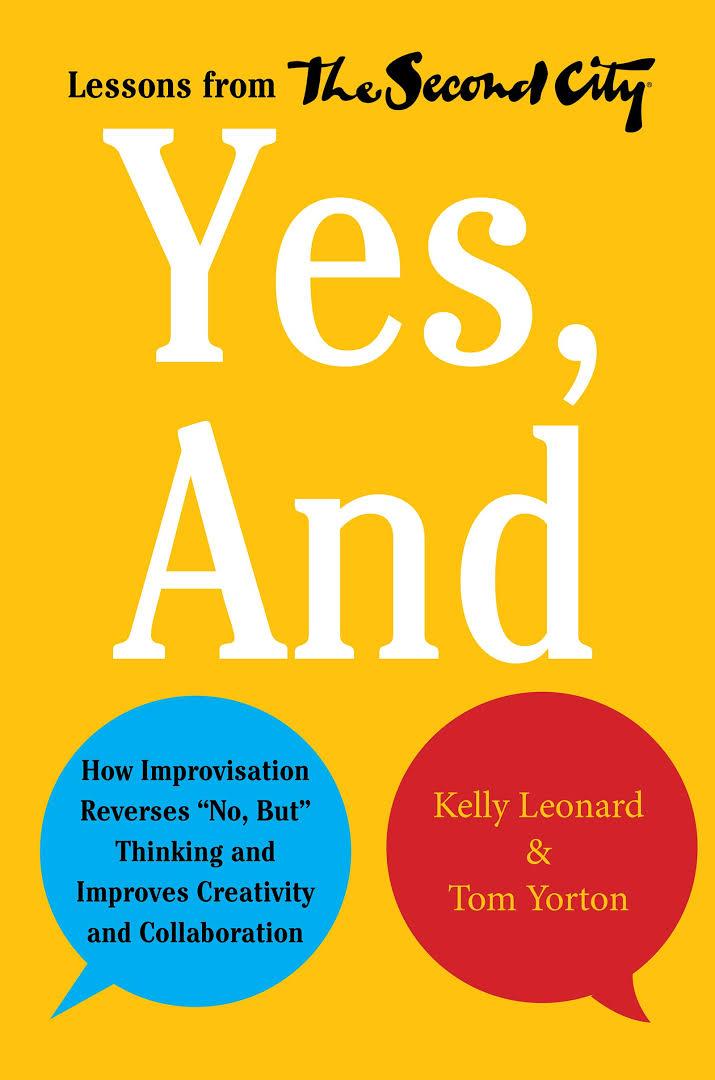
Yes, And
How Improvisation Reverses No, But Thinking and Improves Creativity and Collaboration
Kelly Leonard; Tom Yorton
Comedy and Distinction
The Cultural Currency of a 'Good' Sense of Humour
Sam Friedman

Theatrical Improvisation
Short Form, Long Form, and Sketch-Based Improv
Jeanne Leep
Improvise
Scene from the Inside Out
Mick Napier

The Second City Unscripted
Revolution and Revelation at the World-Famous Comedy Theater
Mike Thomas

Brain Disruption
Radical Innovation in Business Through Improv
Bruce Montgomery; Gail Montgomery
Related Games
Haunted House
Haunted House is a scene game in which performers explore a haunted environment, reacting to imagined terrors and building suspense through commitment to the horror genre. The group moves through rooms or areas of the house, with each new space revealing fresh dangers, creatures, or supernatural phenomena. The game rewards physical reactions, vocal work, and the ability to create genuine tension within a comedic framework. The comedy emerges from the contrast between real fear responses and the absurdity of the imagined threats.
Rash
Rash is a short-form scene game in which a performer develops an increasingly strange physical affliction during a scene, which they must justify and maintain without breaking character. The condition escalates in intensity or spreads to other performers over the course of the game. The game tests the ability to integrate absurd physical premises into a scene's emotional reality without abandoning the scene's human stakes.
Mix and Match
Mix and Match is a character and scene game in which performers combine disparate audience-suggested traits, occupations, scenarios, or styles into a single scene. The game takes two or more elements that do not naturally belong together and challenges the performers to find coherent logic within the absurd combination. A brain surgeon with a fear of blood, a cowboy at a ballet class, or a romantic comedy set in a submarine: the game rewards specificity, commitment, and the ability to ground heightened premises in recognizable human behavior.
Sound Effects
Sound Effects is a short-form game in which one or more players perform a scene while a designated sound-effects player (or audience members) provides live audio: crashes, music, ambient noise, animal sounds, or any sound they choose. The scene players must justify and physically embody whatever they hear. The game trains acceptance of external offers, physical commitment, and real-time narrative adaptation. It appeared as a recurring game on *Whose Line Is It Anyway?*
Narrator
Narrator is a short-form game in which one performer serves as an omniscient narrator who describes and directs the action while other players act out whatever is narrated. The performers must physicalize the narrator's words instantly, even when the descriptions become absurd, contradictory, or physically challenging. The game generates comedy from the tension between what is narrated and what the performers can actually do, and from the narrator's power to control the scene's reality with a single sentence. The game rewards quick physical commitment from the actors and creative, descriptive language from the narrator.
Bucket
Bucket is a short-form game in which scene suggestions, character traits, or constraints are written on slips of paper and placed in a bucket before the show. During scenes, performers draw slips at designated moments and must immediately incorporate whatever is written into the ongoing action. The random elements inject controlled unpredictability, forcing performers to accept and justify offers that could not be anticipated. The game rewards flexibility, quick thinking, and the ability to absorb any suggestion without hesitation. Bucket demonstrates the core improv principle that accepting external offers, no matter how disruptive, produces stronger and more surprising scene work than relying solely on performer-generated choices.
How to Reference This Page
The Improv Archive. (2026). Nightmare. Retrieved March 17, 2026, from https://improvarchive.org/games/nightmare
The Improv Archive. "Nightmare." The Improv Archive, 2026. https://improvarchive.org/games/nightmare.
The Improv Archive. "Nightmare." The Improv Archive, 2026, https://improvarchive.org/games/nightmare. Accessed March 17, 2026.
The Improv Archive is a systemically maintained repository. The archive itself acts as the corporate author.