Pecking Order
Pecking Order is a status exercise in which players are secretly assigned a numerical rank in a social hierarchy and must interact in scenes according to their position, treating those above them with deference and those below with authority. Observers attempt to determine the correct ranking from behavioral cues alone. The exercise develops physical and vocal markers of status and trains ensemble sensitivity to power dynamics.
Structure
Setup
Four to six players receive secret rank assignments: each player is given a number (1 through 4 or 1 through 6), where 1 is the highest status and the highest number is the lowest. Players do not reveal their numbers. The group is given a shared location or circumstance.
Exercise
Players interact in scene with each other in whatever way the situation suggests. Each player behaves toward everyone they encounter in a manner consistent with their status: those above them (lower numbers) receive deference, eye-contact avoidance, and lowered vocal energy; those below them (higher numbers) receive casual authority, held eye contact, and physical confidence. Players must read the status of everyone they encounter and adjust accordingly.
Observers watch the scene and attempt to determine the correct ranking order from what they see. After the scene, players reveal their numbers and observers share their guesses. Discrepancies between what was intended and what was read open up coaching about which physical and vocal behaviors communicate status effectively.
Status Behaviors
Low-status signals include: looking away when someone speaks, touching the face or neck, incomplete gestures, rising inflection on statements, and reducing the physical space taken up. High-status signals include: holding eye contact past the point of comfort, finishing sentences, taking up more space, lowering vocal pitch, and moving slowly and deliberately.
How to Teach It
How to Explain It
"Everyone has a rank, but you do not know what yours is. Interact with the other people in the room. Pay attention to how people treat you. By the end, you should be able to figure out where you stand in the hierarchy from the signals you received."
Objectives
Pecking Order develops the ability to read and play status through physical behavior rather than social label. Many performers conflate status with personality or power: they believe a character labeled "boss" should be high status. The exercise demonstrates that status is enacted through physical behavior independent of social role , a janitor can dominate a CEO through physical and vocal choices.
The debrief is the exercise's most important phase. Asking observers to name exactly which physical behavior communicated rank (eye contact duration, space taken up, the completeness of gestures) gives performers precise vocabulary for status work.
Facilitation
Assign numbers secretly. If players assign their own, they tend to gravitate to comfortable status levels. The assignment should push performers to play both extremes.
Run the exercise in a neutral setting rather than one with built-in status implications (a throne room already tells performers who should be high status). A kitchen, a waiting room, or a bus stop requires performers to construct the hierarchy from behavior alone.
Common Coaching Notes
- "Low status is not shy. It is actively managing the threat of someone above you."
- "High status is not cruel. It is comfortable with authority."
- "You have to read everyone in the room, not just the person you're talking to."
- "If you can't tell the ranking from the outside, the physical signals are not specific enough."
History
Pecking Order is attributed to Keith Johnstone and appears in the TheatreSports tradition as a status training exercise. Lynda Belt documents it as "Pecking Order I (Johnstone)" in Acting Through Improv: Improv Through Theatresports, specifying the four-person format and secret number assignment.
The concept of status as a behavioral hierarchy rather than a social category was central to Johnstone's contribution to improv pedagogy, developed in his work at the Royal Court Theatre in London in the 1960s and elaborated in Impro (1979). Johnstone's insight that performers could play status as a dynamic physical quality, not a fixed character trait, transformed how actors and improvisers approached character relationships.
The specific phrase "pecking order" was drawn from social science: David Shepherd at The Compass in Chicago had encountered Mark Kennedy's book The Pecking Order, a popular campus text about group behavior, and used its language to describe social hierarchy in performance. Johnstone, independently arriving at the same territory from a theater direction perspective, codified the exercises. Gavin Levy documents the exercise as Game 129 in 112 Acting Games.
Worth Reading
See all books →
Impro
Improvisation and the Theatre
Keith Johnstone

Acting Through Improv
Improv Through Theatresports
Lynda Belt; Rebecca Stockley

Improvised Theatre and the Autism Spectrum
A Practical Guide
Gary Kramer; Richie Ploesch

Applied Improvisation
Leading, Collaborating, and Creating Beyond the Theatre
Theresa Robbins Dudeck; Caitlin McClure

The Applied Improvisation Mindset
Tools for Transforming Individuals, Organizations, and Communities
Theresa Robbins Dudeck; Caitlin McClure
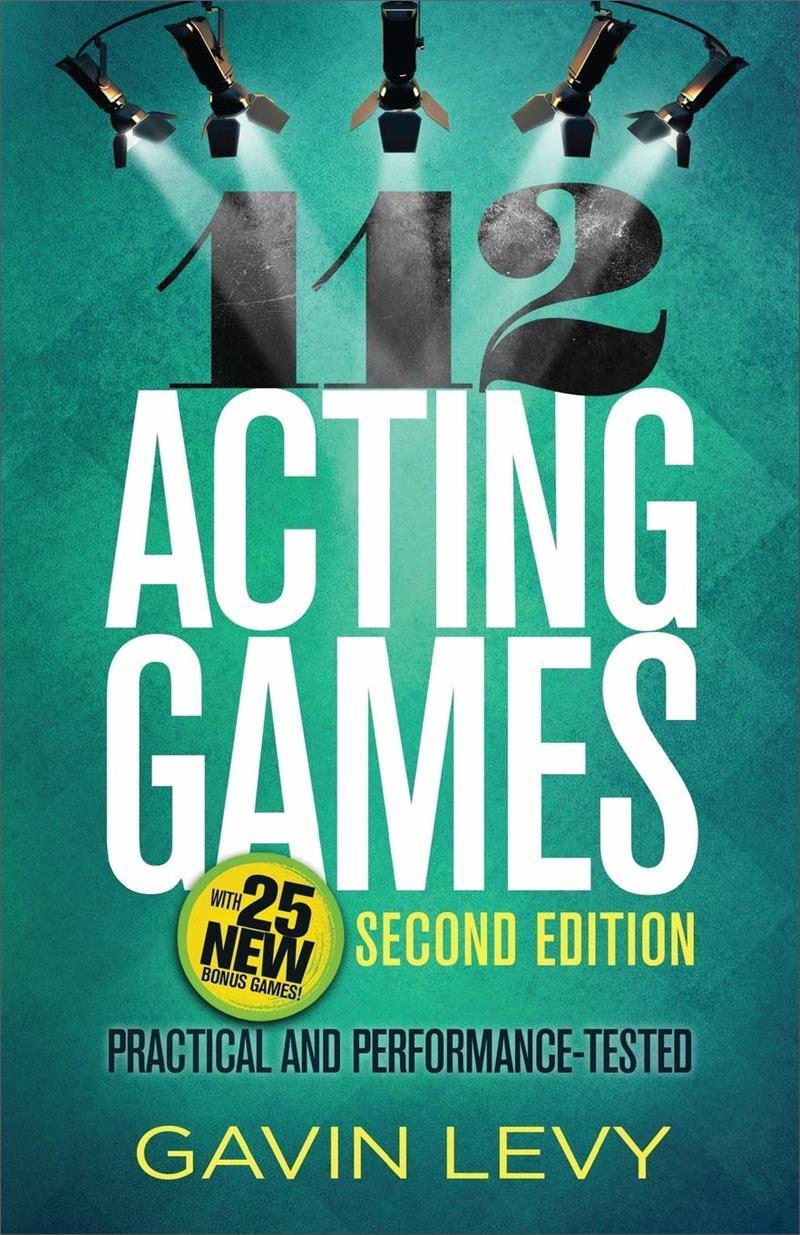
112 Acting Games
Gavin Levy
Related Games
How to Reference This Page
The Improv Archive. (2026). Pecking Order. Retrieved March 17, 2026, from https://improvarchive.org/games/pecking-order
The Improv Archive. "Pecking Order." The Improv Archive, 2026. https://improvarchive.org/games/pecking-order.
The Improv Archive. "Pecking Order." The Improv Archive, 2026, https://improvarchive.org/games/pecking-order. Accessed March 17, 2026.
The Improv Archive is a systemically maintained repository. The archive itself acts as the corporate author.