Solo Doors
Solo Doors is a game in which a single performer faces multiple doors, each representing a different scene, character, or world. The performer opens one door at a time, instantly inhabiting whatever they find behind it, then closes it and moves to the next. The game rewards versatility, quick character shifts, and the ability to create distinct worlds with minimal setup.
Worth Reading
See all books →
Group Improvisation
The Manual of Ensemble Improv Games
Peter Campbell Gwinn; Charna Halpern

Pirate Robot Ninja
An Improv Fable
Billy Merritt; Will Hines
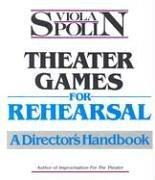
Theater Games for Rehearsal
Viola Spolin

Business Improv
Experiential Learning Exercises to Train Employees
Val Gee

The Playbook
Improv Games for Performers
William Hall

You Can Teach Improv (Yes, You!)
The Ultimate Guide to Class Planning, Skill Building, and Helping Every Student Leave With a Win
Andrew Berkowitz
Related Games
Doors
Doors is a scene game in which performers enter and exit through imagined doors, with each entrance bringing a new character, revelation, or complication. The physical act of entering through a door heightens the theatrical convention and gives each new addition a clear punctuation. The game rewards strong entrance choices and the ability to build on what has already been established.
Ding Dong
Ding Dong is a doorbell-based scene game in which the scene is repeatedly interrupted by visitors arriving at the door. Each new arrival brings a different energy, character, or complication. The game builds a layered ensemble scene from a simple mechanic and rewards performers who heighten the accumulating chaos.
Behind Closed Doors
Behind Closed Doors is a scene game in which the audience sees only the moments before characters enter and after they exit a room, never what happens inside. Players must convey dramatic events through their changed demeanor, dialogue, and physical state upon emerging. The game trains performers to communicate offstage action through behavior.
Turntable
Turntable is a scene game in which the stage rotates between two or more scenes that share a physical setup, with the same furniture or blocking serving different purposes in each scene. The transitions between scenes may be called by a host or initiated by the performers. The game rewards inventive reuse of physical space and thematic connections between parallel scenes.
Character Switch
Character Switch is a scene game in which a caller signals performers to rotate characters, each inheriting the role of the player to their left or right. Unlike Character Swap, which involves a single exchange, Character Switch cycles all characters simultaneously. The game demands close observation and the ability to pick up another performer's character instantly.
Walkout
Walkout is a scene game in which performers can walk out of a scene at any point, and whoever remains must justify the departure and continue. The unpredictability of exits forces improvisers to stay alert and adaptable. The game trains the ability to maintain scene coherence despite sudden changes in cast.
How to Reference This Page
The Improv Archive. (2026). Solo Doors. Retrieved March 17, 2026, from https://improvarchive.org/games/solo-doors
The Improv Archive. "Solo Doors." The Improv Archive, 2026. https://improvarchive.org/games/solo-doors.
The Improv Archive. "Solo Doors." The Improv Archive, 2026, https://improvarchive.org/games/solo-doors. Accessed March 17, 2026.
The Improv Archive is a systemically maintained repository. The archive itself acts as the corporate author.