Ding Dong
Ding Dong is a doorbell-based scene game in which the scene is repeatedly interrupted by visitors arriving at the door. Each new arrival brings a different energy, character, or complication. The game builds a layered ensemble scene from a simple mechanic and rewards performers who heighten the accumulating chaos.
Worth Reading
See all books →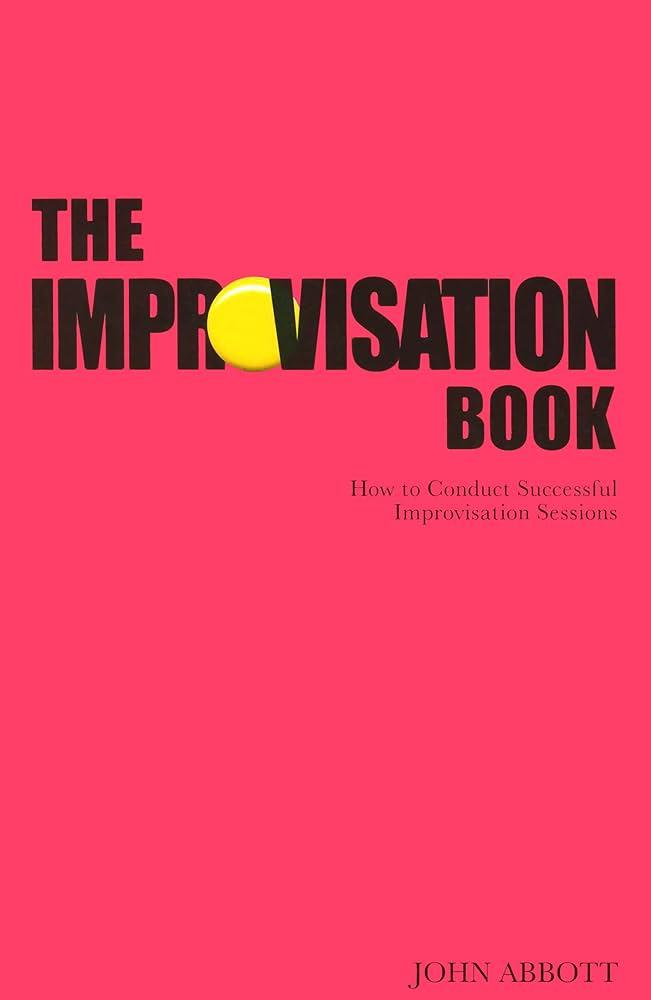
The Improvisation Book
How to Conduct Successful Improvisation Sessions
John S.C. Abbott

Pirate Robot Ninja
An Improv Fable
Billy Merritt; Will Hines

Group Improvisation
The Manual of Ensemble Improv Games
Peter Campbell Gwinn; Charna Halpern
The Triangle of the Scene
A Simple, Practical, Powerful Method for Approaching Improvisation
Paul Vaillancourt

Acting Through Improv
Improv Through Theatresports
Lynda Belt; Rebecca Stockley

The Playbook
Improv Games for Performers
William Hall
Related Games
Solo Doors
Solo Doors is a game in which a single performer faces multiple doors, each representing a different scene, character, or world. The performer opens one door at a time, instantly inhabiting whatever they find behind it, then closes it and moves to the next. The game rewards versatility, quick character shifts, and the ability to create distinct worlds with minimal setup.
Front Desk
Front Desk is a scene game set at a reception desk, hotel lobby, or similar service point. The fixed location creates a natural parade of characters who arrive with different needs and problems. The game rewards the desk worker's ability to maintain composure while adapting to each new visitor's energy.
Doors
Doors is a scene game in which performers enter and exit through imagined doors, with each entrance bringing a new character, revelation, or complication. The physical act of entering through a door heightens the theatrical convention and gives each new addition a clear punctuation. The game rewards strong entrance choices and the ability to build on what has already been established.
Behind Closed Doors
Behind Closed Doors is a scene game in which the audience sees only the moments before characters enter and after they exit a room, never what happens inside. Players must convey dramatic events through their changed demeanor, dialogue, and physical state upon emerging. The game trains performers to communicate offstage action through behavior.
Interloper
Interloper is a scene game in which an uninvited character inserts themselves into a situation where they do not belong. The tension between the interloper's presence and the other characters' reactions drives the scene. The game rewards bold initiation and the ability to justify an outrageous entrance.
Mix Tape
Mix Tape is a short-form game in which performers play scenes that shift between different emotional registers, musical genres, or tonal modes as if a host is rapidly flipping through tracks on a mix tape. Each shift is immediate and total: performers must transition from the warmth of a pop ballad to the intensity of a heavy metal scene to the wistfulness of a folk song without lag or negotiation, creating a fast-paced ensemble exercise in tonal range and rapid transformation.
How to Reference This Page
The Improv Archive. (2026). Ding Dong. Retrieved March 17, 2026, from https://improvarchive.org/games/ding-dong
The Improv Archive. "Ding Dong." The Improv Archive, 2026. https://improvarchive.org/games/ding-dong.
The Improv Archive. "Ding Dong." The Improv Archive, 2026, https://improvarchive.org/games/ding-dong. Accessed March 17, 2026.
The Improv Archive is a systemically maintained repository. The archive itself acts as the corporate author.