A Cultural History of Comedy in the Early Modern Age
A Cultural History of Comedy in the Early Modern Age, edited by Andrew McConnell Stott and Eric Weitz, is the third volume in Bloomsbury's ambitious six-volume series. This collection of scholarly essays examines the development of comedic forms and social functions from approximately 1400 to 1650. It captures a period of seismic shift: the transition from medieval folkloric traditions to the highly structured, professionalized theater of the Renaissance and Baroque eras.
The volume is structured thematically rather than chronologically, with chapters dedicated to specific cultural domains such as performance, laughter and the body, the social life of comedy, and the politics of humor. The contributors explore how comedy served as a vital tool for navigating the religious upheavals of the Reformation, the expansion of global trade, and the tightening of social hierarchies. This period saw the rise of iconic forms like Commedia dell'Arte in Italy and the professional stage in London, and the essays provide deep context on how these forms mirrored and challenged the shifting power dynamics of the time.
A key theme of the work is the "policing" of laughter. The editors highlight how the Early Modern period was characterized by intense debates over the legitimacy of humor, ranging from puritanical condemnation to the courtly cultivation of wit as a marker of status. By centering comedy within the broader cultural history of the age, the book demonstrates that laughter was never just "comic relief" but was instead a central site for the negotiation of identity, authority, and communal values.
Key Concepts
The shift from amateur, community-based performance to the establishment of permanent theaters and commercial acting companies.
The evolution of stock characters and masks as a universal language for satirizing social roles and human fallibility.
The role of comedy as a 'safety valve' for political dissent and the corresponding increase in state and religious oversight of performance.
A study of the 'Bakhtinian' grotesque, focusing on how early modern comedy utilized themes of physical decay and bodily functions.
The emergence of sophisticated wordplay and irony as essential tools for the courtier and the rising middle class.
Who Benefits from Reading this Book
Those seeking a rigorous, context-heavy analysis of the origins of scripted comedy and the development of the professional stage.
Researchers focused on Shakespeare, Molière, or Lope de Vega who need to understand the social conventions of laughter.
Individuals interested in the history of social control and the role of popular culture.
Directors and actors working on period pieces who want to understand the cultural logic of early modern humor.
Reception & Legacy
Scholars have praised this volume for its refusal to treat comedy as a trivial byproduct of history. Critics highlight the series' consistent quality and the specific success of this volume in bridging the gap between literary analysis and social history. The thematic structure is often cited as a major strength, allowing for cross-cultural comparisons that chronological surveys often miss. While its academic tone makes it less accessible to the casual reader, it is regarded as an indispensable reference work for any library dedicated to the performing arts.
Related Reading
See all books →
A Cultural History of Comedy in the Middle Ages
Martha Bayless

American Laughter, American Fury
Humor and the Making of a White Man's Democracy, 1750-1850
Eran A. Zelnik
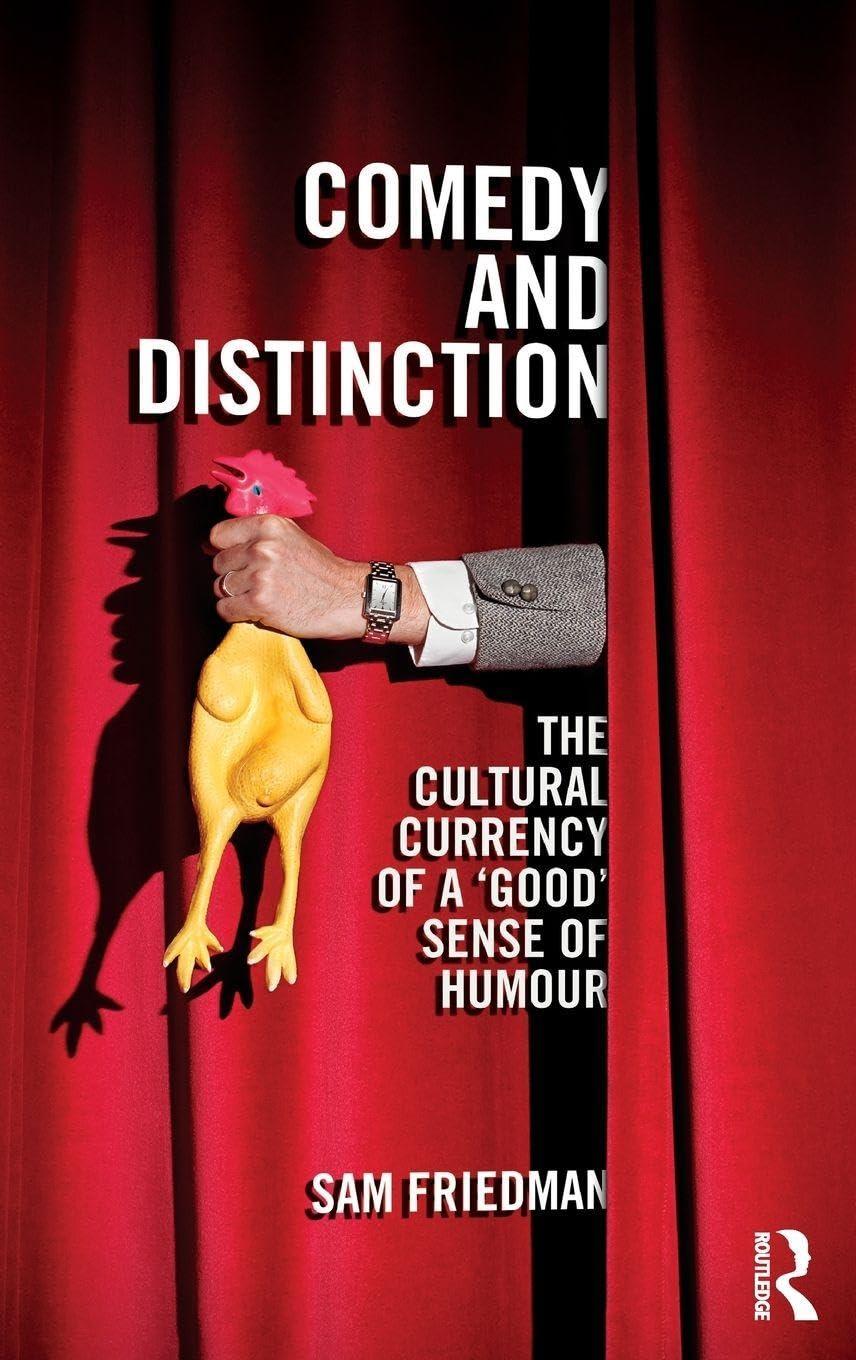
Comedy and Distinction
The Cultural Currency of a 'Good' Sense of Humour
Sam Friedman

Improvisation In The Arts Of The Middle Ages And Renaissance
Timothy J. McGee

Improvisation in Drama, Theatre and Performance
History, Practice, Theory
Anthony Frost; Ralph Yarrow

The Art of Chicago Improv
Short Cuts to Long-Form Improvisation
Rob Kozlowski
About This Book
How to Reference This Page
The Improv Archive. (2026). A Cultural History of Comedy in the Early Modern Age. Retrieved March 17, 2026, from https://improvarchive.org/books/cultural-history-of-comedy-in-the-early-modern-age
The Improv Archive. "A Cultural History of Comedy in the Early Modern Age." The Improv Archive, 2026. https://improvarchive.org/books/cultural-history-of-comedy-in-the-early-modern-age.
The Improv Archive. "A Cultural History of Comedy in the Early Modern Age." The Improv Archive, 2026, https://improvarchive.org/books/cultural-history-of-comedy-in-the-early-modern-age. Accessed March 17, 2026.
The Improv Archive is a systemically maintained repository. The archive itself acts as the corporate author.