Anyone Who
Anyone Who is a high-energy chair-based warm-up exercise in which players sit in a circle with one fewer seat than participants. The person left standing moves to the center and calls out a statement beginning with "Anyone who..." followed by a trait, experience, or preference. Everyone to whom the statement applies must leave their seat and find a new one, while the caller also scrambles for a seat. The last player left standing becomes the new caller. The exercise energizes the room, breaks down social barriers, and reveals shared experiences across the group. It functions as both a physical warm-up and a group-bonding exercise, making it particularly effective at the start of rehearsals, workshops, and applied improv sessions where participants may not know each other well.
Structure
Setup
Players arrange chairs in a circle, removing one chair so there is one fewer seat than participants. All players sit down except one, who stands in the center.
Progression
The standing player calls out a statement beginning with "Anyone who..." and completes it with a characteristic, experience, or preference. Examples include "Anyone who has a pet," "Anyone who has traveled outside the country," or "Anyone who ate breakfast today." Every seated player to whom the statement applies must stand and move to a different chair. The caller also attempts to claim a seat. Players cannot return to the seat they just left or move to an immediately adjacent seat.
The last player without a seat moves to the center and makes the next call. The exercise continues for a set number of rounds or until the facilitator determines the group has reached the desired energy level.
Conclusion
The facilitator ends the exercise on a high-energy round and transitions directly into the next activity while the room's momentum is still elevated. There is no winner or loser. The goal is activation and connection, not competition.
How to Teach It
Objectives
The exercise trains listening, physical commitment, and rapid self-disclosure. Players must process the caller's statement, assess whether it applies to them, and act immediately. The constraint of a missing chair forces full physical engagement rather than cautious minimal movement.
How to Explain It
"We're going to play a game called Anyone Who. Everyone sit in a circle. I'm removing one chair, so one person will be standing in the middle. That person calls out a statement starting with 'Anyone who...' and finishes it with something true about themselves. If it's also true for you, you have to get up and find a new seat. The person in the middle is also trying to grab a seat. Whoever is left standing goes next. You can't sit back down in your own chair or move to the chair right next to you. Let's go."
Scaffolding
With beginners, model the first two rounds from the center before handing it off. Demonstrate both a broad call that moves most of the group and a specific call that moves only a few players, so the group understands the range of what works.
With experienced players, set the expectation before the exercise begins: callers should move from easy universal calls toward more specific or personal ones as the exercise builds momentum.
Common Notes
Coach callers to vary between universal statements and specific ones. Universal calls create chaotic, high-energy scrambles. Specific calls create moments of discovery as the group learns what it has in common.
Watch for players who avoid making eye contact during scrambles or who consistently grab the nearest open chair rather than crossing the circle. The exercise works best when players commit to full physical movement through the space.
A common drift is callers defaulting to safe, surface-level statements throughout the exercise. After the first few rounds, invite callers to take small risks with more personal or specific calls. The exercise becomes richer when players share something real.
Common Pitfalls
Players often hesitate before moving, waiting to see if others are getting up. Coach for immediate response: if it is true, move.
Groups with mixed physical abilities need a safety note before the exercise begins. Collisions are common in enthusiastic groups. Padding chairs away from walls and using a larger circle reduces impact risk.
Worth Reading
See all books →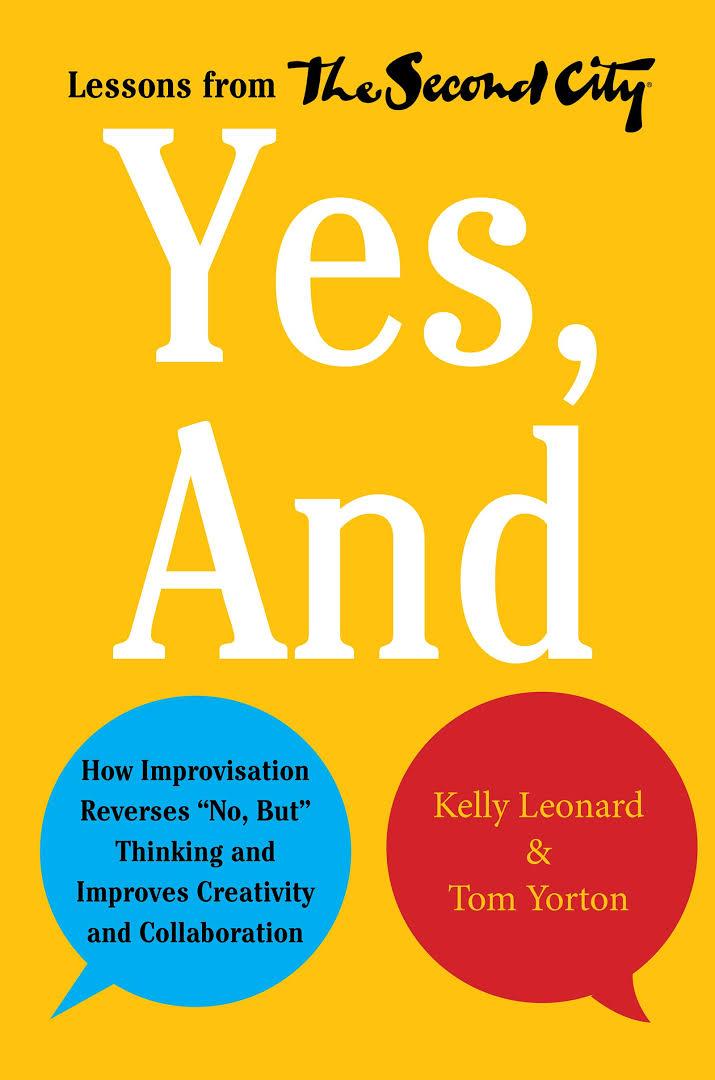
Yes, And
How Improvisation Reverses No, But Thinking and Improves Creativity and Collaboration
Kelly Leonard; Tom Yorton

Business Improv
Experiential Learning Exercises to Train Employees
Val Gee

Comedy and Distinction
The Cultural Currency of a 'Good' Sense of Humour
Sam Friedman

Legislative Theatre
Using Performance to Make Politics
Augusto Boal

Theatrical Improvisation
Short Form, Long Form, and Sketch-Based Improv
Jeanne Leep
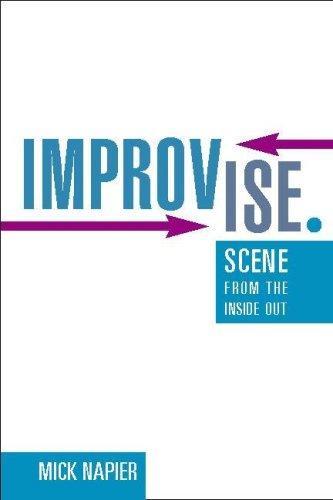
Improvise
Scene from the Inside Out
Mick Napier
Related Exercises
Shuffle
Shuffle is a physical warm-up exercise in which players mill through the space and must quickly form groups of a called-out number when the facilitator gives the signal. Players who cannot find a complete group in time are eliminated or take a forfeit. The exercise builds physical energy, spatial awareness, and the habit of actively and immediately seeking connection with other players.
Bobsledding Bodies
Bobsledding Bodies is a physical warm-up exercise in which players form a tight line and navigate the space together, shifting direction and speed as a unit. The exercise builds group awareness, physical coordination, and the ability to respond as an ensemble to subtle changes in momentum.
Run Around
Run Around is a physical warm-up exercise in which players move through the space and respond to commands called by the facilitator. The exercise builds spatial awareness, group attentiveness, and physical readiness by requiring participants to shift direction, speed, or movement quality on cue.
Popcorn
Popcorn is an ensemble energy exercise in which players crouch on the ground and pop up one at a time to shout a word, sound, or short phrase before dropping back down. The group must self-regulate so that pops do not overlap and the rhythm stays dynamic. The exercise builds group awareness, spontaneity, and the instinct to fill empty space without stepping on others.
Barney
Barney is an energy and movement warm-up exercise in which players adopt an exaggerated, lumbering physical character and interact with the group through simple, playful commands. The exercise asks participants to embody a large, slow, friendly creature (often described as a dinosaur or monster) and move through the space with maximum physical commitment and minimum self-consciousness. The inherent silliness of the character lowers inhibitions quickly, making Barney effective as an early warm-up for groups that are new to physical work or uncomfortable with large physical choices. The exercise builds comfort with exaggerated movement, vocal projection, and the willingness to look ridiculous in front of others, all foundational skills for improv performance.
Zulu
Zulu (1) is an energetic warm-up exercise in which players perform a series of synchronized group movements and chants, building collective rhythm and physical energy. The call-and-response format creates strong group cohesion and raises the energy level quickly. The exercise is commonly used as a pre-show warm-up to unite the ensemble.
How to Reference This Page
The Improv Archive. (2026). Anyone Who. Retrieved March 17, 2026, from https://improvarchive.org/exercises/anyone-who
The Improv Archive. "Anyone Who." The Improv Archive, 2026. https://improvarchive.org/exercises/anyone-who.
The Improv Archive. "Anyone Who." The Improv Archive, 2026, https://improvarchive.org/exercises/anyone-who. Accessed March 17, 2026.
The Improv Archive is a systemically maintained repository. The archive itself acts as the corporate author.