Just Seven Words
Just Seven Words is an applied improv exercise that constrains each participant to responding with exactly seven words -- no more, no fewer. The constraint forces deliberate word choice, disrupts habitual overexplanation, and trains the ability to communicate precisely and completely within a tight limit. The exercise is used in applied improv to develop conciseness, clarity, and the discipline of editing thought before speaking.
Structure
Setup
Participants work in pairs or a full group circle. The facilitator establishes the rule: every response must be exactly seven words. Participants are not allowed to pad with fillers or cut off a thought prematurely -- the goal is a complete, meaningful seven-word response.
Progression
The facilitator poses a question or prompt. Each participant must respond in exactly seven words. They may take a brief moment to formulate the response, but cannot exceed or fall short of the seven-word limit.
Participants count their words aloud or on their fingers as needed in early rounds. Over time, the group develops the ability to construct seven-word responses more naturally.
Conclusion
The exercise concludes when participants can produce seven-word responses fluently across multiple prompt types without excessive pausing. The facilitator follows with a group debrief.
How to Teach It
Objectives
Just Seven Words targets conciseness and intentional communication. It counters the habitual patterns of overexplanation, hedging, and unfocused rambling that dilute communication in workplace and ensemble contexts.
How to Explain It
"Every time you respond, say exactly seven words. Not six, not eight -- seven. Think about what you actually want to say, and find the words that say it completely. The constraint is the point: it forces you to choose."
Scaffolding
Begin with low-stakes prompts (favorite food, weekend plans) before moving to substantive workplace or scene-based content. For advanced groups, remove the physical counting aid and require the seven-word structure to be internalized rather than calculated.
Common Pitfalls
Participants frequently pad responses to reach seven words with meaningless filler ("um" and "well" and "so") or truncate a genuine thought to meet the limit. Coach participants to find the thought first and then find the seven words that carry it -- not to count words and fill the remaining slots.
In Applied Settings
Learning Objectives
Just Seven Words trains the communication discipline of saying exactly what you mean, completely, within a tight constraint. The exercise surfaces the gap between how much participants say and how much they actually need to say, developing the habit of deliberate editing before speaking rather than after.
Workplace Transfer
Professional communication in meetings, emails, and presentations frequently suffers from overexplanation -- lengthy set-ups, hedging qualifications, and unfocused elaboration that buries the core message. The seven-word constraint replicates the pressure of a high-attention, low-patience audience: a senior leader, a busy client, or a time-limited meeting slot. Participants who complete this exercise develop the reflex of identifying and leading with the point rather than arriving at it after several sentences.
Facilitation Context
Just Seven Words is effective in communication skills training, leadership development, presentation coaching, and facilitation workshops. It works well as a warm-up preceding a session where clarity and conciseness are the primary skill targets. Groups of any size can participate; pairs allow the most practice repetitions. It is particularly useful for groups that struggle with executive-level communication, where the ability to convey a complete idea in a sentence or two is a high-value skill.
Debrief Framing
After the exercise, ask: What did you have to cut to get to seven words? Was the seven-word version clearer or less clear than a longer response? When in your professional communication do you say more than you need to? The debrief should help participants identify the specific communication habits -- hedging, over-contextualizing, unnecessary qualification -- that the seven-word constraint made visible.
Skills Developed
Worth Reading
See all books →
When I Say This, Do You Mean That?
Enhancing Communication
Cherie Kerr; Julia Sweeney

The "Yes And" Business Evolution
Improv Skills for Leadership and Life
Tracy Shea-Porter
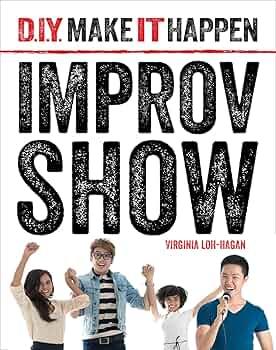
Improv Show
Virginia Loh-Hagan
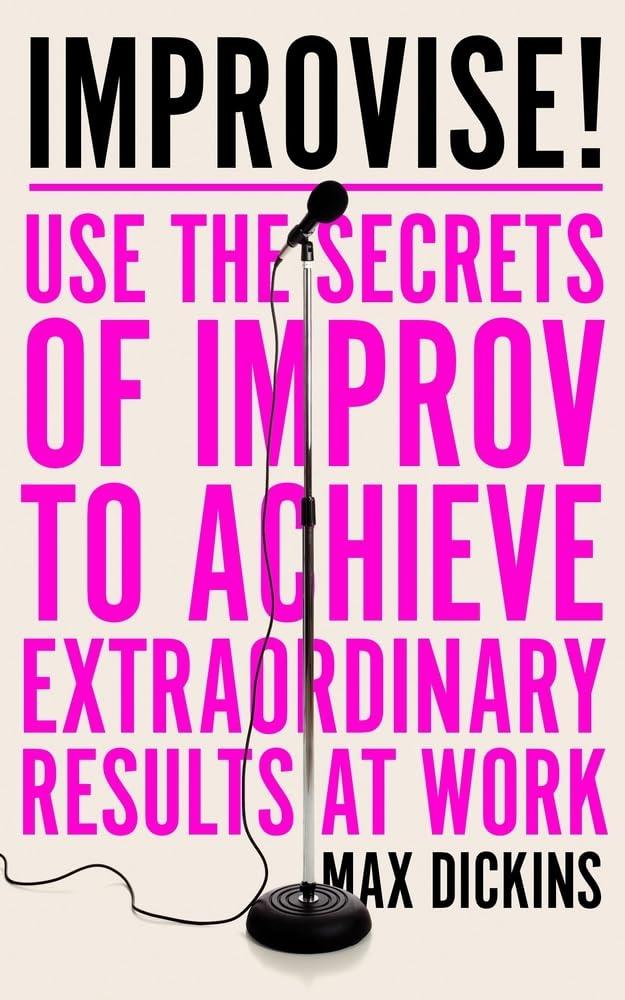
Improvise!
Use the Secrets of Improv to Achieve Extraordinary Results at Work
Max Dickins

The Improv Mindset
How to Make Improvisation Your Superpower for Success
Keith Saltojanes
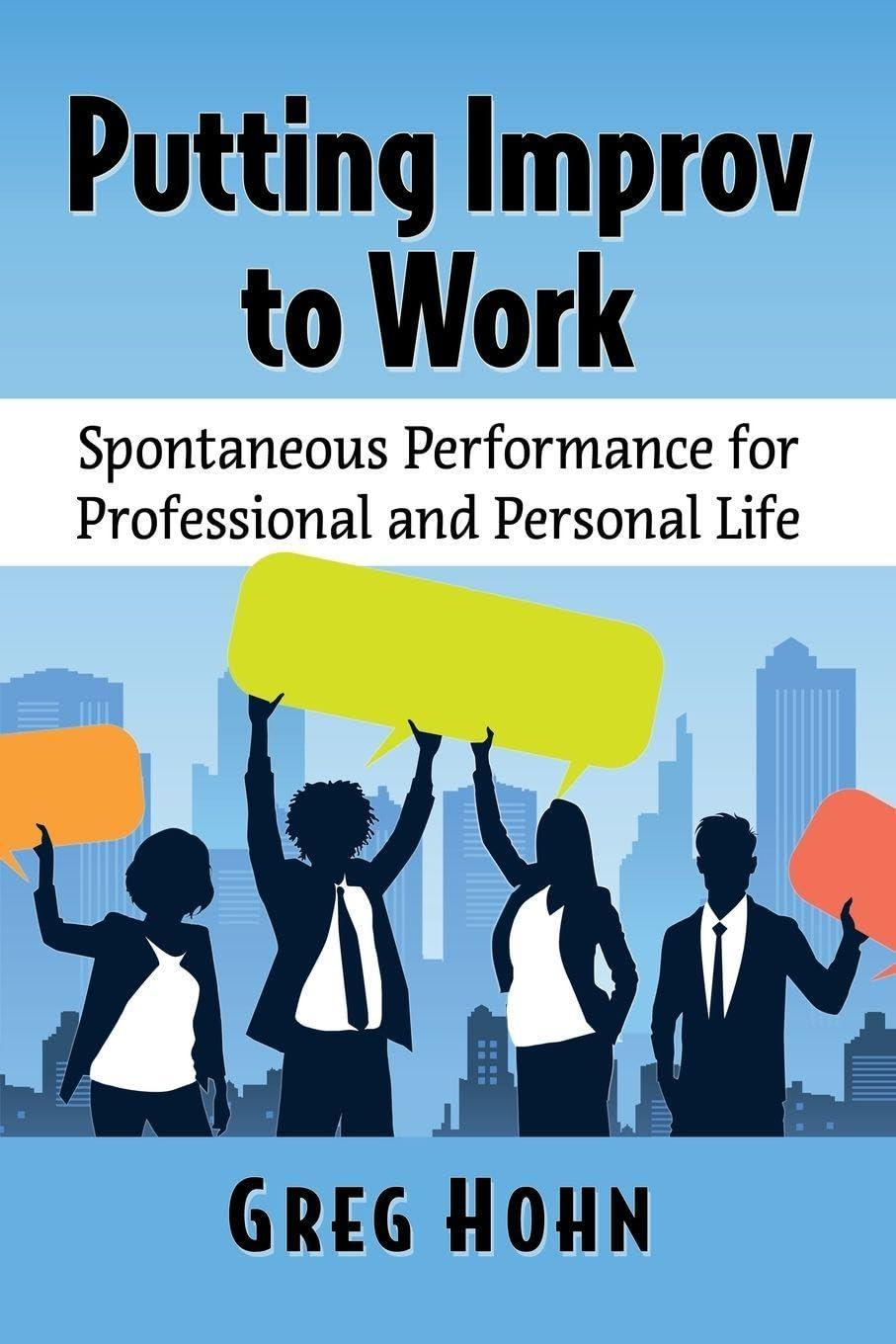
Putting Improv to Work
Spontaneous Performance for Leadership, Learning, and Life
Greg Hohn
Related Exercises
To the Point
Activities for practicing concise, clear communication, eliminating filler and getting to the essence of a message.
Solo Sevens
Think of a category and rapidly say seven things in that category as fast as possible, including made-up answers. Trains mental agility and quiets the judging brain.
Alliterations
Alliterations is a verbal constraint exercise in which players construct sentences, tell stories, or carry on conversations using words that all begin with the same letter. The restriction sharpens verbal agility, expands vocabulary under pressure, and demands creative commitment in real time.
What I Like About That Is
One person pitches an idea. Others must respond starting with What I like about that is before adding their own idea. Builds a culture of building on rather than tearing down.
One-word Story
Common alternate title that emphasizes the one-word constraint.
Hello
Hello is a simple greeting exercise in which players practice making contact through the single word "hello," varying their delivery to express different emotions, characters, and relationships. The exercise demonstrates the range of meaning a single word can carry. It builds vocal variety and the ability to communicate intention through tone.
How to Reference This Page
The Improv Archive. (2026). Just Seven Words. Retrieved March 17, 2026, from https://improvarchive.org/exercises/just-seven-words
The Improv Archive. "Just Seven Words." The Improv Archive, 2026. https://improvarchive.org/exercises/just-seven-words.
The Improv Archive. "Just Seven Words." The Improv Archive, 2026, https://improvarchive.org/exercises/just-seven-words. Accessed March 17, 2026.
The Improv Archive is a systemically maintained repository. The archive itself acts as the corporate author.