Play Tag
Play Tag is a physical warm-up exercise that adapts the universal children's game of tag for an improv workshop setting. One player is designated as "it" and pursues others within the defined playing space; tagged players become "it" and must pursue the next player. The exercise builds physical energy, spatial awareness, and the embodied experience of ensemble interdependence before scene work begins.
Structure
Setup
A playing space is defined by boundaries. One player is designated as "it."
Exercise
The player who is "it" attempts to tag another player by touching them. When a tag is made, the tagged player becomes the new "it." The previous "it" then becomes a free player.
Play continues until the facilitator ends the exercise. The exercise has no winner; the objective is sustained physical activity and group spatial engagement rather than elimination.
Variations
Slomo Tag: All movement is in slow motion. The constraint transforms a high-intensity chase into a sustained practice of physical commitment and sustained effort. The variant is gentler for groups with physical limitations and produces a different quality of focus.
Walking Tag: As documented by Telander for creative drama with older adults, the exercise begins as a walking exercise through the space and is extended by adding a single "it" who attempts to tag others at walking pace. This version is accessible for groups who cannot run.
How to Teach It
How to Explain It
"You are it, or you are not. Move through the space. This is not pretend: actually try to tag someone, actually try not to be tagged. Let your body be genuinely present in the game."
Objectives
Play Tag builds physical readiness, spatial awareness, and the embodied experience of genuine ensemble presence. The exercise gets performers out of their analytical minds and into physical responsiveness before scene work begins. A group that has just played tag arrives in scene work more physically present and spatially aware than a group that began rehearsal seated.
Spolin's Ensemble Principle
Spolin's aphorism "You can't play tag alone!" captures the essential transfer from the warm-up to scene work: scene improvisation, like tag, is fundamentally an activity that requires other people. A performer who treats their scene partner as a set piece rather than as the person who makes the scene possible has misunderstood the art form in the same way that a tag player who ignores other players has misunderstood the game.
Adaptation for Different Groups
For groups with physical limitations or in small spaces, the walking variant reduces intensity without eliminating the core ensemble-awareness value. Telander's documentation of Play Tag with older adults demonstrates that the exercise is adaptable across age and physical capacity without losing its training function.
History
Tag is one of the oldest and most widely distributed children's games, found across cultures under various names ("it," "tiggy," "chase"). Its adaptation for drama and actor training warm-ups follows naturally from its physical properties: the game requires continuous movement, spatial awareness, and responsiveness to other players.
Viola Spolin used the concept of tag as a foundational metaphor for ensemble interdependence, arguing that performers must be genuinely present for each other in the same way that tag requires other players to exist: "You can't play tag alone!", as documented by Wasson in Improv Nation. Spolin's workshops at the Compass Players rehearsals and later at Second City used physical games including tag variants as tools for building ensemble awareness.
Telander documents the exercise explicitly in Acting Up as a warm-up for creative drama with older adults: an outgrowth of walking exercises that adds a single "it" pursuing other players.
Worth Reading
See all books →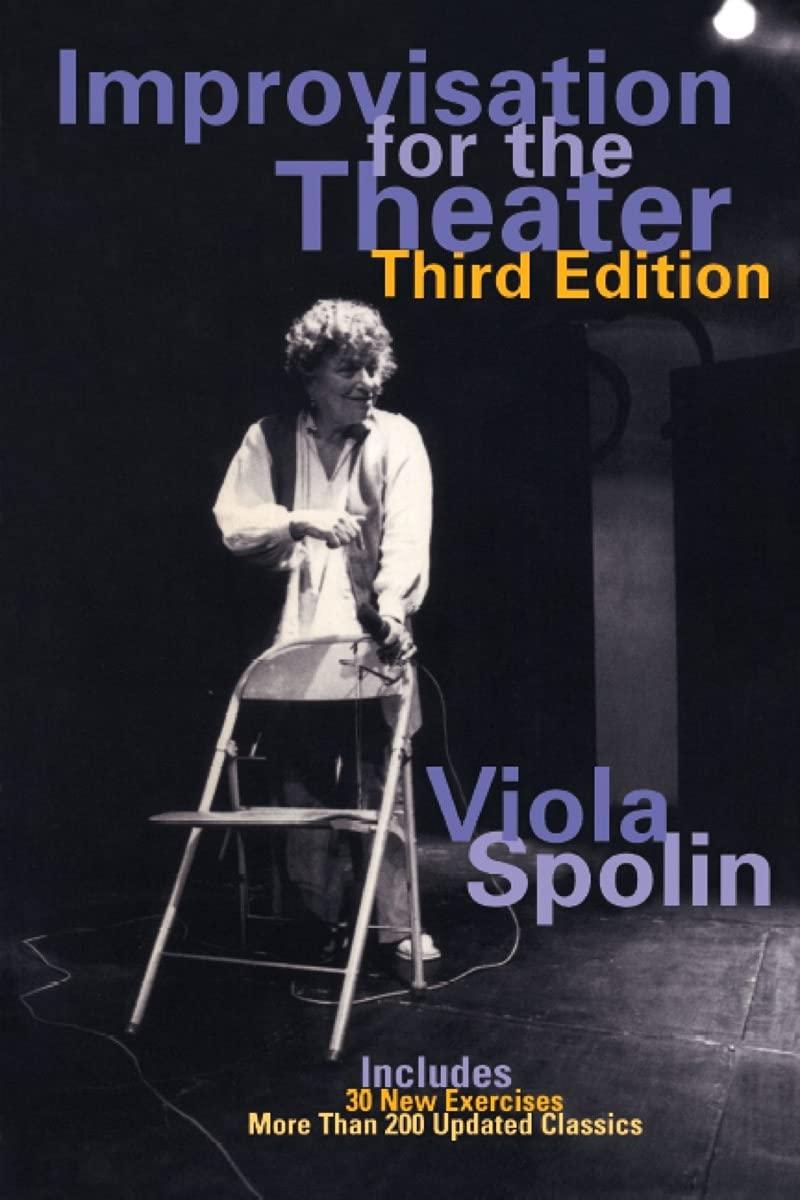
Improvisation for the Theater
A Handbook of Teaching and Directing Techniques
Viola Spolin

Mask Improvisation for Actor Training and Performance
the compelling image
Sears A. Eldredge

Acting Up!
An Innovative Approach to Creative Drama for Older Adults
Marcie Telander; Flora Quinlan; Karol Verson
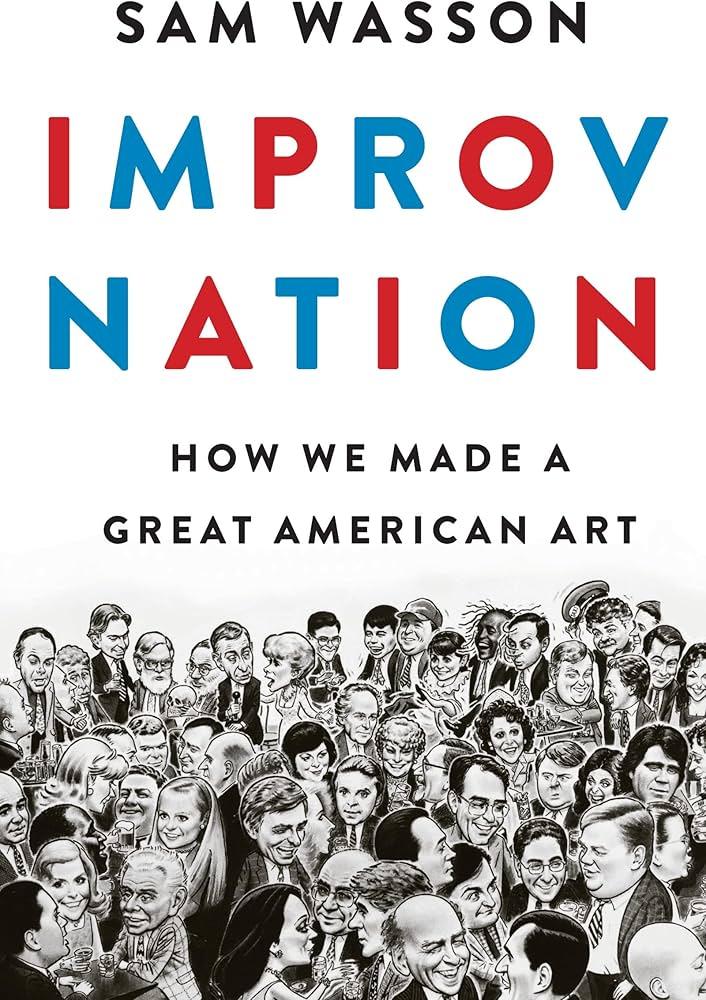
Improv Nation
How We Made a Great American Art
Sam Wasson

Group Improvisation
The Manual of Ensemble Improv Games
Peter Campbell Gwinn; Charna Halpern

Business Improv
Experiential Learning Exercises to Train Employees
Val Gee
Related Exercises
Bandaid Tag
Bandaid Tag is a warm-up variation on tag in which tagged players must place one hand on the spot where they were touched, as if applying a bandage. A second tag requires the other hand. A third tag eliminates the player, since they have no hands left to cover the wound. The game raises energy while adding a physical comedy element to standard tag.
Big Blob
Big Blob is a tag variant in which tagged players join hands with the tagger, forming an ever-growing chain that pursues the remaining free players. As the blob grows, coordination becomes increasingly difficult. The exercise builds group physicality, communication, and cooperative movement.
Shuffle
Shuffle is a physical warm-up exercise in which players mill through the space and must quickly form groups of a called-out number when the facilitator gives the signal. Players who cannot find a complete group in time are eliminated or take a forfeit. The exercise builds physical energy, spatial awareness, and the habit of actively and immediately seeking connection with other players.
Slomo Tag
Slomo Tag is a warm-up exercise in which players play tag entirely in slow motion, pursuing and evading each other with exaggerated, deliberate movements. The slow pace transforms a chaotic game into a study in physical control and spatial awareness. The exercise builds body awareness and creates a playful, focused energy in the group.
Foot Touch Tag
Foot Touch Tag is a warm-up variant of tag in which players can only tag each other by touching another player's foot with their own foot. The constraint changes the physical logic of the game entirely: rather than running and dodging at full speed, players must get low, stay in close range, and use lateral footwork to both pursue and protect. The exercise raises physical energy, develops agility and spatial awareness, and generates genuine group play in a physically unusual register.
Barney
Barney is an energy and movement warm-up exercise in which players adopt an exaggerated, lumbering physical character and interact with the group through simple, playful commands. The exercise asks participants to embody a large, slow, friendly creature (often described as a dinosaur or monster) and move through the space with maximum physical commitment and minimum self-consciousness. The inherent silliness of the character lowers inhibitions quickly, making Barney effective as an early warm-up for groups that are new to physical work or uncomfortable with large physical choices. The exercise builds comfort with exaggerated movement, vocal projection, and the willingness to look ridiculous in front of others, all foundational skills for improv performance.
How to Reference This Page
The Improv Archive. (2026). Play Tag. Retrieved March 17, 2026, from https://improvarchive.org/exercises/play-tag
The Improv Archive. "Play Tag." The Improv Archive, 2026. https://improvarchive.org/exercises/play-tag.
The Improv Archive. "Play Tag." The Improv Archive, 2026, https://improvarchive.org/exercises/play-tag. Accessed March 17, 2026.
The Improv Archive is a systemically maintained repository. The archive itself acts as the corporate author.