The Magnet
The Magnet is a physical ensemble exercise in which one player acts as a magnet moving through the space while other players respond as if they are iron filings, drawn toward or pushed away depending on the magnet's orientation. The exercise develops physical responsiveness, spatial sensitivity, and ensemble attunement through non-verbal interaction.
Structure
Setup
One player is designated the magnet. All other participants spread through the space as iron filings. The magnet moves freely.
Exercise
As the magnet moves, participants respond physically to its orientation. When the magnet presents its positive pole toward them, they are repelled and move away. When it presents its negative pole, they are attracted and drawn closer. The magnet player controls which pole faces which direction through their movement and body orientation.
Participants respond not to explicit signals but to the magnet's spatial relationship to them. The exercise is non-verbal throughout.
Variation
In a more complex version, multiple magnet players operate simultaneously, each with independently chosen positive and negative orientations. Participants must navigate contradictory fields of attraction and repulsion across the space.
How to Teach It
How to Explain It
"One player is the magnet. Everyone else is a particle. When the magnet moves, the particles respond: attracted, repelled, orbiting. The magnet does not speak. The magnet's movement is the only language. Particles, follow what the body tells you."
Objectives
The Magnet develops physical responsiveness and sensitivity to a partner's spatial presence without verbal negotiation. It belongs to the family of Boal exercises that train actors to read and respond to embodied signals rather than spoken language. In improv contexts, the exercise serves as a pre-verbal warm-up that establishes ensemble attunement before scene work begins.
Facilitating the Exercise
Participants who are unfamiliar with Boal's physical work may initially over-intellectualize the exercise, trying to figure out which pole is active before responding. Encourage immediate physical response to proximity. The exercise works best when participants move continuously rather than waiting to determine the correct response.
The concept of positive and negative poles can remain abstract or can be made explicit. Boal's version in Games for Actors and Non-Actors presents both poles as active orientations the magnet player controls and shifts.
Relationship to Theatre of the Oppressed
This exercise comes from a specific pedagogical tradition. When using it with groups unfamiliar with Boal's work, context about Theatre of the Oppressed enriches the debrief: the exercise is not merely a warm-up but a demonstration that physical dynamics between bodies in space are readable and transformable.
History
Augusto Boal documents the exercise as "The Magnet -- Positive and Negative" in Games for Actors and Non-Actors (1992). The exercise belongs to Boal's arsenal of physical exercises developed for the Theatre of the Oppressed, a practice originating in Brazil in the 1960s and 1970s that used drama to build political and social awareness. Boal's games were designed to make physical and relational processes visible through structured physical play.
The metaphor of the magnet as a model for interpersonal attraction and repulsion appears in Boal's broader theoretical writing. In Theater of the Oppressed, Boal uses the image of magnetic force to describe the "soul" of objects and the invisible dynamics between bodies in space.
Worth Reading
See all books →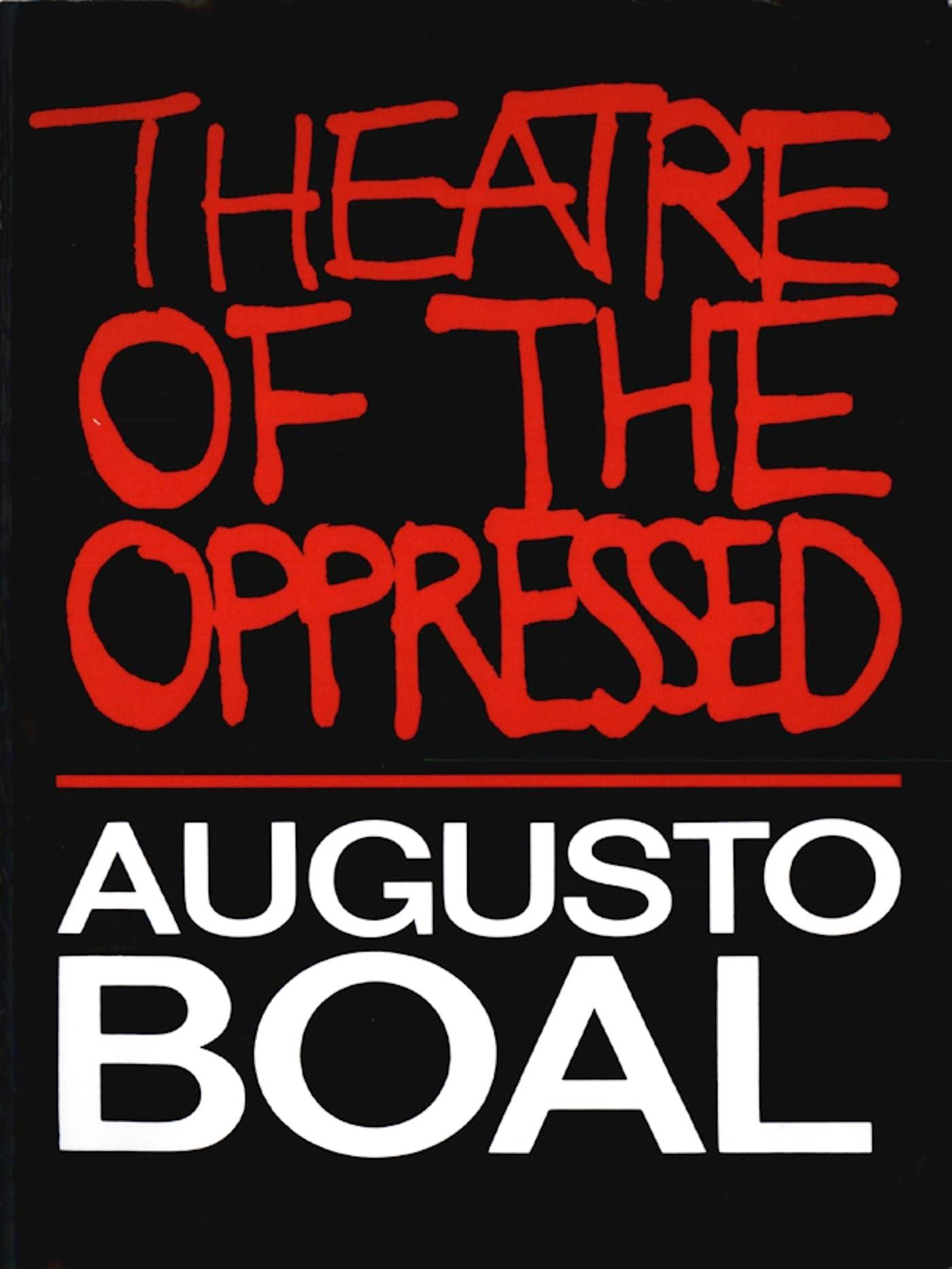
Theatre of the Oppressed
Augusto Boal

Theatrical Improvisation, Consciousness, and Cognition
Clayton D. Drinko

Long Form Improvisation and American Comedy
The Harold
Matt Fotis

Funny on Purpose
The Definitive Guide to an Unpredictable Career in Comedy
Joe Randazzo

Group Improvisation
The Manual of Ensemble Improv Games
Peter Campbell Gwinn; Charna Halpern
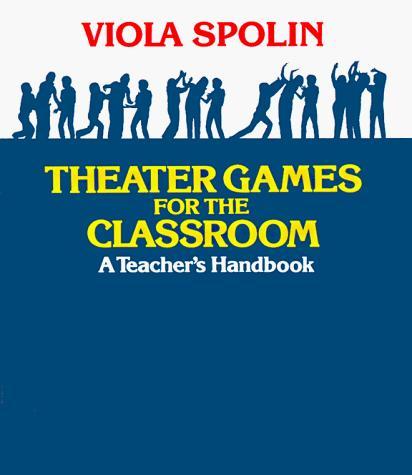
Theater Games for the Classroom
Viola Spolin
Related Exercises
Run Around
Run Around is a physical warm-up exercise in which players move through the space and respond to commands called by the facilitator. The exercise builds spatial awareness, group attentiveness, and physical readiness by requiring participants to shift direction, speed, or movement quality on cue.
Object Morphing
Object Morphing is an exercise in which a player holds an imaginary object and gradually transforms it into something else through continuous physical manipulation. The transformation should be smooth and visible so the group can follow the shift. The exercise trains creative fluidity and the ability to find physical connections between unrelated objects.
Obstacle Course
Obstacle Course is a physical exercise in which players navigate a real or imagined series of obstacles using their bodies expressively. The exercise may be used to build physical confidence, practice environment work, or warm up the body before performance. It trains spatial awareness and encourages bold physical choices.
Shuffle
Shuffle is a physical warm-up exercise in which players mill through the space and must quickly form groups of a called-out number when the facilitator gives the signal. Players who cannot find a complete group in time are eliminated or take a forfeit. The exercise builds physical energy, spatial awareness, and the habit of actively and immediately seeking connection with other players.
Alliances
Alliances is a spatial awareness exercise in which each player secretly selects one person in the group as their ally and another as their enemy, then moves through the space trying to keep the ally positioned between themselves and the enemy at all times. No one announces their choices, so the resulting group movement becomes complex, organic, and unpredictable as every participant simultaneously pursues their own spatial objective. The exercise produces a constantly shifting formation that resembles flocking behavior, with sudden accelerations, direction changes, and clusters forming and dissolving. Alliances develops spatial awareness, peripheral vision, and the ability to read and respond to group movement patterns without verbal communication. It also demonstrates how simple individual rules can generate complex group behavior, a principle that applies directly to ensemble scene work.
Play Tag
Play Tag is a physical warm-up exercise that adapts the universal children's game of tag for an improv workshop setting. One player is designated as "it" and pursues others within the defined playing space; tagged players become "it" and must pursue the next player. The exercise builds physical energy, spatial awareness, and the embodied experience of ensemble interdependence before scene work begins.
How to Reference This Page
The Improv Archive. (2026). The Magnet. Retrieved March 17, 2026, from https://improvarchive.org/exercises/the-magnet
The Improv Archive. "The Magnet." The Improv Archive, 2026. https://improvarchive.org/exercises/the-magnet.
The Improv Archive. "The Magnet." The Improv Archive, 2026, https://improvarchive.org/exercises/the-magnet. Accessed March 17, 2026.
The Improv Archive is a systemically maintained repository. The archive itself acts as the corporate author.